KOSPI Sees Record Average Daily Trading Volume of $20.7 Billion in February
Synopsis
In February, South Korea's main stock market witnessed an unprecedented average daily trading value exceeding 30 trillion won ($20.7 billion), propelled by a strong performance in semiconductor shares.
Key Takeaways
Average daily trading volume on KOSPI exceeded 30 trillion won in February.
Driving factors include a surge in semiconductor stocks .
KOSPI's trading activity was heavily concentrated in large-cap technology stocks .
Analysts warn of potential market corrections, yet optimism remains.
Companies are prioritizing employee safety amid geopolitical tensions .
Seoul, March 2 (NationPress) In February, the average daily trading value on South Korea's main stock exchange soared to a historic level of over 30 trillion won ($20.7 billion), mainly fueled by a surge in semiconductor stocks.
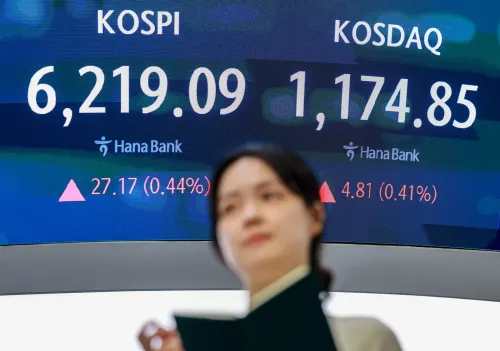
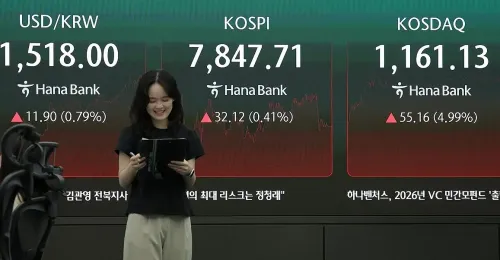
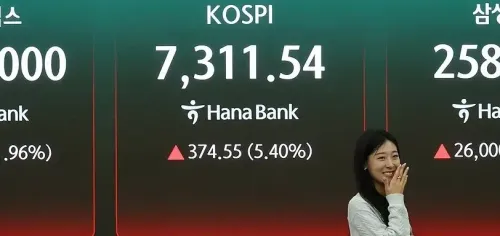
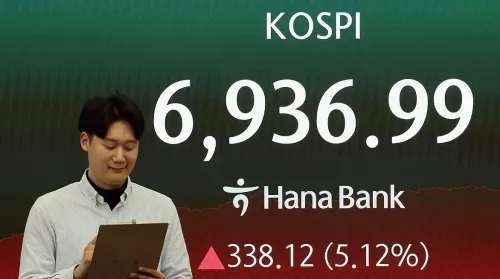
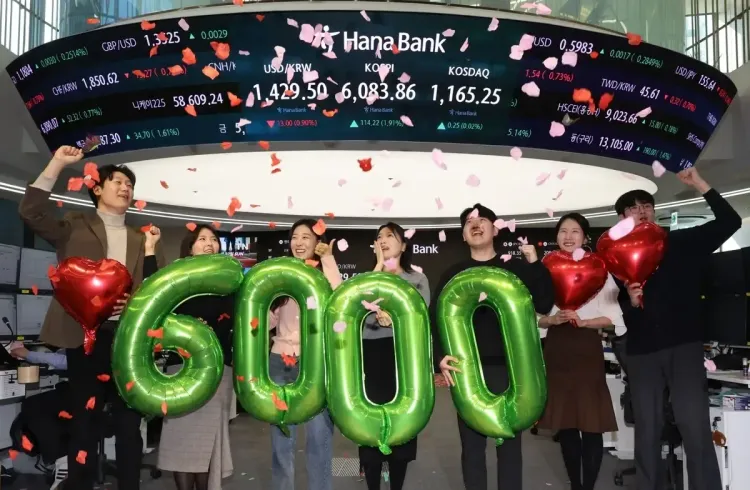
The benchmark Korea Composite Stock Price Index (KOSPI) jumped past the 6,000-point threshold on Wednesday, just weeks after crossing the 5,000 mark, as reported by Yonhap news agency.
According to the Korea Exchange (KRX), the average daily turnover on the KOSPI market reached 32.23 trillion won last month, which is a 19 percent increase from 27.06 trillion won the previous month.
Market analysts have linked this surge to increasing optimism regarding the global semiconductor sector, as well as expectations for pro-business government policies in Seoul.
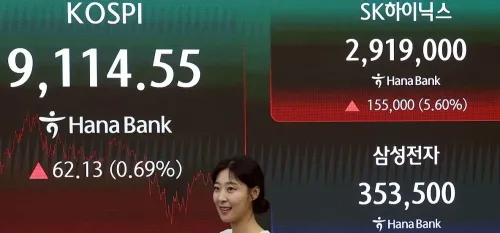
Trading activity has been heavily focused on major technology firms, particularly Samsung Electronics Co. and SK hynix Inc.
The combined average daily turnover of these two semiconductor giants was 10.5 trillion won in February, which represented 33 percent of the total trading value on the KOSPI.
Experts have warned that a correction may be on the horizon following the recent rapid gains, although many anticipate that the upward trend could persist for some time.
They also pointed out uncertainties arising from escalating geopolitical tensions in the Middle East after the death of Iran's Supreme Leader Ayatollah Ali Khamenei due to military strikes by the United States and Israel, along with the evolving U.S. tariff policies under the Trump administration.
Lee Kyoung-min, an analyst at Daishin Securities, remarked, "The current rally in the KOSPI is distinct from previous liquidity-driven surges. The trajectory toward record highs is expected to continue, as recent gains are backed by favorable revisions to earnings projections for semiconductor firms."
In the meantime, South Korean companies with operations in the Middle East are urgently formulating response strategies amid rising tensions in the region following U.S.-Israeli actions against Iran, prioritizing employee safety and minimizing operational disruptions.
Key firms have held emergency meetings to ensure the safety of their personnel in the Middle East and to discuss measures to tackle potential challenges, given their significant presence in Iran, Iraq, the United Arab Emirates, and other nations in the region.
Point of View
It's essential to highlight the pivotal trends in the financial sector. The KOSPI's impressive trading volume reflects not only investor confidence but also the growing significance of the semiconductor industry in South Korea's economy. However, we must remain vigilant about potential market corrections and geopolitical risks that could influence future performance.
NationPress
17 Sept 2026
Frequently Asked Questions
What is the average daily trading volume of KOSPI in February?
The average daily trading volume of KOSPI in February reached over 30 trillion won, equivalent to approximately $20.7 billion.
What factors contributed to the KOSPI's rise?
The KOSPI's rise was primarily driven by a rally in semiconductor stocks and optimism about supportive government policies.
What percentage of trading activity was focused on semiconductor companies?
Trading activity in semiconductor companies, notably Samsung Electronics and SK hynix, accounted for 33 percent of the total trading value.
What concerns do analysts have about the KOSPI's performance?
Analysts are cautious about a potential market correction following recent gains, despite an overall positive outlook.
How are South Korean companies responding to geopolitical tensions?
South Korean companies in the Middle East are developing response measures to ensure employee safety and minimize operational disruptions amidst rising tensions.