Seoul Stock Market Dips Over 8% Amid Middle East Tensions
Synopsis
Seoul's stock market plunged by over 8% on March 4, as investors reacted to escalating tensions in the Middle East. Coordinated military actions have intensified fears about potential economic fallout, leading to significant sell-offs in major companies.
Key Takeaways
Seoul's stock market dropped over 8% due to geopolitical tensions.
KOSPI index fell to 5,322.93.
Foreign investors sold a net 1.17 trillion won in stocks.
Major corporations faced significant losses.
KRX implemented measures to stabilize the market.
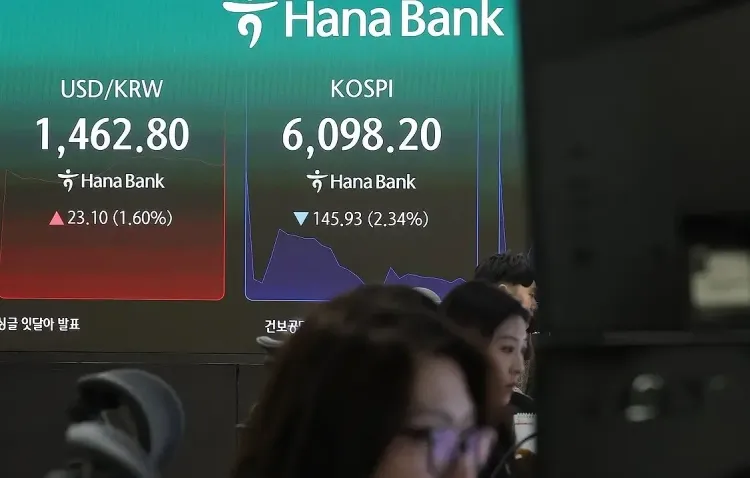
Seoul, March 4 (NationPress) The stock market in Seoul faced significant declines on Wednesday morning, plummeting by over 8 percent as fears about the economic repercussions of the ongoing Middle East conflict continued to dampen investor mood.
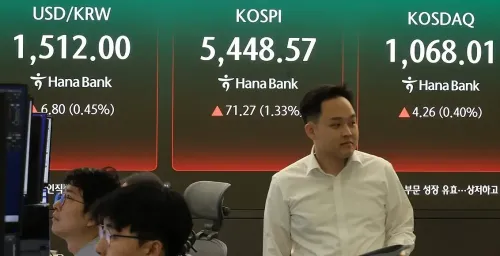
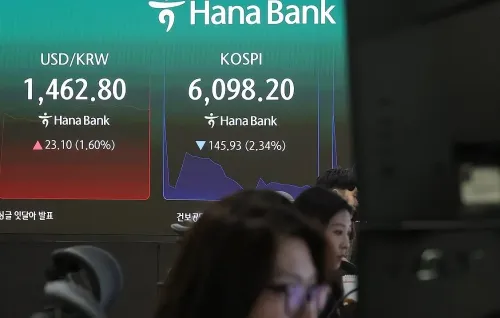
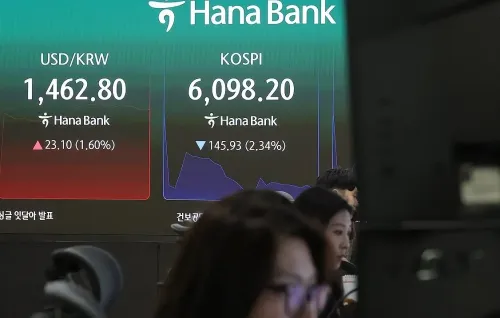
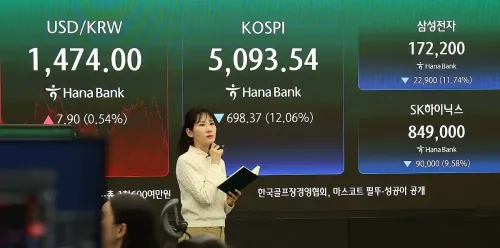
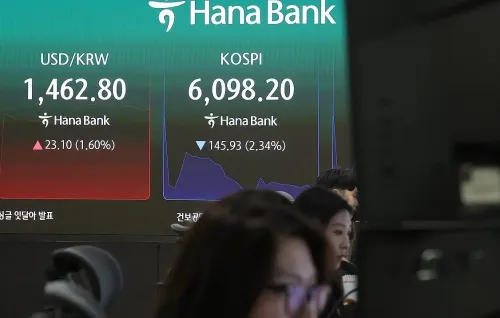
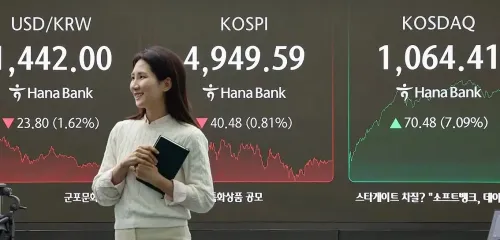
After an initial drop of 3.44 percent, the Korea Composite Stock Price Index (KOSPI) further decreased by 468.98 points, or 8.1 percent, reaching 5,322.93 by 11:45 a.m., following a drop of more than 7.24 percent the day before.
The Korea Exchange (KRX) activated circuit breakers shortly after the KOSPI dipped over 8 percent due to heightened geopolitical tensions, as reported by Yonhap news agency.
Earlier, the KRX had also implemented a five-minute sell-side sidecar right after the market opened, temporarily suspending program-driven sell orders in KOSPI futures. A similar measure was enacted on the tech-focused KOSDAQ market.
This turmoil follows coordinated strikes by the United States and Israel on Iran over the weekend, resulting in the death of Iran's Supreme Leader Ayatollah Ali Khamenei. U.S. President Donald Trump hinted at the potential for a prolonged military engagement.
In the previous trading session, the Dow Jones Industrial Average saw a decline of 0.83 percent, while the tech-heavy Nasdaq composite dropped 1.02 percent.
Foreign investors offloaded stocks worth a net 1.17 trillion won (approx. US$792 million), counterbalancing the purchases made by institutions and individuals, which amounted to 461.33 billion won and 638.82 billion won, respectively.
In Seoul, the majority of large-cap stocks experienced sharp declines.
Market leader Samsung Electronics saw a drop of 7.28 percent, while its competitor SK Hynix fell by 5.43 percent.
Leading automobile manufacturer Hyundai Motor declined by 10.92 percent, with its smaller counterpart Kia also dropping 10.42 percent.
Major defense contractor Hanwha Aerospace fell by 11.03 percent, and top refiner SK Innovation decreased by 12.83 percent.
Flag carrier Korean Air lost 5.75 percent, and prominent shipping company HMM experienced a substantial decline of 16.73 percent.
On a positive note, defense firm LIG Nex1 increased by 3.63 percent and refiner S-Oil surged by 18.05 percent.
The Korean won was trading at 1,477.15 won against the U.S. dollar by 11:45 a.m., reflecting a decrease of 11.05 won from the prior session.
Point of View
It's crucial to highlight the broader implications of geopolitical instability on financial markets. The significant drop in Seoul's shares reflects a growing concern among investors regarding the potential long-term consequences of military actions in the Middle East. This situation warrants close observation as it may influence global economic trends.
NationPress
19 Sept 2026
Frequently Asked Questions
Why did Seoul shares fall over 8%?
Seoul shares fell over 8% due to rising concerns about the economic implications of the ongoing Middle East conflict and coordinated military actions by the U.S. and Israel.
What triggered the market losses?
The market losses were triggered by fears of economic fallout from military strikes on Iran, leading to panic selling among investors.
How did major companies perform?
Most large-cap companies, including Samsung Electronics and Hyundai Motor, reported significant declines in their stock prices.
What measures were taken by the Korea Exchange?
The Korea Exchange activated circuit breakers and implemented a sell-side sidecar to temporarily halt program-driven sell orders.
What is the current exchange rate for the Korean won?
As of 11:45 a.m., the Korean won was trading at 1,477.15 won against the U.S. dollar.