Seoul Stock Market Adjusts Gains Amid Easing US-Iran Tensions
Synopsis
In a surprising turn, the Seoul stock market has adjusted its earlier gains despite a reduction in military tensions between the US and Iran. As the KOSPI index fluctuates, foreign investors exert selling pressure. Discover how the situation impacts South Korea's economy and stock performance.
Key Takeaways
Seoul's stock market adjusted gains amid geopolitical tensions.
KOSPI index rose by 45.02 points, reaching 5,450.77.
Foreign investor selling pressure contributed to market fluctuations.
Export growth driven by semiconductors surged over 50%.
The Korean won strengthened against the US dollar.
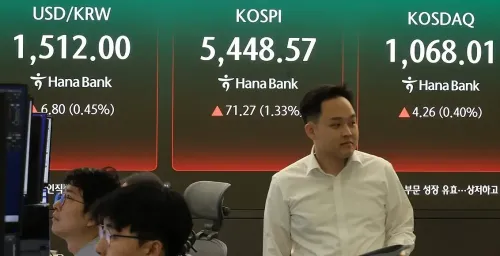
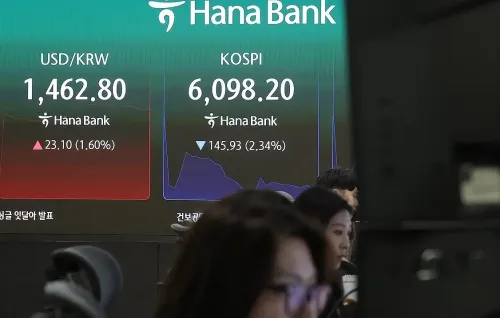
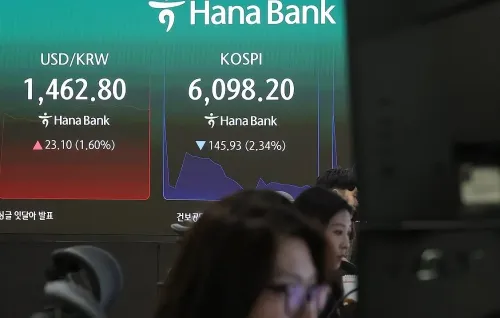
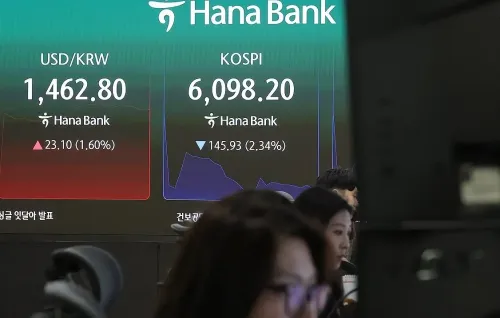
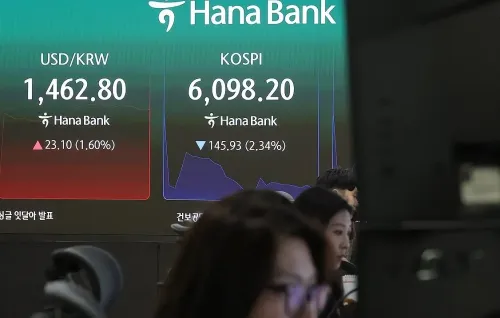
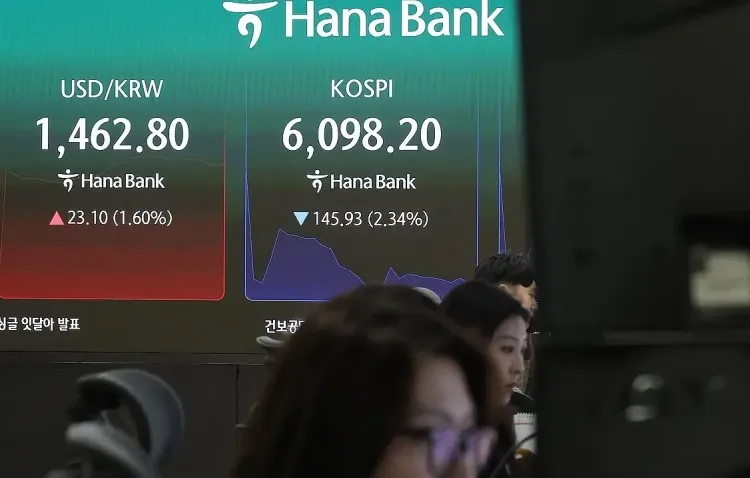
Seoul, March 24 (NationPress) - Despite a reduction in military tensions between the United States and Iran, Seoul's stock market saw a decline in earlier gains late Tuesday morning. The benchmark Korea Composite Stock Price Index (KOSPI) rose by 45.02 points, equivalent to 0.83 percent, reaching 5,450.77 at 11:20 a.m.
The market initially surged by over 4 percent at the opening, but faced selling pressure from foreign investors, leading to diminished gains, according to reports from Yonhap news agency.
In the United States, major stock indexes closed positively overnight, following President Donald Trump's announcement to postpone strikes on Iranian energy facilities after diplomatic discussions.
Trump had previously threatened military action against Iran if it failed to keep the Strait of Hormuz, a vital global oil shipping lane, open by Monday evening. Iran responded with warnings of potential retaliation.
These developments have sparked optimism regarding a potential de-escalation of tensions in the Middle East, which could also lead to stabilization in soaring oil prices.
Simultaneously, South Korea's customs agency reported a staggering increase of over 50 percent in the country's exports as of Friday, primarily driven by a record month for semiconductors.
In terms of large-cap stocks, the performance was mixed. South Korea's leading chip manufacturers experienced minor losses, with Samsung Electronics rising by 1.18 percent and SK hynix gaining 2.47 percent.
Hyundai Motor, the top automotive manufacturer, saw a rise of 1.24 percent, while defense company Hanwha Aerospace increased by 1.72 percent. The major financial group, KB Financial, remained stable.
The South Korean won demonstrated a significant recovery against the US dollar, bouncing back from a 17-year low after Trump announced a delay in planned military actions against Iranian infrastructure amidst ongoing talks.
Opening at 1,490.9 won per dollar, the won appreciated by 26.4 won from the previous session's rate of 1,517.3 won. This marked the weakest level since March 9, 2009, when the won dropped to 1,549 during the global financial crisis.
The domestic and international foreign exchange and stock markets have been marked by increased volatility due to escalating tensions from recent U.S.-Israeli strikes on Iran.
On Monday (U.S. time), Trump stated he had ordered a five-day delay of the proposed strikes on Iranian energy assets, citing productive discussions aimed at resolving the ongoing conflict in the Middle East.
Point of View
The adjustments in the Seoul stock market reflect the delicate balance of international relations and economic performance. As tensions ease between the US and Iran, the market's fluctuations indicate a cautious optimism, emphasizing the need for investors to remain vigilant amidst global uncertainties.
NationPress
21 Sept 2026
Frequently Asked Questions
What caused the decline in Seoul stocks?
The decline in Seoul stocks was primarily due to selling pressure from foreign investors, despite earlier gains amidst easing military tensions between the US and Iran.
How did the KOSPI index perform?
The KOSPI index rose by 45.02 points, or 0.83 percent, but later trimmed its gains after a significant opening surge.
What impact did Trump's statements have on the market?
Trump's announcement to postpone military strikes against Iran led to a positive response in US stock indexes, influencing optimism in the South Korean market.
What are the main drivers of South Korea's export growth?
South Korea's export growth, which rose by over 50 percent, was largely driven by a record performance in the semiconductor sector.
How is the Korean won performing against the US dollar?
The Korean won has gained significantly against the US dollar, recovering from a 17-year low after Trump delayed military actions against Iran.