KOSPI falls 55 points as chip stocks slide despite Iran ceasefire
Synopsis
South Korean stocks erased a near-2% opening gain in minutes as foreign investors dumped 1.7 trillion won of chip shares — even as the US-Iran ceasefire held and a $950 billion AI summit wrapped up in San Francisco. The divergence between geopolitical relief and market reality points to deeper anxieties about foreign capital flows and tech valuations.
Key Takeaways
KOSPI fell 55.63 points (0.83%) to 6,634.99 as of 11:20 a.m. on 27 July , reversing a 1.73% opening gain.
Foreign investors sold nearly 1.7 trillion won , outpacing combined retail and institutional buying of 1.6 trillion won .
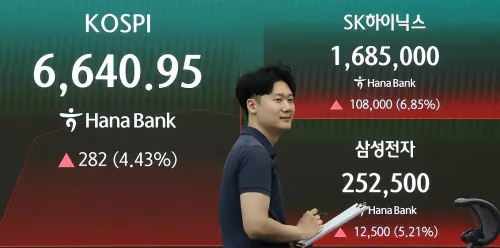
SK Innovation plunged 9.15% and Hanwha Aerospace tumbled 8.17% ; Samsung Electronics fell 0.6% and SK hynix dropped 0.8% .
South Korean and US tech firms agreed to US$950 billion in AI cooperation projects at a government-hosted summit in San Francisco .
The Bank of Korea reported that semiconductors made up 10.1% of South Korea's manufacturing output in 2024 , with production reaching 210.8 trillion won .
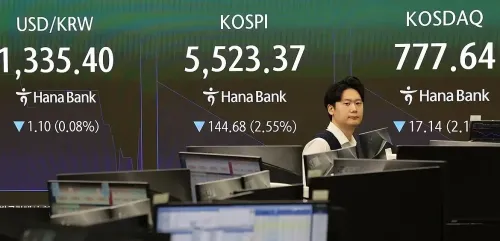
The Korean won weakened to 1,468.1 won per US dollar, down 9.6 won from the prior session.
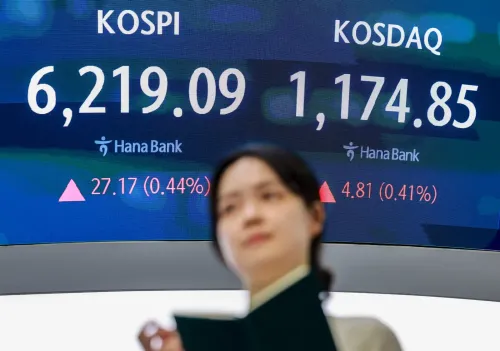
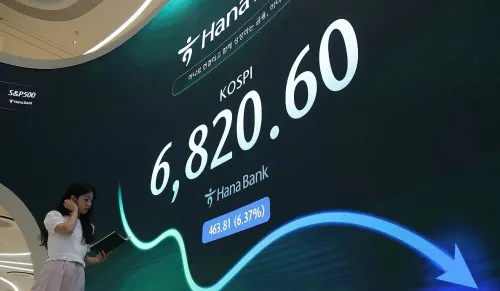
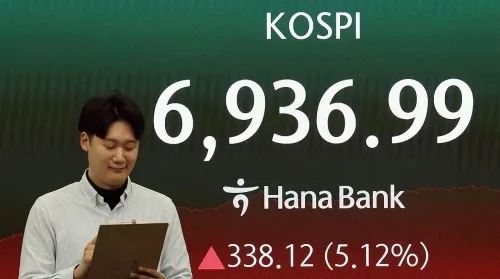
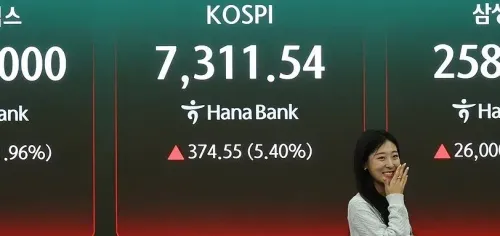
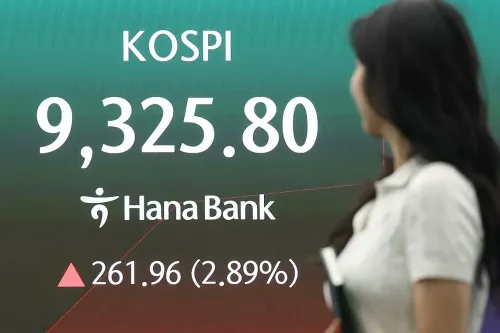
South Korea's benchmark Korea Composite Stock Price Index (KOSPI) reversed early gains to fall 55.63 points, or 0.83 percent, to 6,634.99 as of 11:20 a.m. on Monday, 27 July, as heavyweight semiconductor shares came under selling pressure even as Middle East military tensions showed signs of easing.
Early Rally Wiped Out by Chip Selling
The index had opened 1.73 percent higher, buoyed by news that the United States had suspended attacks on Iran since Friday and that Iran had halted counterstrikes while engaging in talks with Oman over the Strait of Hormuz. The optimism, however, proved short-lived as foreign investors turned aggressive sellers.
Foreign investors offloaded nearly 1.7 trillion won worth of shares, overwhelming a combined 1.6 trillion won in purchases by retail and institutional participants — a net outflow that dragged the index firmly into negative territory.
Tech and Defence Stocks Lead Losses
Samsung Electronics, the index's largest constituent, declined 0.6 percent, while memory chipmaker SK hynix dropped 0.8 percent. Their affiliates fared worse: Samsung Electro-Mechanics shed 1.06 percent and SK Square, the parent company of SK hynix, slumped 5.59 percent.
Outside the chip sector, oil refiner SK Innovation plunged 9.15 percent and defence conglomerate Hanwha Aerospace tumbled 8.17 percent — the latter's sharp fall notable given that defence stocks had surged in recent weeks amid elevated geopolitical risk. The Korean won weakened to 1,468.1 won per US dollar as of 11:20 a.m., down 9.6 won from the previous session.
$950 Billion AI Summit Fails to Lift Sentiment
The selloff came despite a high-profile outcome from an artificial intelligence summit hosted by the South Korean government in San Francisco over the weekend, where South Korean and US technology companies agreed to pursue cooperation projects valued at a combined US$950 billion. The scale of the commitments did not translate into buying momentum on the Seoul bourse, suggesting markets viewed the agreements as longer-term in nature rather than near-term earnings catalysts.
Chips Now Over 10% of South Korea's Manufacturing Output
Separately, a report published by the Bank of Korea (BOK) on Monday revealed that South Korea's chipmaking sector accounted for more than 10 percent of the country's total manufacturing output in 2024. Semiconductor production reached 210.8 trillion won (approximately $143.9 billion) over the year, representing a 10.1 percent share — growth driven by surging global demand for artificial intelligence infrastructure following the widespread adoption of large language models such as ChatGPT.
The BOK data underscores how structurally dependent South Korea's broader economy has become on chip-sector performance, making Monday's semiconductor selloff a wider concern for policymakers and investors alike. With Iran-US tensions in a fragile pause and foreign outflows accelerating, markets will be watching whether the chip sector can stabilise before the week's close.
Point of View
Meaning a sustained foreign selloff in semiconductors is not just a market story but a macroeconomic one. The sharp falls in SK Innovation and Hanwha Aerospace are also telling: defence and energy names, which had been bid up on conflict premium, are unwinding fast. If foreign outflows persist into the week, the won's slide will compound import costs and squeeze margins further down the supply chain.
NationPress
25 Oct 2026
Frequently Asked Questions
Why did the KOSPI fall on 27 July despite easing Iran tensions?
The KOSPI fell 55.63 points to 6,634.99 as foreign investors sold nearly 1.7 trillion won of shares, more than offsetting domestic buying. Despite a US-Iran ceasefire and a $950 billion AI cooperation deal, chip stocks led the decline, erasing an early 1.73% gain.
Which South Korean stocks fell the most on Monday?
SK Innovation was the biggest decliner, plunging 9.15%, followed by Hanwha Aerospace at 8.17% and SK Square at 5.59%. Samsung Electronics and SK hynix fell 0.6% and 0.8% respectively.
What was the US-Iran ceasefire situation as of 27 July?
The United States had suspended its attacks on Iran since Friday, 25 July, easing military tensions that had escalated over the prior two weeks. Iran also halted counterstrikes and entered talks with Oman regarding the Strait of Hormuz.
What did the South Korea-US AI summit in San Francisco announce?
South Korean and US technology companies agreed to pursue cooperation projects with a combined value of US$950 billion at an AI summit hosted by the South Korean government in San Francisco over the weekend of 26-27 July.
How significant is the semiconductor sector to South Korea's economy?
According to a Bank of Korea report released on 27 July, South Korea's semiconductor sector produced 210.8 trillion won (about $143.9 billion) in 2024, accounting for 10.1% of the country's total manufacturing output. Growth has been driven by rising global demand for AI infrastructure.