KOSPI gains 0.69% on 18 August as profit-taking trims early 2% surge
Synopsis
Seoul's KOSPI opened 2% higher on 18 August but quickly surrendered most of those gains to profit-taking, settling at a modest 0.69% advance. The real story is underneath: margin debt has surged to 30.93 trillion won as retail investors pile back in — a sign of returning confidence that also raises the stakes if the US-Iran situation deteriorates further.
Key Takeaways
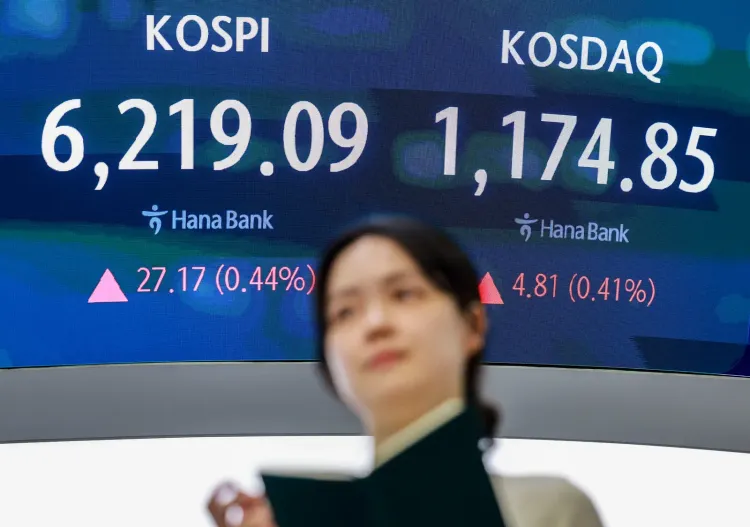
KOSPI traded 48.32 points (0.69%) higher at 7,026.26 as of 11:20 am on 18 August , after opening up 2% .
SK Hynix surged 4.07% and HMM jumped 6.12% , leading sectoral gains.
Retail investors and institutions were net sellers of 804.7 billion won and 219.9 billion won respectively; foreigners bought a net 1.07 trillion won .
Margin debt rose to 30.93 trillion won (US$21.8 billion) by the previous Thursday, up from 27.44 trillion won on 3 August , per KOFIA data.
Hyundai Motor fell 1.77% and Hanwha Aerospace declined 1.55% among notable losers.
Fading US-Iran deal prospects and elevated oil prices capped the broader rally.
South Korea's benchmark Korea Composite Stock Price Index (KOSPI) was trading 48.32 points, or 0.69 percent, higher at 7,026.26 as of 11:20 am IST on Tuesday, 18 August, after opening the session with a sharp 2 percent gain that was quickly eroded by profit-taking. Fading hopes for a diplomatic resolution to the US-Iran conflict weighed on sentiment, capping what could have been a stronger rally.
What Drove the Early Surge
Tech heavyweights powered the initial advance. Market bellwether Samsung Electronics rose 0.46 percent, while chipmaking rival SK Hynix jumped 4.07 percent. Both counters had been under pressure in recent weeks over concerns about the profitability of artificial intelligence (AI)-related investment, and Tuesday's move reflected a partial recovery from that turbulence.
Refiner SK Innovation climbed 3.11 percent and shipping firm HMM surged 6.12 percent, adding to the broad-based early momentum.
Profit-Taking and Global Headwinds
Retail investors and institutions sold a net 804.7 billion won (approximately US$570 million) and 219.9 billion won worth of stocks, respectively, trimming the index's advance. Foreigners, however, were net buyers to the tune of 1.07 trillion won, providing a partial offset.
Overnight cues from Wall Street were mixed-to-negative. The Dow Jones Industrial Average shed 0.51 percent, while the tech-heavy Nasdaq Composite declined 0.32 percent. Elevated oil prices stoked inflation concerns, and prospects for a US-Iran deal dimmed further after US President Donald Trump indicated he was not interested in extending an agreement with Iran that was set to expire.
Notable Decliners
Not all sectors participated in the recovery. Top carmaker Hyundai Motor fell 1.77 percent, and defence giant Hanwha Aerospace declined 1.55 percent. The Korean won traded at 1,411.45 won against the US dollar as of 11:20 am, up 4.15 won from the previous session's close.
Margin Debt Climbs as Retail Confidence Returns
A notable undercurrent in the market is the sharp rise in margin lending. The amount of money borrowed to purchase stocks — known as margin debt — reached 30.93 trillion won (approximately US$21.8 billion) as of the previous Thursday, up from 27.44 trillion won on 3 August, according to data compiled by the Korea Financial Investment Association (KOFIA). The upturn signals renewed retail confidence as the market rebounds from its recent deep trough, though elevated leverage also raises the risk of amplified volatility should sentiment reverse. All eyes now turn to the trajectory of US-Iran negotiations and the next oil price move for direction.
Point of View
Leveraged retail positions could unwind fast, turning today's modest gain into tomorrow's outsized loss.
NationPress
2 Oct 2026
Frequently Asked Questions
Why did the KOSPI trim its early gains on 18 August?
The KOSPI opened 2% higher but gave back most of those gains due to profit-taking by retail investors and institutions, who sold a net 804.7 billion won and 219.9 billion won respectively. Fading hopes for a US-Iran deal and elevated oil prices added to the cautious mood.
Which stocks led gains on the Seoul market on 18 August?
SK Hynix jumped 4.07% and HMM surged 6.12%, while SK Innovation rose 3.11% and Samsung Electronics gained 0.46%. Tech stocks broadly led the advance as they recovered from recent AI-related profitability concerns.
What is the current level of margin debt in South Korea's stock market?
Margin debt — money borrowed to buy stocks — reached 30.93 trillion won (approximately US$21.8 billion) as of the previous Thursday, up sharply from 27.44 trillion won on 3 August, according to Korea Financial Investment Association (KOFIA) data. The rise reflects renewed retail confidence following the market's rebound from a recent trough.
How did US-Iran tensions affect the Seoul market?
Prospects for a US-Iran deal dimmed after President Donald Trump said he was not interested in extending an agreement set to expire, which stoked oil price concerns and inflation fears. This weighed on broader sentiment and limited the KOSPI's gains.
How was the Korean won trading on 18 August?
The Korean won was at 1,411.45 won per US dollar as of 11:20 am on 18 August, up 4.15 won from the previous session's close, reflecting a modest strengthening alongside the equity recovery.