CM Yogi Orders Rs 2 Lakh Aid for UP Victims of Bhind Accident

Synopsis
UP CM Yogi Adityanath has announced Rs 2 lakh compensation for each UP family that lost a member in a Bhind, MP accident, and directed officials to repatriate bodies and ensure medical care for the injured.
Key Takeaways
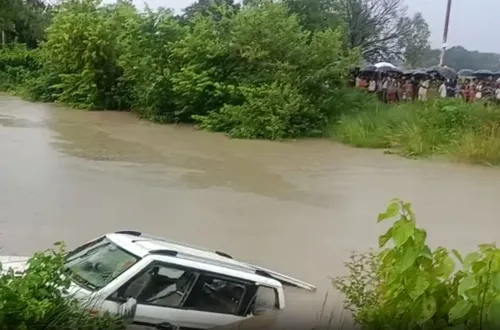
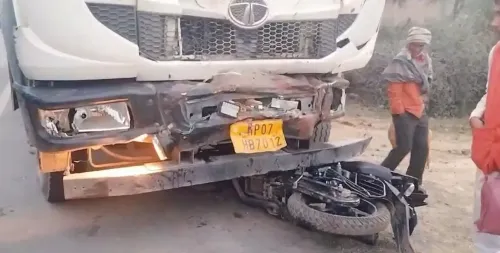
CM Yogi Adityanath responded to a fatal accident in Bhind, Madhya Pradesh on 18 August 2026 .
Each family of a deceased Uttar Pradesh resident will receive Rs 2 lakh in financial assistance.
UP officials have been directed to coordinate with the MP government to repatriate the mortal remains of victims to their home districts.
Injured UP residents are to receive proper medical treatment facilitated by the state.
The CM described the accident as deeply painful and expressed condolences to bereaved families.
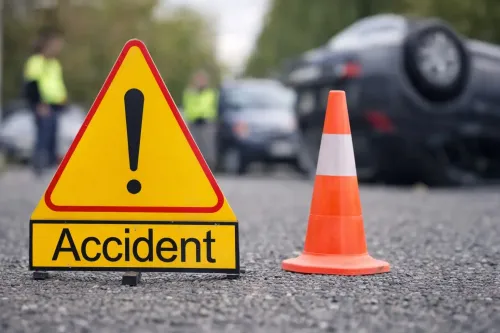
Grief crossed state lines on Tuesday, 18 August 2026, when Uttar Pradesh Chief Minister Yogi Adityanath responded to a deadly accident in Madhya Pradesh's Bhind district that claimed the lives of several UP residents — announcing immediate financial relief and directing officials to coordinate the return of the victims' bodies to their home districts.
In a post on X, CM Yogi called the accident 'atyant peedadayak' (deeply painful) and said the loss of life had left him deeply distressed. He extended his condolences to the bereaved families and outlined concrete steps his government is taking on their behalf.
Rs 2 Lakh per Family — and a Directive to Act Fast
CM Yogi announced that each family of a UP resident killed in the Bhind accident will receive Rs 2 lakh in financial assistance. The relief is not contingent on paperwork delays — the directive has already been issued to the relevant authorities.
Officials have been instructed to coordinate with the Madhya Pradesh government to ensure the mortal remains of deceased UP citizens are transported back to their home districts and handed over to their families. Injured UP residents are to receive proper medical treatment, with the state government facilitating that care.
Bhind Accident: What Happened
The accident occurred in Bhind, a district in northern Madhya Pradesh bordering Uttar Pradesh — a region where cross-state movement for work, trade, and pilgrimage is common. The proximity means that victims of road or other accidents in Bhind frequently include residents from neighbouring UP districts. The specific nature and scale of the accident were not detailed in the CM's post, and no verified figures on the total number of casualties have been confirmed.
A Chief Minister's Reach Beyond His State's Borders
The response underlines a well-established protocol in Indian federalism: when a state's citizens die or are injured in another state, their home-state government steps in to manage the human and administrative aftermath — from body repatriation to compensation. CM Yogi's intervention signals that UP's administration is treating this not as another state's problem, but as an obligation to its own people, wherever they fall.
For families waiting in villages across UP's border districts, the announcement of Rs 2 lakh per deceased and a state-coordinated return of their loved ones' remains is the difference between a bureaucratic ordeal and a measure of dignified closure. The kicker is this: the speed and specificity of the CM's public directive — compensation amount, inter-state coordination, medical care, all in one post — sets a visible accountability trail that officials cannot easily ignore.
Point of View
Multi-pronged response — compensation, body repatriation, medical care — reflects the standard crisis-management playbook of a state government that has faced repeated demands to protect migrant and travelling citizens. The public specificity of the directive (a named amount, named coordinating parties) creates a real-time accountability trail, signalling that the UP administration views inter-state citizen welfare as a political as well as humanitarian obligation. It also reinforces the BJP's broader governance narrative of responsive, 'double-engine' coordination between states — particularly relevant when both UP and MP are governed by the same party. The absence of confirmed casualty figures, however, leaves the full scale of the tragedy — and the adequacy of the response — still to be assessed.
NationPress
18 Aug 2026
Frequently Asked Questions
What happened in Bhind, Madhya Pradesh in August 2026?
A serious accident in Bhind district, MP, resulted in the deaths and injuries of several residents, including citizens from neighbouring Uttar Pradesh. The specific nature of the accident was not detailed in CM Yogi's official statement.
How much compensation will UP give to families of Bhind accident victims?
UP CM Yogi Adityanath has announced Rs 2 lakh in financial assistance for each family of a UP resident who died in the Bhind accident.
Will the bodies of UP victims be brought back from Madhya Pradesh?
Yes. CM Yogi has directed UP officials to coordinate with the Madhya Pradesh government to transport the mortal remains of deceased UP citizens back to their home districts and hand them over to their families.
What is the UP government doing for those injured in the Bhind accident?
CM Yogi has instructed officials to ensure that UP residents injured in the Bhind accident receive proper medical treatment, with the state facilitating that care in coordination with MP authorities.
Why is the UP government involved in an accident that happened in Madhya Pradesh?
Because several victims were UP residents, the UP government has a responsibility to its own citizens regardless of where the accident occurred — covering compensation, body repatriation, and medical support under standard inter-state welfare protocols.