India pushes digital cooperation at BRICS ICT Meet in Pune
Synopsis
India is using its BRICS Chairship to shape the bloc's digital future — from AI and next-gen communications to Digital Public Infrastructure. The Pune meeting signals New Delhi's intent to export its DPI model and co-author emerging tech standards across a grouping that now spans over 40% of the world's population.
Key Takeaways
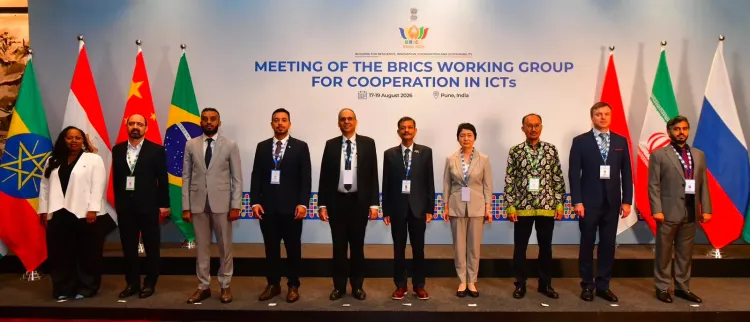
The 7th BRICS ICT Working Group Meeting opened in Pune on 18 August under India's BRICS Chairship.
Amit Agrawal , Secretary, Department of Telecommunications , outlined India's four-pillar ICT track theme: 'Innovate, Cooperate and Transform for a Resilient Future' .
The BRICS Institute of Future Networks reviewed Study Groups on AI , next-generation communications , Industry 4.0 , and electromagnetic field exposure .
Upcoming sessions will focus on Digital Public Infrastructure (DPI) and the Digital BRICS Task Force .
Member-country responses to the Survey Questionnaire were compiled and tabled for discussion under the Chairship's 'Issues Note' priorities.
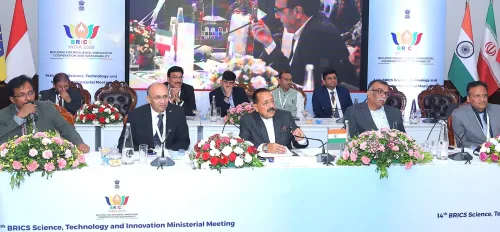
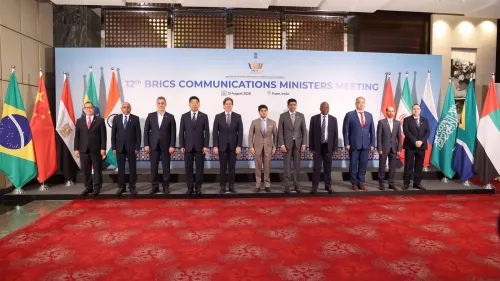
India reaffirmed its commitment to advancing digital cooperation and next-generation network technologies at the 7th BRICS ICT Working Group Meeting in Pune on 18 August, with the three-day gathering convened under New Delhi's BRICS Chairship theme: 'Building for Resilience, Innovation, Cooperation and Sustainability'. The meeting marks a key milestone in India's stewardship of the ICT track this year.
India's ICT Track Agenda
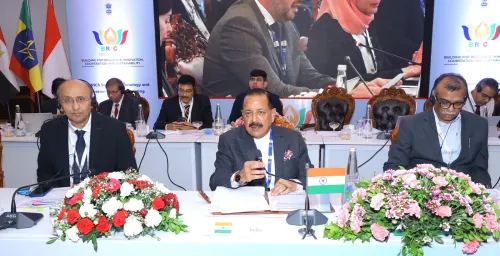
Amit Agrawal, Secretary of the Department of Telecommunications, outlined the four pillars of India's ICT track theme — 'Innovate, Cooperate and Transform (ICT) for a Resilient Future' — at the opening session. Agrawal described the inauguration as the beginning of an important week of engagement, stressing that it represents the continuation of a collaborative process that has been underway for several months.
'Since the commencement of India's Chairship of the BRICS ICT Track earlier this year, we have worked closely together through successive Working Group meetings, thematic webinars, discussions on concept notes and regular exchanges among experts and officials,' Agrawal said. 'These engagements have enabled us to share experiences, build a common understanding of our priorities and collectively shape the agenda before us today.'
Key Discussions and Study Groups
Notably, the Council of the BRICS Institute of Future Networks reviewed the activities of designated national branches during the Pune meeting. Updates were received from Study Groups covering artificial intelligence, next-generation communications, internet applications in Industry 4.0, and electromagnetic field exposure — areas that reflect the bloc's ambition to coordinate on frontier technologies.
The Working Group also took up the 'Issues Note' priorities set out by the Chairship, alongside questions for discussion under each pillar and a compilation of member-country responses to the Survey Questionnaire, according to an official statement.
What Comes Next
Subsequent sessions are scheduled to focus on Digital Public Infrastructure (DPI) and the Meeting of the Digital BRICS Task Force — two areas where India has positioned itself as a model for other emerging economies, given the scale of its own DPI stack including UPI, Aadhaar, and DigiLocker. This comes amid broader global competition to set standards for digital governance and AI regulation, making the BRICS ICT platform increasingly consequential.
The outcome of the Pune deliberations is expected to feed into the broader BRICS summit agenda, with member nations seeking to align on interoperability frameworks and digital resilience standards.
Point of View
Aadhaar, DigiLocker — as a replicable model for the Global South at a moment when Western-led digital governance frameworks face credibility gaps in developing economies. The four-pillar ICT theme is carefully worded to leave room for India to anchor standard-setting on AI and next-gen networks. Whether BRICS members, with their divergent regulatory philosophies, can actually converge on interoperable frameworks remains the central unresolved question.
NationPress
2 Oct 2026
Frequently Asked Questions
What is the 7th BRICS ICT Working Group Meeting?
It is a three-day gathering of BRICS member nations focused on digital cooperation, held in Pune in August 2024 under India's BRICS Chairship. The meeting covers areas including artificial intelligence, next-generation communications, Industry 4.0, and Digital Public Infrastructure.
What is India's theme for the BRICS ICT Track?
India's ICT track theme is 'Innovate, Cooperate and Transform (ICT) for a Resilient Future', built on four pillars outlined by Telecom Secretary Amit Agrawal. It sits within the broader Chairship theme of 'Building for Resilience, Innovation, Cooperation and Sustainability'.
What did the BRICS Institute of Future Networks discuss at Pune?
The Council of the BRICS Institute of Future Networks reviewed the activities of designated national branches and received updates from Study Groups on AI, next-generation communications, internet applications in Industry 4.0, and electromagnetic field exposure.
What are the next steps after the Pune meeting?
Subsequent sessions will focus on Digital Public Infrastructure (DPI) and the Meeting of the Digital BRICS Task Force. Outcomes from the Pune deliberations are expected to inform the broader BRICS summit agenda on digital governance and interoperability.
Why does India's BRICS ICT Chairship matter?
India is using the Chairship to shape digital standards and cooperation frameworks across a bloc that represents a significant share of the global population. With its own large-scale DPI ecosystem — including UPI and Aadhaar — India is positioning itself as a model for digital governance in emerging economies.