BRICS Urbanisation Forum 2026 adopts declaration on inclusive city growth
Synopsis
The 13th BRICS Urbanisation Forum closed in New Delhi with a ministerial declaration on inclusive city growth — and a concrete Indian proposal: a BRICS Urban Research and Knowledge Network to convert forum-level commitments into applied, peer-driven urban cooperation across the bloc.
Key Takeaways
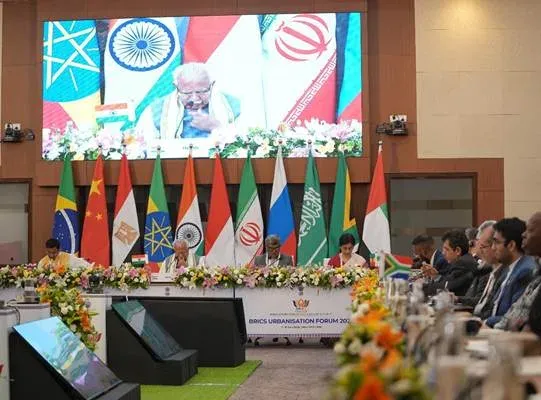
The 13th BRICS Urbanisation Forum concluded on 13 June 2026 at Sushma Swaraj Bhavan, New Delhi .
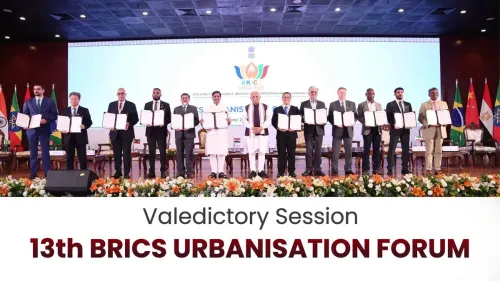
Member nations adopted a ministerial declaration on inclusive, resilient and people-centred urban development.
India proposed the establishment of the BRICS Urban Research and Knowledge Network for applied research and knowledge sharing.
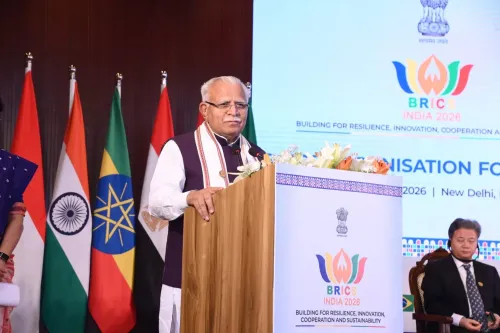
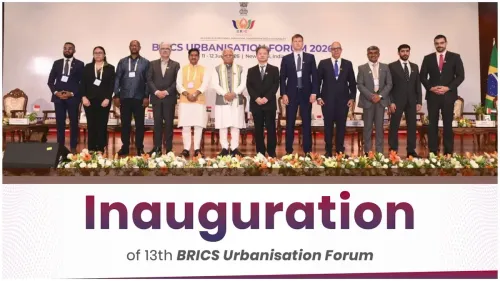
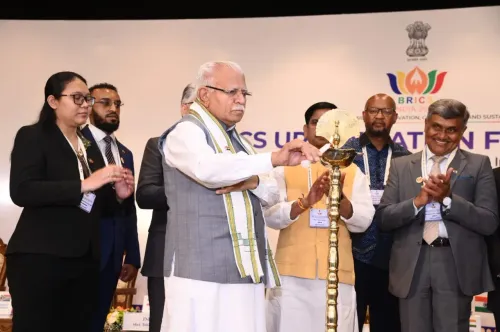
Union Minister Manohar Lal inaugurated the forum and released two publications on urban practices from India and BRICS nations.
Bilateral meetings were held between India–Russia , India–Iran , Iran–China , Iran–Russia , and Russia–UAE on the sidelines.
The forum was hosted under India's BRICS Chairship in 2026 , themed 'Cities for People' .
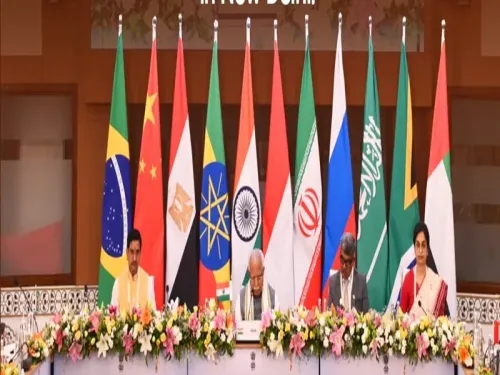
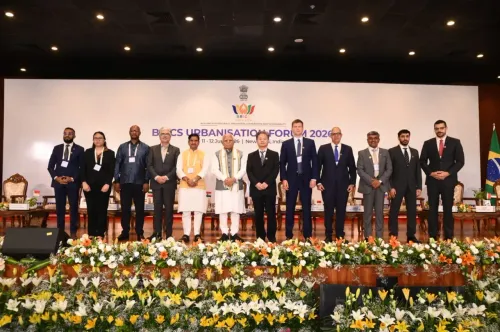
The 13th BRICS Urbanisation Forum concluded on Friday, 13 June 2026, at Sushma Swaraj Bhavan in New Delhi with the adoption of a ministerial declaration committing member nations to inclusive, resilient and people-centred urban development. The two-day forum, hosted under India's BRICS Chairship in 2026, brought together ministers, senior officials and urban practitioners from across BRICS member nations.
What the Declaration Commits To
The ministerial declaration identifies shared priorities across BRICS nations, centring on the creation of cities that offer equitable access to urban services — particularly for marginalised and underserved communities. According to an official statement, the declaration frames inclusive, sustainable, resilient and liveable urban development as collective goals rather than individual national targets.
Member nations also welcomed India's proposal for the establishment of the 'BRICS Urban Research and Knowledge Network', a platform designed to facilitate applied urban research, knowledge sharing and peer-to-peer learning among member states — a mechanism intended to sustain cooperation beyond the forum itself.
India's Role and Key Announcements
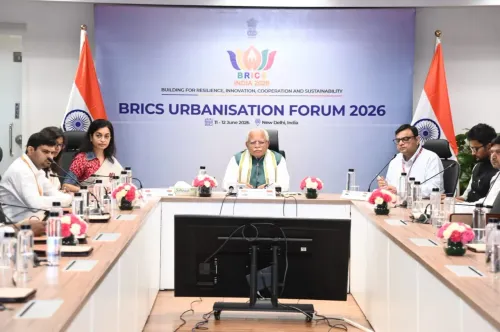
Union Minister of Housing and Urban Affairs Manohar Lal formally inaugurated the forum and chaired the high-level plenary session. In his inaugural address, he positioned inclusive urban development, climate- and disaster-resilient infrastructure, institutional strengthening, and digital innovation as the four anchors of India's urban development approach.
The minister also released 'India's Urban Transformation: Stories of Change', a publication documenting select urban practices from India's states and Union Territories across the forum's four priority areas. A companion volume, 'Cities for People: Urban Stories from BRICS Nations', compiled good practices from across the bloc.
Panel Discussions and Key Themes
The second day featured two high-level panel discussions. The first, 'Building Inclusive Pathways for Resilient and Equitable Cities', moderated by Roopa Mishra, Joint Secretary (International Cooperation) at the Ministry of Housing and Urban Affairs, examined approaches to improving access to housing, mobility, basic services, livelihoods and public spaces for vulnerable communities.
The second panel, 'Strengthening Institutions and Scaling Innovations for People-centred Cities', was moderated by Shalabh Goel, Managing Director of the National Capital Region Transport Corporation. It focused on building municipal capacity, improving inter-governmental coordination, and deploying technology and data to enhance urban service delivery.
Bilateral Meetings and Field Visits
On the sidelines, bilateral meetings were held between India and Russia, India and Iran, Iran and Russia, Iran and China, and Russia and the United Arab Emirates. Delegations also undertook a field visit to select urban interventions in and around New Delhi, including the New Parliament Complex and the India Gate–Kartavya Path precinct.
What Comes Next
The outcomes of the forum are expected to feed into a shared BRICS roadmap for inclusive and well-governed urban futures. The proposed BRICS Urban Research and Knowledge Network, if formalised, would mark a structural step toward institutionalising urban cooperation within the bloc — moving the conversation from declarations to sustained, applied collaboration.
Point of View
But only if member nations commit funding and technical staff rather than goodwill. India's decision to host the forum at Sushma Swaraj Bhavan and showcase the Kartavya Path precinct is also a soft-power signal — framing New Delhi's own urban transformation as a model worth exporting to the Global South.
NationPress
27 Oct 2026
Frequently Asked Questions
What was decided at the BRICS Urbanisation Forum 2026?
The 13th BRICS Urbanisation Forum, held in New Delhi on 12–13 June 2026, concluded with the adoption of a ministerial declaration on inclusive, resilient and people-centred urban development. Member nations also welcomed India's proposal to establish the BRICS Urban Research and Knowledge Network for sustained cooperation.
What is the BRICS Urban Research and Knowledge Network?
It is a platform proposed by India at the forum for applied urban research, knowledge sharing and peer-to-peer learning among BRICS member nations. The network is intended to translate forum-level commitments into ongoing, structured cooperation on urban development challenges.
Who inaugurated the BRICS Urbanisation Forum 2026?
Union Minister of Housing and Urban Affairs Manohar Lal formally inaugurated the forum and chaired its high-level plenary session. He also released two publications: 'India's Urban Transformation: Stories of Change' and 'Cities for People: Urban Stories from BRICS Nations'.
Which countries held bilateral meetings at the forum?
On the sidelines of the forum, bilateral meetings were held between India and Russia, India and Iran, Iran and Russia, Iran and China, and Russia and the United Arab Emirates, reflecting the forum's broader diplomatic dimension beyond its urban agenda.
What was the theme of the 13th BRICS Urbanisation Forum?
The forum was themed 'Cities for People: BRICS Cooperation for Inclusive and Resilient Urban Futures'. It was hosted by India's Ministry of Housing and Urban Affairs under India's BRICS Chairship in 2026.