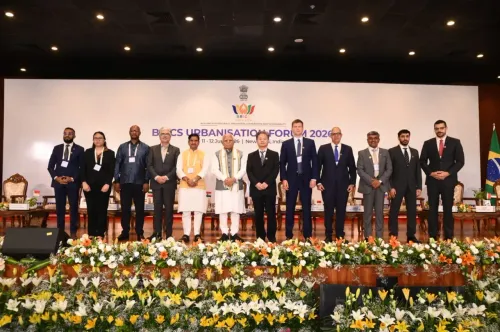
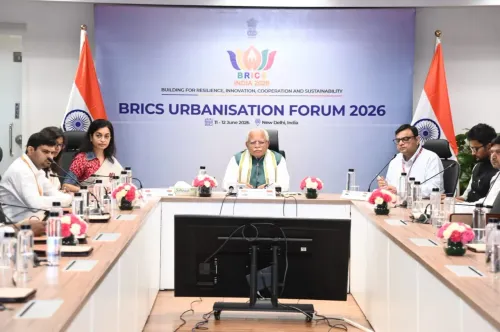
Khattar Inaugurates 13th BRICS Urbanisation Forum in Delhi
Synopsis
Union Minister Manohar Lal Khattar inaugurated the 13th BRICS Urbanisation Forum in New Delhi on June 11, 2026, outlining four priorities — inclusive urban growth, climate-resilient infrastructure, institutional capacity and digital governance — as India steers the BRICS Chairship agenda toward sustainable, citizen-centric cities.
Key Takeaways
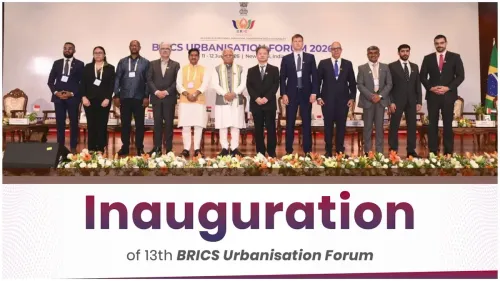
Manohar Lal Khattar inaugurated the 13th BRICS Urbanisation Forum in New Delhi on June 11, 2026 .
Four priorities were outlined: inclusive urban growth, climate-resilient infrastructure, stronger institutional capacity, and digital innovation in governance.
The priorities are framed as aligned with PM Narendra Modi 's 'Humanity First' vision for India's multilateral engagements.
India holds the BRICS Chairship in 2026 , positioning New Delhi as the host for key thematic forums this year.
Domestic programmes including Smart Cities Mission , AMRUT and PMAY form the policy foundation India is projecting at the BRICS level.
The BRICS New Development Bank is a potential financing vehicle for follow-up pilot projects on climate-resilient urban infrastructure.
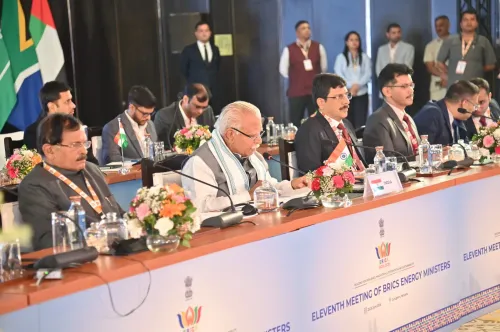
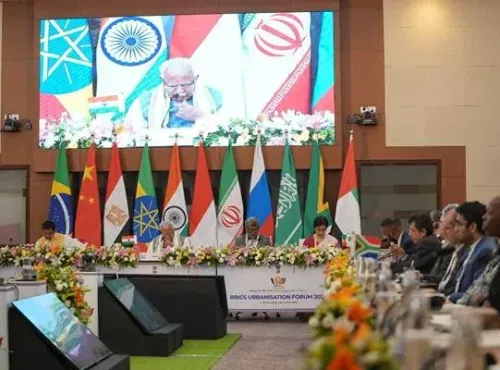
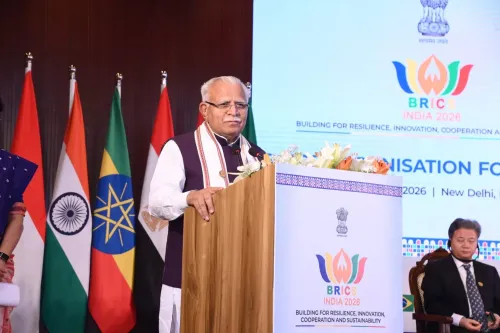
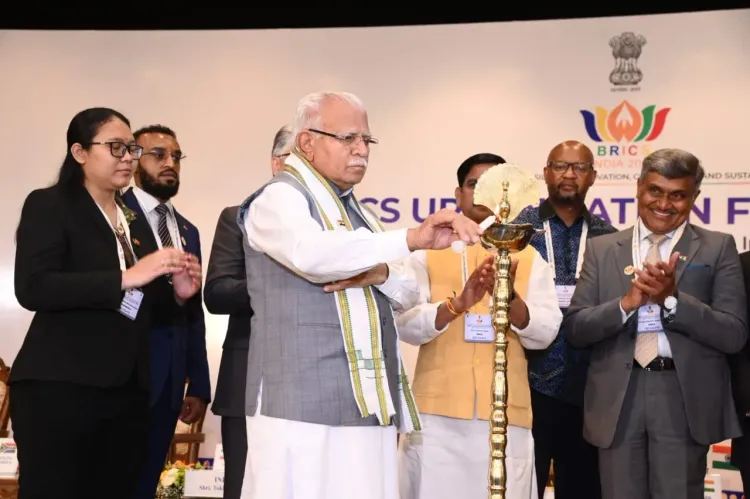
Union Minister of Housing and Urban Affairs Manohar Lal Khattar inaugurated the 13th BRICS Urbanisation Forum in New Delhi on Thursday, June 11, 2026, calling for deeper multilateral cooperation to build cities that are inclusive, resilient and future-ready as BRICS nations continue to drive the global urban transition.
Context
Addressing delegates at the forum, Khattar outlined four key priorities that he said would form a practical framework for urban development across BRICS member nations: inclusive urban growth, climate-resilient infrastructure, stronger institutional capacity, and digital innovation in governance. He framed these priorities as aligned with Prime Minister Narendra Modi's vision of 'Humanity First' — a principle the government has repeatedly invoked in multilateral settings to position India as a development partner rather than merely an economic competitor.
The minister expressed confidence that the forum would 'strengthen BRICS cooperation and advance a shared agenda for inclusive, resilient and sustainable urban development,' directly linking the multilateral platform to measurable outcomes in service delivery and governance execution.
Policy Backdrop
India holds the BRICS Chairship in 2026, making New Delhi the host for a series of thematic forums ahead of any broader summit. The Urbanisation Forum sits within a long-running multilateral effort: BRICS members collectively account for some of the world's fastest urbanisation rates, and the grouping has repeatedly used this platform to align housing, transport and climate-adaptation strategies across member economies.
Domestically, India has built a substantial urban policy portfolio that Khattar's ministry now oversees. The Smart Cities Mission, launched in 2015, targets 100 cities for sustainable infrastructure and digital governance upgrades. Programmes such as AMRUT (Atal Mission for Rejuvenation and Urban Transformation) and PMAY (Pradhan Mantri Awas Yojana) have been consistently cited in India's G20 and BRICS outreach as proof-of-concept models for inclusive urban growth. The emphasis on digital governance at the forum mirrors these ongoing national efforts to integrate technology into city administration.
The BRICS New Development Bank, established in 2014 with a mandate to finance urban infrastructure in member countries, remains a key institutional vehicle through which forum-level commitments can be translated into funded pilot projects, particularly on climate-resilient infrastructure.
Stakeholders and Impact
The forum's primary audience is urban local bodies and municipal administrations across BRICS nations, which bear the front-line responsibility for implementing housing, transport and digital-governance mandates. For India, alignment between national urban schemes and BRICS-level frameworks can unlock co-financing opportunities and facilitate technology transfer, especially in areas such as smart metering, climate-adaptive housing and integrated command-and-control centres.
Civil society groups and urban planners have long argued that the gap between policy ambition and on-the-ground delivery in rapidly growing cities remains the central challenge. Khattar's explicit reference to 'better execution and service delivery' signals an acknowledgement of this gap and suggests the forum's outcomes will be benchmarked against implementation, not just declarations.
What's Next
With India holding the BRICS Chairship, formal outcomes or a joint statement from the Urbanisation Forum are expected to feed into the broader BRICS 2026 summit agenda. Follow-up funding proposals through the New Development Bank for pilot projects on climate-resilient infrastructure could emerge as a tangible deliverable. The four priorities Khattar articulated — inclusive growth, climate resilience, institutional capacity and digital innovation — are likely to anchor India's urban-policy pitch at subsequent BRICS ministerial meetings through the rest of 2026.
Point of View
AMRUT, PMAY — as a multilateral template, reinforcing New Delhi's bid for norm-setting influence among emerging economies. The 'Humanity First' framing is consistent with the Modi government's strategy of anchoring foreign-policy and multilateral engagements in a development-solidarity narrative rather than purely transactional terms. By foregrounding execution and service delivery alongside the usual aspirational language, Khattar is also signalling that India wants BRICS urban cooperation judged by implementation outcomes, not just declarations. Whether the New Development Bank follows through with concrete project financing will be the real test of how much institutional weight these forum-level commitments carry.
NationPress
26 Oct 2026
Frequently Asked Questions
What is the 13th BRICS Urbanisation Forum?
The 13th BRICS Urbanisation Forum is a recurring multilateral platform where BRICS member nations discuss urban policy, housing, infrastructure and governance. The 2026 edition was held in New Delhi on June 11, with India holding the BRICS Chairship.
Who inaugurated the BRICS Urbanisation Forum 2026?
Union Minister of Housing and Urban Affairs Manohar Lal Khattar inaugurated the 13th BRICS Urbanisation Forum in New Delhi on June 11, 2026.
What are the four priorities India outlined at the BRICS Urbanisation Forum?
India outlined four priorities: inclusive urban growth, climate-resilient infrastructure, stronger institutional capacity, and digital innovation in governance for better service delivery.
What is India's BRICS Chairship 2026?
India holds the BRICS Chairship in 2026, making it the host nation for a series of thematic forums and ministerial meetings leading up to the broader BRICS summit. The Urbanisation Forum is one such thematic event under this chairship.
How does the BRICS New Development Bank relate to urban development?
The BRICS New Development Bank, established in 2014, has a mandate to finance urban infrastructure projects in member countries. It is a key institutional vehicle for translating forum-level commitments into funded pilot projects, including on climate-resilient infrastructure.