Putin talks Ukraine peace with Finland, Norway leaders in rare call
Synopsis
Vladimir Putin held a rare direct call with Finland's President and Norway's PM on Tuesday, with both Nordic leaders — acting in consultation with Kyiv — pressing for talks ahead of UAE meetings. On the same day, a localised humanitarian ceasefire took effect near Oleshky, offering a narrow but concrete sign that limited agreements between Moscow and Kyiv remain possible even as broader peace remains elusive.
Key Takeaways
Vladimir Putin spoke by telephone with Finnish President Alexander Stubb and Norwegian PM Jonas Gahr Store on 27 October 2026 about settling the Ukraine conflict.
The Kremlin stated peace is possible only with 'full and unconditional consideration' of Russia's interests — a position at odds with Kyiv's stated terms.
The call was initiated by Stubb and Store, reportedly in consultation with Ukraine , and linked to upcoming meetings in the United Arab Emirates .
A humanitarian ceasefire around Oleshky took effect at 3 a.m.
Kyiv time on Tuesday, covering aid deliveries and civilian evacuations in the Kherson direction .
Russia's Defence Ministry confirmed a 'silence regime' from 4 a.m.
Moscow time to facilitate the humanitarian operation.
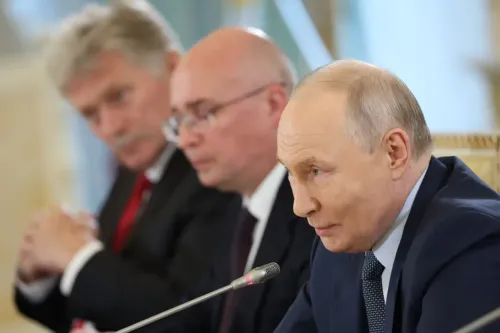
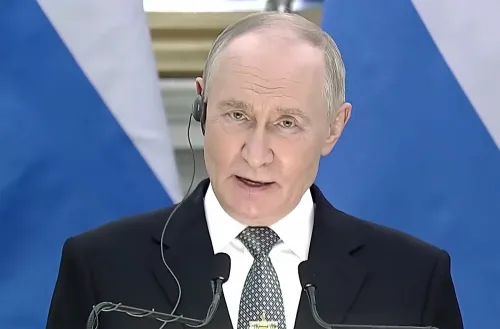
Russian President Vladimir Putin discussed the settlement of the Ukraine conflict with Finnish President Alexander Stubb and Norwegian Prime Minister Jonas Gahr Store in a telephone call on Tuesday, 27 October 2026, the Kremlin confirmed. The conversation, initiated by Stubb and Store, marked a rare direct engagement between Putin and Nordic leaders on the war's resolution.
What the Kremlin Said
Moscow's official statement underlined that 'the achievement of a just long-term peace is possible only with full and unconditional consideration of the legitimate interests of the Russian Federation.' Putin reportedly drew attention to what he described as the 'confrontational policy' of the European Union and NATO countries, which, in Moscow's framing, had prolonged the conflict. Issues of security and stability in the Baltic Sea and Northern Europe were also discussed, the Kremlin noted.
Nordic Leaders Push for Direct Negotiations
Stubb characterised the discussion as 'frank and substantive,' stating that both Finland and Norway — each sharing proximity to Russia — would be directly affected by the war's outcome, as would broader European security. 'Ending the war requires direct discussions,' Stubb said, according to a press release from the Finnish President's Office. The call was reportedly held in consultation with Ukraine and was aimed at conveying messages to Putin ahead of upcoming meetings in the United Arab Emirates. Stubb and Store also stressed the importance of complying with international maritime law and the principle of freedom of navigation in the Baltic Sea.
Localised Ceasefire Around Oleshky
Separately, a humanitarian ceasefire in the area around Oleshky took effect on Tuesday, according to Ukrainian Parliament Commissioner for Human Rights Dmytro Lubinets, who announced the development on social media. The ceasefire began at 3 a.m. Kyiv time (0100 GMT) as part of a previously agreed humanitarian mission, with Lubinets stating that the Ukrainian side was honouring its commitments. Russia's Defence Ministry confirmed that Russian forces had ceased fire in the Kherson direction, introducing a 'silence regime' from 4 a.m. Moscow time (0100 GMT) to facilitate a humanitarian operation near Oleshky. The arrangement had been agreed between both sides the preceding Friday, covering humanitarian aid deliveries and civilian evacuations.
Context and Broader Significance
The call is notable for several reasons. Finland joined NATO in April 2023, making it a direct alliance neighbour of Russia — a geopolitical shift Moscow has consistently opposed. Norway, a founding NATO member, holds strategic Arctic and Baltic significance. Both governments engaging Putin directly, reportedly with Kyiv's knowledge, signals that Nordic nations are seeking a role in any future diplomatic framework. This comes amid persistent stalemate on the front lines and growing European debate over the terms of any eventual settlement. Notably, Moscow's insistence on 'full and unconditional' consideration of Russian interests stands in sharp contrast to Kyiv's stated red lines, including territorial integrity. How these positions narrow — if at all — ahead of the UAE meetings will be closely watched.
What Comes Next
Attention now turns to the upcoming meetings in the United Arab Emirates, which may provide a platform for further back-channel diplomacy. The humanitarian ceasefire near Oleshky, while limited in scope, could be a test case for broader confidence-building measures. Whether Tuesday's call translates into any substantive shift in negotiating positions remains uncertain.
Point of View
Yet the fact that Putin took the call at all suggests back-channel signalling is ongoing. Finland and Norway engaging directly, with Ukraine's apparent knowledge, is a significant procedural development: it indicates Kyiv is willing to use trusted third parties rather than insisting on exclusivity. The Oleshky ceasefire is too narrow to be called momentum, but localized agreements, repeated and held, are historically how broader ceasefires begin. The real test will come in the UAE — whether those meetings produce any convergence on terms, or simply confirm that the two sides' opening positions remain irreconcilable.
NationPress
28 Oct 2026
Frequently Asked Questions
What did Putin discuss with Finland and Norway's leaders on 27 October?
Putin held a telephone call with Finnish President Alexander Stubb and Norwegian Prime Minister Jonas Gahr Store on 27 October to discuss settling the Ukraine conflict. The Kremlin said Moscow's position is that a just peace requires full consideration of Russia's interests.
Who initiated the call and what was its purpose?
The call was initiated by Stubb and Store, according to the Finnish President's Office. It was reportedly held in consultation with Ukraine and aimed at conveying messages to Putin ahead of upcoming meetings in the United Arab Emirates.
What is the Oleshky humanitarian ceasefire?
A localised humanitarian ceasefire around Oleshky, in the Kherson direction, took effect at 3 a.m. Kyiv time on 27 October 2026. It was agreed between Russia and Ukraine the previous Friday to facilitate humanitarian aid deliveries and civilian evacuations in the area.
Why are Finland and Norway significant in Ukraine diplomacy?
Finland joined NATO in April 2023 and shares a long border with Russia, making it a direct alliance neighbour. Norway is a founding NATO member with strategic Arctic and Baltic significance. Both countries have a direct stake in European security outcomes and carry credibility with both Western allies and, to a degree, Moscow.
What happens next in Ukraine peace efforts?
Diplomatic attention is focused on upcoming meetings in the United Arab Emirates, which may provide a platform for further negotiations. The Oleshky ceasefire, if held, could serve as a confidence-building model, though substantive gaps between Russian and Ukrainian negotiating positions remain wide.