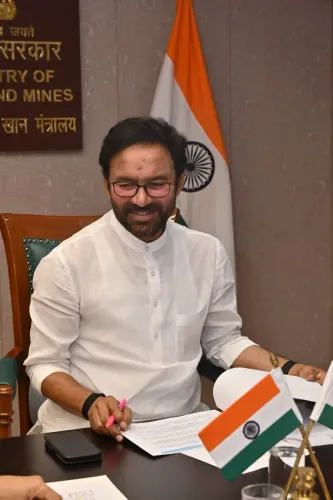
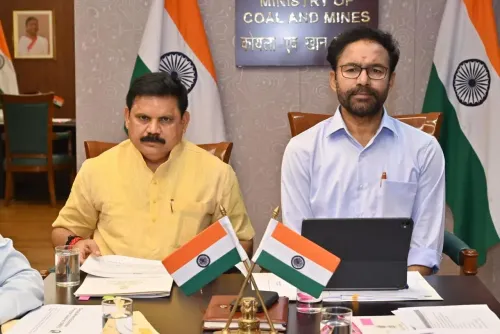
Kishan Reddy meets FIMI at IMARC 2026, backs mineral self-reliance
Synopsis
Union Coal and Mines Minister G. Kishan Reddy met FIMI President Prabodh Mohanty and Secretary General Pramod Kumar Tyagi at IMARC 2026 in Sydney, discussing India's mineral sector progress and the Atmanirbhar Bharat self-reliance agenda.
Key Takeaways
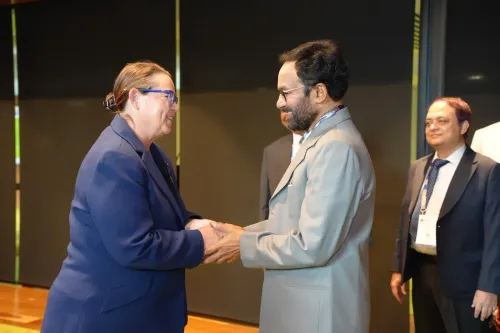
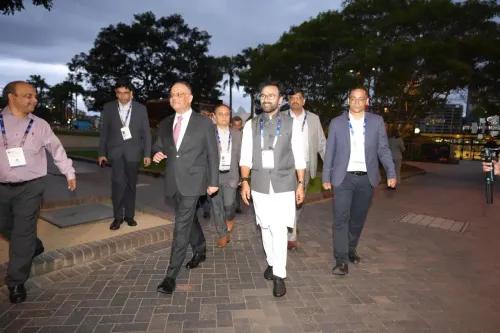
Kishan Reddy , Union Coal and Mines Minister, met FIMI leadership on the sidelines of IMARC 2026 in Sydney on October 27, 2026 .
Talks covered developments in India's mineral industry and FIMI's commitment to advancing Atmanirbhar Bharat through mineral development.
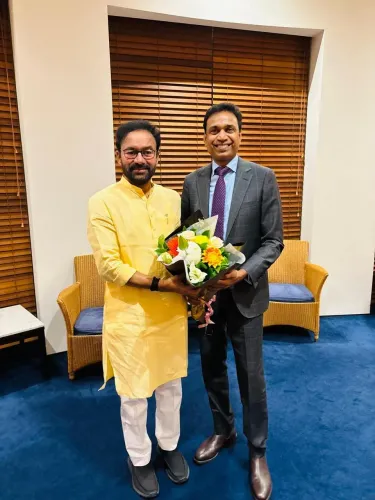
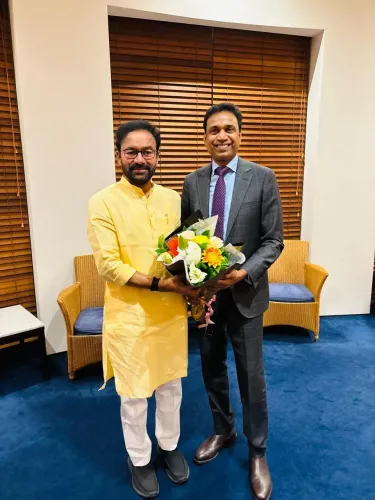
Prabodh Mohanty (President) and Pramod Kumar Tyagi (Secretary General) represented FIMI at the meeting.
India's mining reform milestones include the National Mineral Policy 2019 and the MMDR Amendment Act 2021 , both aimed at boosting domestic output.
India's presence at IMARC reflects strategic interest in technology and investment partnerships, particularly with Australia , for critical minerals.
Next key watch-points include fresh mineral block auctions and updates to critical minerals policy from the Ministry of Mines.
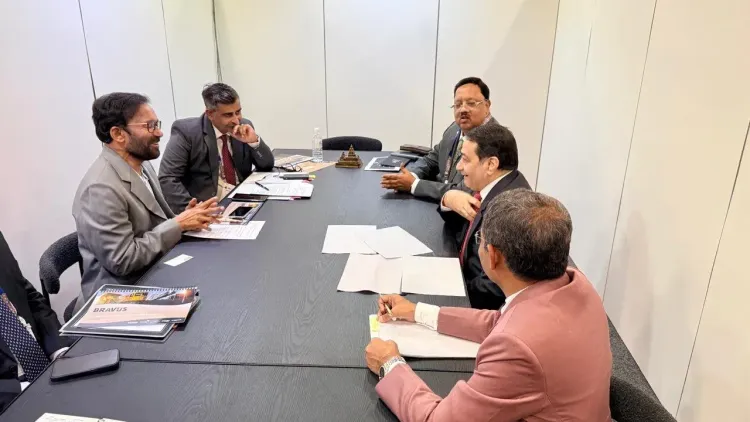
On the sidelines of the International Mining and Resources Conference (IMARC) 2026 in Sydney, Australia, Union Coal and Mines Minister G. Kishan Reddy sat down with the leadership of the Federation of Indian Mineral Industries (FIMI) — a meeting that placed India's mineral ambitions squarely on a global stage.
Who was in the room and what they discussed
Minister Reddy met Shri Pramod Kumar Tyagi, Secretary General of FIMI, and Shri Prabodh Mohanty, President of FIMI, on Tuesday, October 27, 2026. The conversation centred on developments across India's mineral industry and FIMI's role in pushing forward the Atmanirbhar Bharat vision — building domestic mineral value chains, strengthening local capabilities, and anchoring growth on sustainability.
FIMI is the principal industry body representing mining and mineral companies in India, and its engagement with the Ministry of Mines has been a consistent thread through successive rounds of sector reform. Having both its president and secretary general at the table with the minister signals the federation's intent to keep private-sector priorities closely aligned with government policy at an international forum.
Why IMARC and why now
IMARC is one of the world's leading mining and resources conferences, drawing governments, investors and operators from across the globe. India's presence — through the minister and an industry body — is no coincidence. Australia is a key partner of interest for technology, investment and critical mineral sourcing, and the conference provides a rare venue where policy intent and private capital meet in the same room.
India's mining reform trajectory has been building for years. The National Mineral Policy 2019 pushed sustainable mining and technology adoption. The Mines and Minerals (Development and Regulation) Amendment Act 2021 accelerated block auctions and streamlined exploration. And since 2020, the Atmanirbhar Bharat initiative has made domestic mineral value chains — particularly for critical minerals — a strategic priority for manufacturing and energy security.
India's Atmanirbhar mineral push on a global platform
The broader pattern is clear: India is not just reforming its mining sector at home, it is taking that story international. Engaging Australian mining forums reflects a calculated interest in partnerships that bring in both capital and technical know-how — particularly for critical minerals that underpin everything from electric vehicles to defence electronics.
The next milestones to watch are the upcoming round of mineral block auctions and any fresh policy signals from the Ministry of Mines on critical minerals — the sector where India's import dependence remains highest and the strategic stakes are sharpest.
India walked into IMARC 2026 not as a spectator. It walked in as a country with a reform record, a self-reliance mandate, and a minister ready to make the case on the world stage.
Point of View
Consistent with the government's strategy of pairing domestic reform with global partnership-building. The meeting also signals that the industry-government relationship on mineral policy — sharpened through the MMDR Amendment Act 2021 — continues to be actively maintained at senior levels. For FIMI, the optics of direct ministerial access at IMARC strengthen its hand in future policy advocacy on critical mineral frameworks and auction conditions. The Australia angle is quietly significant: as India deepens its critical minerals diplomacy, forums like IMARC are becoming as important as formal bilateral talks.
NationPress
28 Oct 2026
Frequently Asked Questions
What is IMARC 2026 and where is it held?
IMARC — the International Mining and Resources Conference — is one of the world's leading mining industry gatherings, held in Sydney, Australia. It brings together governments, investors and operators to discuss global mining developments, making it a key venue for India to showcase its sector reforms.
Who is G. Kishan Reddy and what ministry does he head?
G. Kishan Reddy is the Union Minister of Coal and Mines in the Indian government and also serves as the BJP's Telangana state president. He oversees coal and mineral policy, including reforms under the Mines and Minerals (Development and Regulation) Act.
What is FIMI and what does it do?
The Federation of Indian Mineral Industries (FIMI) is the apex industry body representing mining and mineral companies in India. It advocates for policy reforms, sustainable mining practices and sector growth before the government and regulatory bodies.
What is Atmanirbhar Bharat's connection to the mineral sector?
Launched in 2020, Atmanirbhar Bharat aims to build Indian self-reliance by strengthening domestic manufacturing and reducing import dependence. In the mineral sector, this means developing domestic value chains for critical minerals — especially those used in electric vehicles, electronics and defence — rather than relying on imports.
What mining reforms has India introduced in recent years?
India introduced the National Mineral Policy in 2019, emphasising sustainable mining and private sector participation. The Mines and Minerals (Development and Regulation) Amendment Act 2021 further accelerated block auctions, streamlined exploration and improved ease of doing business for mining companies.