CM Vishnu Deo Sai Offers Prayers at Raipur Karam Puja Festival
Synopsis
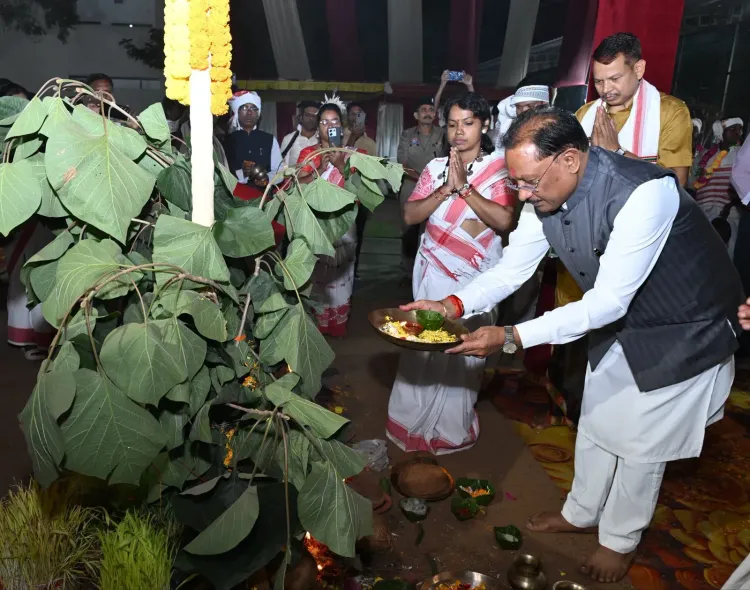
Chhattisgarh Chief Minister Vishnu Deo Sai participated in the state-level Karam Puja Parv Mahotsav in Raipur on 28 October 2026, performing traditional rituals around the sacred Karam tree and praying for the prosperity of all state residents.
Key Takeaways
CM Vishnu Deo Sai participated in the Karam Puja Parv Mahotsav held in Raipur on 28 October 2026 .
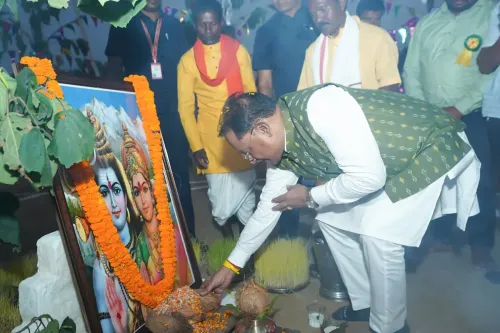
He performed the prescribed ritual worship — vidhi-vidhan — of the Karam Dar (sacred Karam branch).
He prayed for the happiness, prosperity, and well-being of all residents of Chhattisgarh .
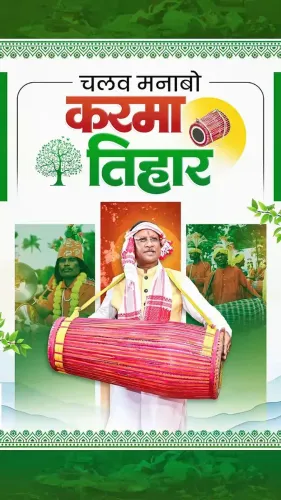
Karam Puja is a major tribal festival involving worship, Karma dance , and folk songs, observed across Chhattisgarh and neighbouring states.
Chhattisgarh governments have supported tribal festival observance since the state's formation in 2000 as part of cultural preservation efforts.
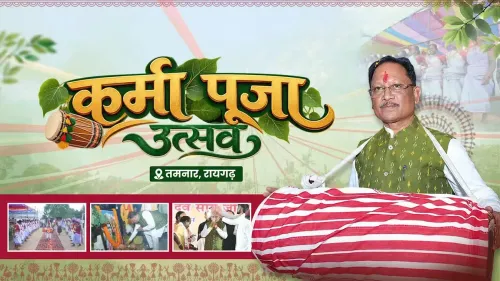
Roots, rhythm, and ritual converged in Raipur as Chhattisgarh Chief Minister Vishnu Deo Sai participated in the Karam Puja Parv Mahotsav on Wednesday, 28 October 2026, performing the traditional worship of the sacred Karam tree and praying for the happiness and prosperity of every resident of the state.
Sharing the moment on X, CM Sai wrote: 'Karam Dar ki pooja, Karma nritya aur lokgeeton ke madhyam se Karma hamein hamari jadon, paramparaon aur samudayik jeevan se jodta hai' — 'Through the worship of the Karam branch, Karma dance, and folk songs, Karam connects us to our roots, traditions, and community life.' He added that at the state-level festival held in Raipur, he offered prayers with full ritual observance and wished well-being and prosperity for all people of the state.
The Karam Tree at the Centre of a Living Tradition
The Karam Puja is one of the most significant tribal festivals of Chhattisgarh and neighbouring states, revolving around the worship of a branch from the Karam tree — believed to be a symbol of youth, fertility, and communal bonding. Devotees bring the Karam Dar (Karam branch) home or to a community gathering, perform rituals, sing traditional folk songs, and perform the graceful Karma dance through the night. The festival is not merely ceremonial — it is an oral archive of tribal identity, passed from generation to generation through song and movement.
Chhattisgarh, carved out as a separate state in 2000, carries one of India's most diverse tribal populations. Since its formation, successive state governments have institutionalised support for tribal festivals like Karam as part of a broader cultural preservation mandate — recognising that for millions of residents, these celebrations are not folklore museum pieces but living community practices.
A State Government Reaffirming Its Cultural Compact
CM Sai, who took office in December 2023, is himself from a tribal community — a fact that lends a personal layer to his participation in such events. His presence at a state-organised Karam festival in the capital signals continuity in the government's engagement with indigenous culture, beyond routine policy announcements.
States with large tribal populations — Chhattisgarh, Jharkhand, Odisha, and others — have increasingly used official participation in indigenous festivals as both a cultural statement and a bridge between government and community. No new policy initiative was announced at the Raipur event, but the symbolism of the Chief Minister personally performing the vidhi-vidhan (prescribed rituals) carries weight in communities where such gestures of recognition matter deeply.
When a state's highest office plants itself beside a Karam branch in prayer, it tells tribal communities that their calendar, their gods, and their songs are part of the mainstream — not footnotes to it.
Point of View
Where electoral and cultural signals often overlap. As a Chief Minister from a tribal background, his presence at state-organised indigenous festivals reinforces a BJP-led government's bid to deepen its connection with tribal communities, a constituency that proved decisive in Chhattisgarh's 2023 assembly elections. The institutionalisation of such festivals since the state's founding in 2000 has gradually transformed them from community observances into occasions for political affirmation — a dynamic that transcends party lines. Whether this cultural engagement translates into durable policy outcomes for tribal welfare remains the sharper question.
NationPress
28 Oct 2026
Frequently Asked Questions
What is Karam Puja and why is it celebrated in Chhattisgarh?
Karam Puja is a major tribal festival in Chhattisgarh and neighbouring states centred on the worship of a branch from the sacred Karam tree, symbolising youth, fertility, and community bonds. It is marked by ritual prayers, traditional Karma dance, and folk songs and serves as a key expression of tribal cultural identity.
What did CM Vishnu Deo Sai do at the Karam Puja Mahotsav in Raipur?
Chief Minister Vishnu Deo Sai performed the prescribed ritual worship of the Karam branch at the state-level Karam Puja Parv Mahotsav in Raipur on 28 October 2026 and prayed for the happiness and prosperity of all residents of Chhattisgarh.
Where was the Karam Puja Parv Mahotsav 2026 held?
The state-level Karam Puja Parv Mahotsav was held in Raipur, the capital of Chhattisgarh.
When did Vishnu Deo Sai become Chief Minister of Chhattisgarh?
Vishnu Deo Sai took office as Chief Minister of Chhattisgarh in December 2023 after the BJP's victory in the state assembly elections.
Does the Chhattisgarh government officially support tribal festivals like Karam Puja?
Yes. Since Chhattisgarh was formed as a separate state in 2000, successive state governments have supported the annual observance of tribal festivals including Karam Puja as part of efforts to preserve the state's indigenous cultural heritage.