CM Fadnavis secures directive for 5 TMC Ukai Dam water share
Synopsis
At the 15th Narmada Control Authority review meeting in Mumbai on 27 October 2026, Union Minister C. R. Patil directed that Maharashtra's 5 TMC share be released from Gujarat's Ukai Dam, following a strong push by CM Devendra Fadnavis backed by an earlier Amit Shah-chaired commitment.
Key Takeaways
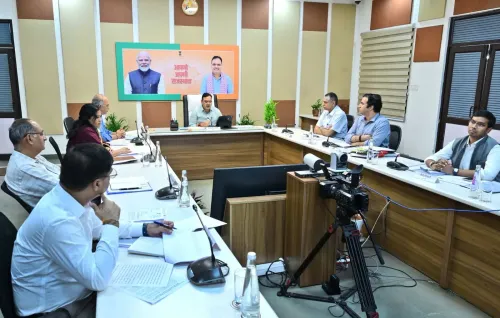
The 15th Review Committee Meeting of the Narmada Control Authority was held online on 27 October 2026 at Mantralaya, Mumbai.
Patil chaired the meeting; CM Devendra Fadnavis presented Maharashtra's case for its water share.
The Narmada Water Disputes Tribunal Award grants Maharashtra 10 TMC in total — 5 TMC via canal and 5 TMC from Ukai Dam in Gujarat.
Patil issued an immediate directive to release Maharashtra's 5 TMC from Ukai Dam in line with the tribunal award.
A prior meeting chaired by Union Home Minister Amit Shah had already affirmed Maharashtra's entitlement to this water under tribunal regulations.
Chief ministers of Gujarat, Madhya Pradesh, and Rajasthan — Bhupendra Patel, Dr.
Mohan Yadav, and Bhajanlal Sharma — attended the session.
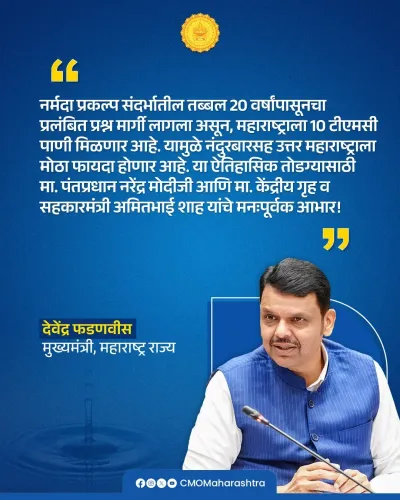
Maharashtra's decades-old claim to water from Ukai Dam in Gujarat moved a decisive step forward on Tuesday, 27 October 2026, when the 15th Review Committee Meeting of the Narmada Control Authority directed that the state's allocated 5 TMC (thousand million cubic feet) be released — a breakthrough the Chief Minister's Office of Maharashtra confirmed in an official post on X.
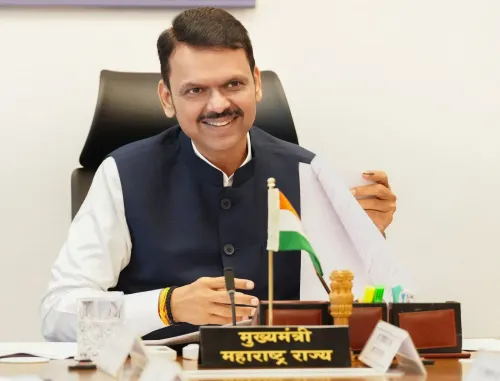
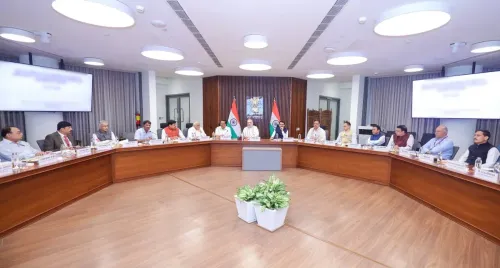
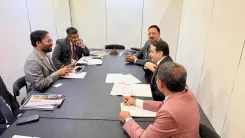
The online meeting, chaired by Union Minister C. R. Patil and attended by Chief Minister Devendra Fadnavis at Mantralaya, Mumbai, brought together the chief ministers of the four riparian states — Gujarat's Bhupendra Patel, Madhya Pradesh's Dr. Mohan Yadav, and Rajasthan's Bhajanlal Sharma — along with senior officials of the Narmada Control Authority.
How Maharashtra's 10 TMC award splits — and where the dispute lay
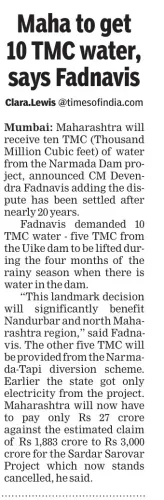
The Narmada Water Disputes Tribunal Award granted Maharashtra a total allocation of 10 TMC from the Narmada basin. Of this, 5 TMC was to arrive via a diversion canal, while the remaining 5 TMC was to be released from Ukai Dam — a reservoir sitting in Gujarat. It is this second tranche that has remained a persistent pressure point in inter-state water diplomacy.
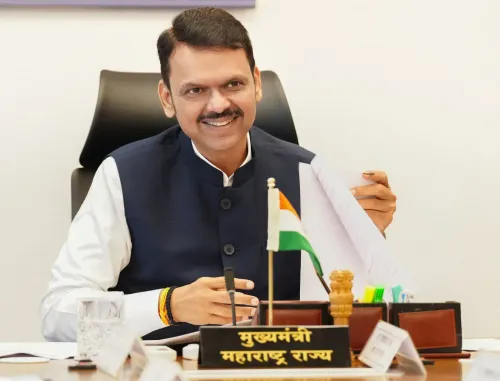
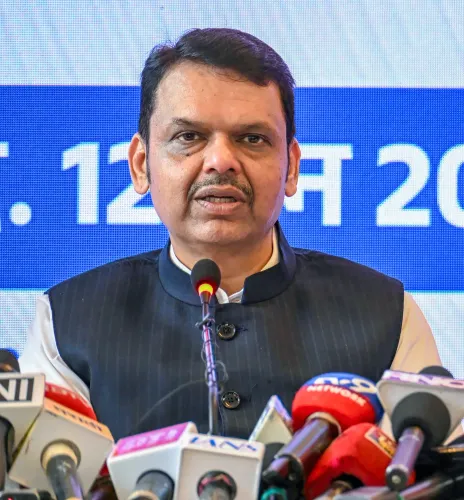
CM Fadnavis placed Maharashtra's case squarely before the committee, noting that an earlier meeting involving Union Home and Cooperation Minister Amit Shah had already affirmed that water must be provided to Maharashtra in line with tribunal regulations. With that precedent on the table, he pressed both Union Minister C. R. Patil and Gujarat CM Bhupendra Patel for formal approval of the release.
C. R. Patil's immediate directive and what it means
The response was swift. C. R. Patil issued an on-the-spot directive instructing that Maharashtra receive its rightful share from Ukai Dam — a signal that the central government is treating the matter not as a future agenda item but as an obligation requiring immediate compliance. This is notable: tribunal awards carry legal force, yet their physical execution has historically lagged behind judicial intent in Indian inter-state river disputes.
For Maharashtra's farmers — particularly in the northern and Nandurbar districts that depend on Narmada-linked irrigation infrastructure — the directive represents tangible relief if it translates into actual water release in the coming season.
The Narmada Control Authority's role in keeping states accountable
The Narmada Control Authority is the apex central body mandated to supervise the implementation of the tribunal's award across Maharashtra, Gujarat, Madhya Pradesh, and Rajasthan. Its periodic review meetings — this being the 15th in the series — serve as the formal arena where compliance is tracked and disputes are aired. That all four chief ministers were present at this session underscores how seriously the riparian states now treat these forums.
The next critical test is execution: whether the physical release of 5 TMC from Ukai Dam follows the committee's directive on schedule — or whether it joins the long list of water promises that outlive the meeting that made them.
Point of View
Reducing inter-state friction. Watch whether the physical release from Ukai Dam follows swiftly — if it does, it validates the Narmada Control Authority's review mechanism as genuinely functional; if it stalls, it exposes the gap between directive and delivery that has long plagued India's inter-state water architecture.
NationPress
28 Oct 2026
Frequently Asked Questions
What is Maharashtra's share of Narmada water?
The Narmada Water Disputes Tribunal has awarded Maharashtra a total of 10 TMC of Narmada water — 5 TMC via a diversion canal and 5 TMC to be released from Ukai Dam in Gujarat.
What happened at the 15th Narmada Control Authority meeting?
At the 15th Review Committee Meeting held online on 27 October 2026 , Union Minister C. R. Patil directed that Maharashtra's 5 TMC share be released from Ukai Dam, following a presentation by CM Devendra Fadnavis.
What is the Narmada Control Authority?
The Narmada Control Authority is the central apex body that oversees the implementation of the Narmada Water Disputes Tribunal award among the four riparian states: Maharashtra, Gujarat, Madhya Pradesh, and Rajasthan.
What is Ukai Dam and why is it relevant to Maharashtra?
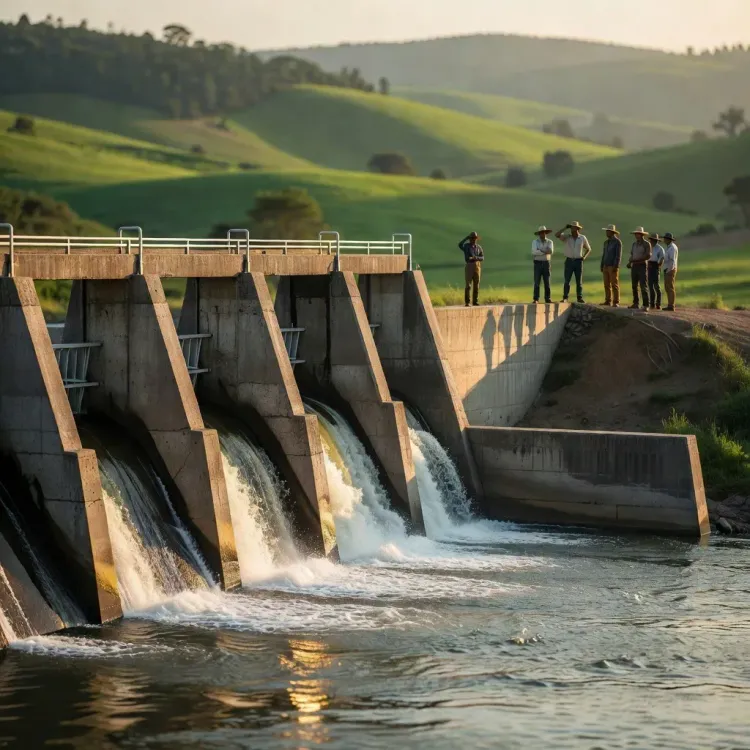
Ukai Dam is a major reservoir located in Gujarat on the Tapi river system. Under the Narmada Tribunal award, it is the designated source for releasing 5 TMC of water to Maharashtra as part of the state's allocated share.
What role did Amit Shah play in Maharashtra's Narmada water issue?
Union Home Minister Amit Shah presided over an earlier meeting in which it was decided that water should be released to Maharashtra in accordance with tribunal regulations — a decision CM Fadnavis cited at the 27 October 2026 review meeting to strengthen Maharashtra's case.