CM Fadnavis: Maharashtra to Get 10 TMC Narmada Water
Synopsis
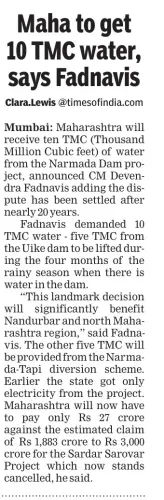
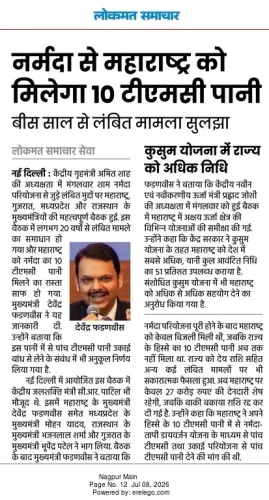
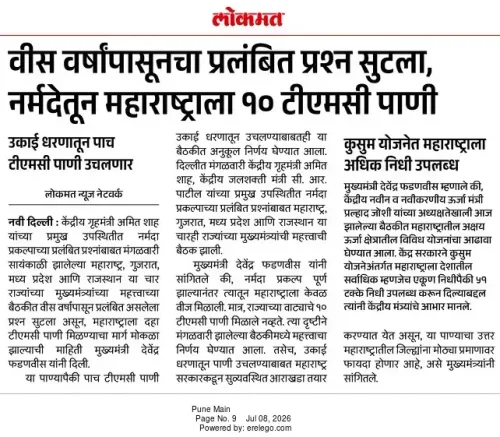
Maharashtra Chief Minister Devendra Fadnavis announced on 7 July 2026 that a 20-year Narmada water dispute is resolved. Maharashtra will receive 10 TMC of water via Gujarat's Narmada-Tapi Diversion and Ukai Project, benefiting Nandurbar and North Maharashtra, with the state's financial liability cut to just ₹27 crore.
Key Takeaways
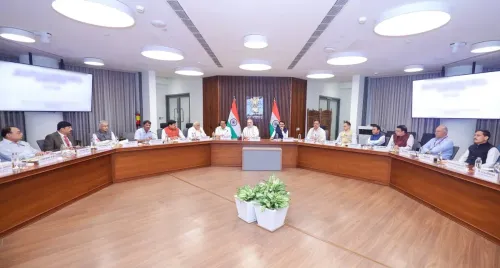
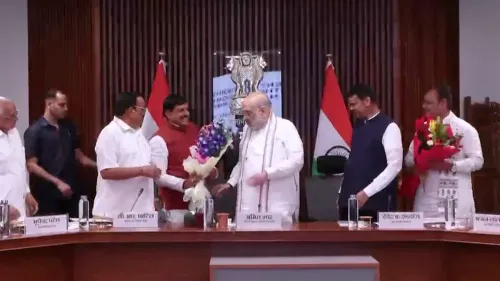
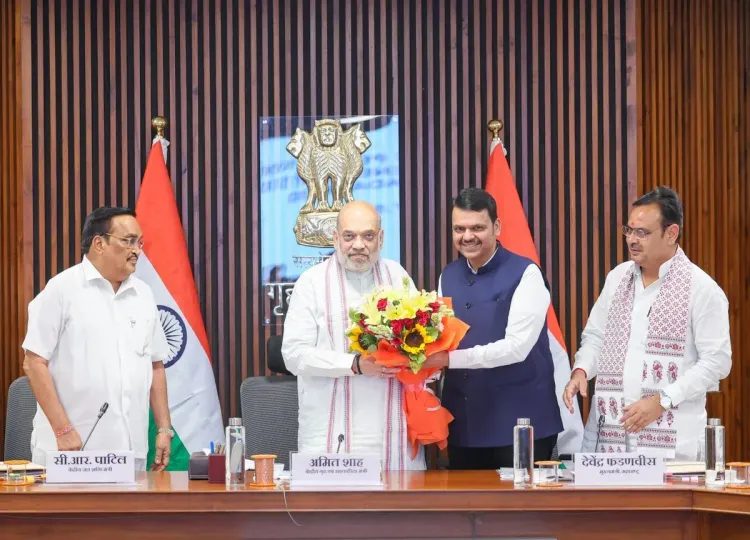
A 20-year inter-state water dispute over the Narmada river has been resolved at a New Delhi meeting chaired by Union Home Minister Amit Shah on 7 July 2026 .
Maharashtra will receive 10 TMC of Narmada water: 5 TMC via the Narmada–Tapi Diversion and 5 TMC from the Ukai Project , both provided by Gujarat .
The agreement is expected to bring direct irrigation and drinking water benefits to Nandurbar district and the North Maharashtra region.
Maharashtra's financial liability under the settlement has been reduced to ₹27 crore , with all remaining inter-state dues declared resolved.
The meeting included the Chief Ministers of Madhya Pradesh , Gujarat , and Rajasthan , reflecting a four-state consensus brokered at the Union level.
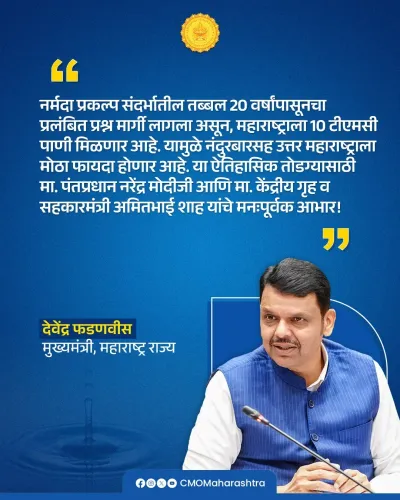
Prime Minister Narendra Modi was credited by CM Fadnavis for enabling the agreement through 'constant support and visionary leadership.'
Maharashtra Chief Minister Devendra Fadnavis announced on Tuesday, 7 July 2026 that a decades-old inter-state water dispute has been resolved, with Maharashtra set to receive 10 TMC (thousand million cubic feet) of Narmada river water following a high-level meeting in New Delhi chaired by Union Home and Cooperation Minister Amit Shah.
Context
Fadnavis described the development as the resolution of a 20-year-old issue, stating that a 'historic consensus was reached on the Narmada project.' The meeting was attended by Madhya Pradesh Chief Minister Dr. Mohan Yadav, Gujarat Chief Minister Bhupendra Patel, Rajasthan Chief Minister Bhajanlal Sharma, and Union Minister C. R. Patil.
Under the agreement, Gujarat has agreed to provide 5 TMC through the Narmada–Tapi Diversion and an additional 5 TMC from the Ukai Project, together fulfilling Maharashtra's full 10 TMC entitlement. Fadnavis credited Prime Minister Narendra Modi for his 'constant support and visionary leadership' in making the consensus possible.
Policy Backdrop
The Narmada Water Disputes Tribunal, which gave its award in 1979, apportioned river waters among the riparian states and established the Narmada Control Authority to oversee allocations and resolve disputes. Subsequent decisions by the Authority in the 1990s and 2000s addressed project clearances, cost-sharing, and limited additional allocations to Maharashtra, but several inter-state financial disputes remained unresolved for years.
Central facilitation of inter-state river water agreements has been a recurring mechanism across major basins — including the Krishna, Cauvery, and Godavari — where the Union Home Ministry has convened concerned state chief ministers to achieve consensus on pending dues and diversions. Tuesday's meeting follows that established format.
Stakeholders and Impact
The allocation is expected to deliver significant irrigation and drinking water benefits to Nandurbar district and the broader North Maharashtra region, areas that have historically faced acute water scarcity. Fadnavis stated the decision 'will significantly benefit Nandurbar and North Maharashtra.'
Critically, the agreement also addresses Maharashtra's financial exposure: the Chief Minister announced that the state's financial liability has been reduced to just ₹27 crore, with 'all remaining dues and long-pending inter-state disputes' declared resolved. This reduction in financial burden is significant for a state managing large infrastructure commitments across multiple sectors.
What's Next
The practical realisation of the allocation will depend on a revised water release schedule being notified by the Narmada Control Authority and the commencement of construction works on the Narmada–Tapi link canal. These are the key milestones that will determine when water actually reaches Nandurbar and surrounding districts.
The inter-state consensus, brokered at the level of the Union Home Minister with four state chief ministers present, gives the agreement significant political weight. Whether it translates swiftly into on-ground infrastructure will be closely watched by farmers and communities in North Maharashtra who have long awaited relief.
Point of View
The announcement is a tangible governance win — reducing financial liability to ₹27 crore while securing a 10 TMC allocation strengthens his standing in water-stressed North Maharashtra ahead of any future electoral cycle. The four-state, Union-mediated format mirrors the Centre's broader approach to river-water disputes across the Krishna and Cauvery basins, suggesting a deliberate institutional strategy of top-down consensus-building. The real test, however, will be how quickly the Narmada Control Authority formalises the revised release schedule and whether canal infrastructure can be commissioned within a credible timeframe.
NationPress
6 Oct 2026
Frequently Asked Questions
How much Narmada water will Maharashtra get under the new agreement?
Maharashtra will receive 10 TMC of Narmada water in total — 5 TMC through the Narmada–Tapi Diversion and 5 TMC from the Ukai Project , both supplied by Gujarat , as announced by CM Fadnavis on 7 July 2026.
What is the Narmada–Tapi Diversion project?
The Narmada–Tapi Diversion is a canal linkage scheme that transfers surplus Narmada water from Gujarat into the Tapi river basin , which flows through North Maharashtra. Under the new agreement, 5 TMC of this diverted water will be allocated to Maharashtra.
Which districts in Maharashtra will benefit from the Narmada water deal?
Nandurbar district and the broader North Maharashtra region are the primary beneficiaries identified by CM Fadnavis, areas that have historically faced significant water scarcity for both irrigation and drinking water needs.
What was Maharashtra's financial liability in the Narmada dispute and how has it changed?
CM Fadnavis stated that following the July 2026 agreement, Maharashtra's financial liability has been reduced to just ₹27 crore , with all remaining inter-state dues and long-pending disputes declared resolved.
Who chaired the meeting that resolved the Narmada water dispute?
Union Home and Cooperation Minister Amit Shah chaired the high-level meeting in New Delhi on 7 July 2026 , attended by the Chief Ministers of Maharashtra, Madhya Pradesh, Gujarat, and Rajasthan, along with Union Minister C. R. Patil.