CM Fadnavis Hails Historic Narmada Water Deal for Maharashtra
Synopsis
The Chief Minister's Office of Maharashtra declared a historic resolution to the Narmada Project water dispute after nearly 20 years, clearing 10 TMC of water for North Maharashtra. Nandurbar and surrounding drought-prone districts are set to benefit, with PM Modi and Home Minister Shah credited for central facilitation.
Key Takeaways
The Chief Minister's Office of Maharashtra announced on 7 July 2026 that the Narmada Project water dispute has been resolved after nearly 20 years .
Maharashtra has been cleared to draw 10 TMC of additional Narmada water for its northern districts.
Nandurbar , a tribal-majority and drought-prone district, is among the primary beneficiaries alongside the broader North Maharashtra farming belt.
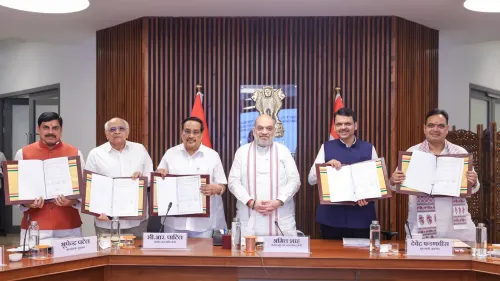
The resolution involved coordination with Prime Minister Narendra Modi and Union Home Minister Amit Shah , as indicated by the official post.
The Narmada Water Disputes Tribunal's 1979 award had fixed state shares, but operationalising Maharashtra's allocation remained incomplete for decades.
The Narmada Control Authority will need to formalise release schedules and canal infrastructure must be assessed before water reaches farms.
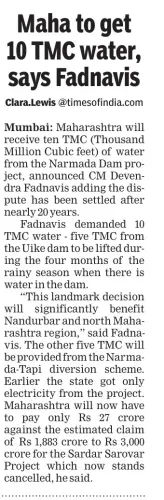
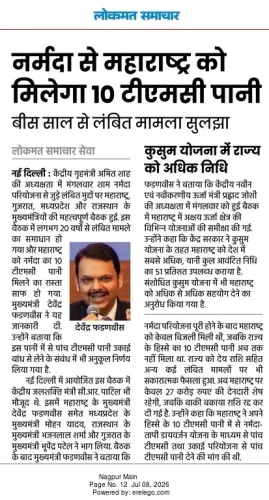
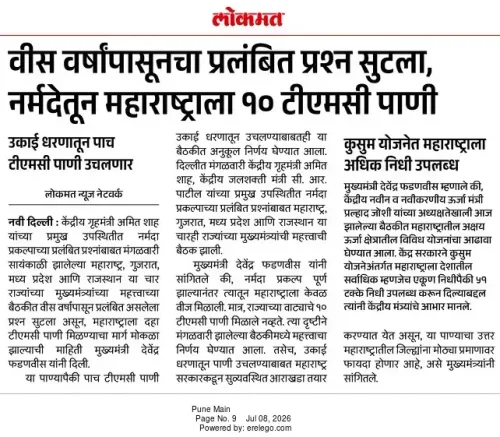
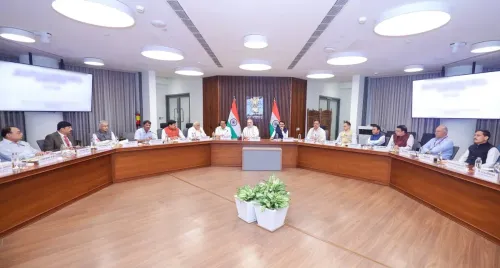
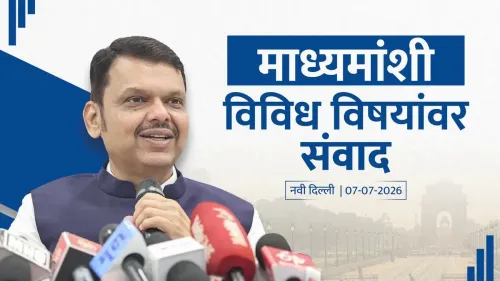
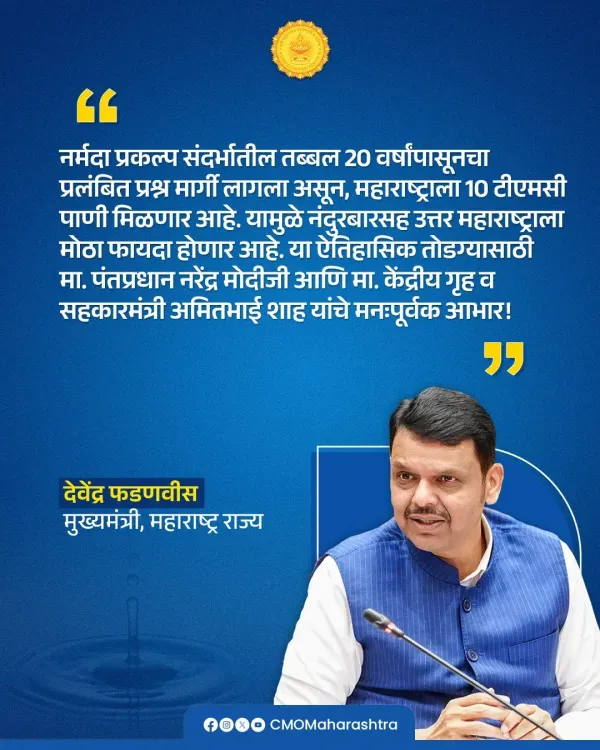
The Chief Minister's Office of Maharashtra announced on Tuesday, 7 July 2026 that a long-pending dispute over the Narmada Project has been resolved after nearly 20 years, clearing the way for Maharashtra to draw 10 TMC (thousand million cubic feet) of additional water from the Narmada basin — a development the office described as historic for farmers across North Maharashtra, particularly in Nandurbar district.
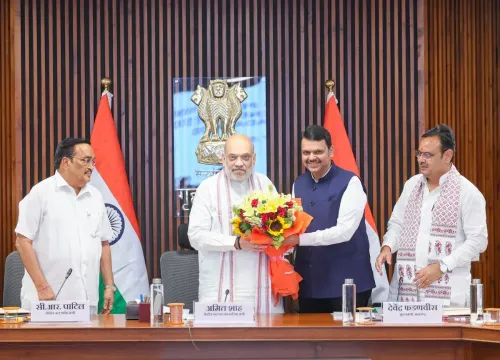
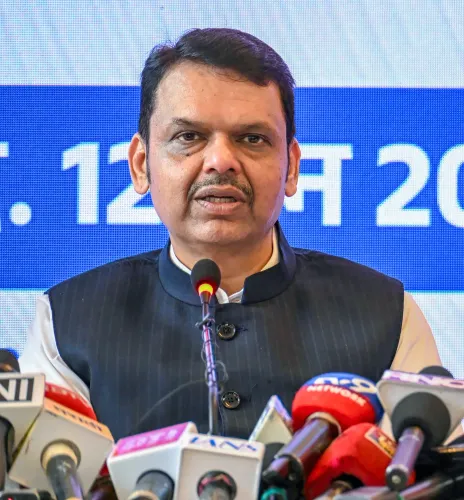
The post, attributed to the Chief Minister's Office and tagging Prime Minister Narendra Modi and Union Home Minister Amit Shah alongside Chief Minister Devendra Fadnavis, declared: 'नर्मदा प्रकल्पाच्या पाण्या प्रश्नावर तब्बल 20 वर्षांनी ऐतिहासिक तोडगा' — 'A historic resolution to the Narmada Project water question after a full 20 years.' The announcement signals that a multi-decade inter-state water-sharing impasse has been broken at the highest levels of the central and state governments.
Context
The Narmada Project, anchored by the Sardar Sarovar Dam, is a multipurpose river valley initiative shared among Gujarat, Maharashtra, Madhya Pradesh, and Rajasthan. The Narmada Water Disputes Tribunal fixed volumetric shares for each riparian state in its 1979 final award, but operationalising those allocations — particularly Maharashtra's entitlement in its northern reaches — has remained contested and administratively incomplete for decades.
The Sardar Sarovar Dam reached its full height in 2017 following central clearances that enabled reservoir filling and the extension of canal networks. Yet Maharashtra's ability to draw its full share in the northern belt bordering Gujarat and Madhya Pradesh continued to face procedural and infrastructure hurdles well beyond that milestone.
Policy Backdrop
Interstate river-water allocations in India have historically moved through two distinct phases: a tribunal award phase and a protracted operationalisation phase that often requires active central facilitation. Maharashtra has long sought to activate its Narmada entitlement to extend irrigation coverage in its water-stressed northern districts. The 10 TMC figure cited in the announcement represents a significant quantum that, if channelled effectively, could feed lift-irrigation schemes and canal networks already planned under the state's irrigation department.
Chief Minister Devendra Fadnavis, a BJP leader with a sustained focus on state infrastructure and irrigation, has previously flagged the Narmada water question as a priority. The tagging of PM Modi — who as former Chief Minister of Gujarat was closely associated with accelerating the Sardar Sarovar project — and Home Minister Amit Shah in the post suggests the resolution involved active coordination at the central level.
Stakeholders and Impact
Nandurbar, a tribal-majority district in northern Maharashtra, stands to be among the primary beneficiaries. The district is drought-prone and heavily dependent on Narmada waters for agriculture. Farmers across the broader North Maharashtra belt — spanning districts bordering both Gujarat and Madhya Pradesh — have waited years for reliable access to the river's irrigation potential.
An additional 10 TMC of water, if released and distributed through functional canal infrastructure, could expand the irrigated area available for both kharif and rabi cropping cycles, reducing dependence on erratic rainfall in one of the state's most agriculturally vulnerable regions. The announcement is expected to have direct political resonance in constituencies across Nandurbar and neighbouring districts.
What's Next
The key near-term question is implementation: the Narmada Control Authority, the inter-state body that governs water releases and accounting from the Sardar Sarovar system, will need to formalise release schedules and measurement protocols for Maharashtra's additional 10 TMC draw. Canal infrastructure linking the river system to North Maharashtra's agricultural land will also need to be assessed for readiness ahead of the 2026-27 rabi season.
State irrigation officials and district administrations in Nandurbar and adjoining areas are likely to be tasked with preparing distribution plans. The resolution, if translated into water on the ground before the next sowing season, would mark a tangible shift for farming communities that have long been promised — but rarely delivered — the full benefit of India's most ambitious inter-state river project.
Point of View
The Maharashtra CMO is signalling that credit for the breakthrough runs upward to Delhi — a pattern consistent with how BJP-governed states have publicly acknowledged central facilitation on contentious inter-state issues. For CM Fadnavis, delivering water to drought-prone Nandurbar — a tribal district with significant political weight — ahead of any future electoral cycle is strategically significant. The real test, however, lies not in the announcement but in whether canal infrastructure and Narmada Control Authority scheduling can convert a policy resolution into water that actually reaches farmers' fields.
NationPress
6 Oct 2026
Frequently Asked Questions
What is the Narmada Project water dispute that Maharashtra resolved?
The dispute concerns Maharashtra's right to draw its allocated share of Narmada river water under the 1979 Narmada Water Disputes Tribunal award. Despite the dam reaching full height in 2017, Maharashtra's ability to operationalise its share in northern districts had remained stalled for nearly 20 years due to procedural and infrastructure hurdles.
How much water will Maharashtra get from the Narmada Project resolution?
According to the Chief Minister's Office announcement on 7 July 2026, Maharashtra has been cleared to draw 10 TMC (thousand million cubic feet) of water from the Narmada basin as part of this resolution.
Which districts in Maharashtra will benefit from the Narmada water deal?
Nandurbar district and the broader North Maharashtra region are the primary beneficiaries. Nandurbar is a tribal-majority, drought-prone district that borders Gujarat and Madhya Pradesh and has long depended on Narmada waters for agriculture.
What role did PM Modi and Amit Shah play in the Narmada water resolution?
The Chief Minister's Office of Maharashtra tagged Prime Minister Narendra Modi and Union Home Minister Amit Shah in its announcement, indicating that the resolution involved active coordination and facilitation at the central government level.
When will farmers actually receive Narmada water after this announcement?
No specific date has been confirmed. The Narmada Control Authority must formalise release schedules and measurement protocols, and canal infrastructure in North Maharashtra needs to be assessed for readiness. The 2026-27 rabi season is the earliest realistic window being watched.