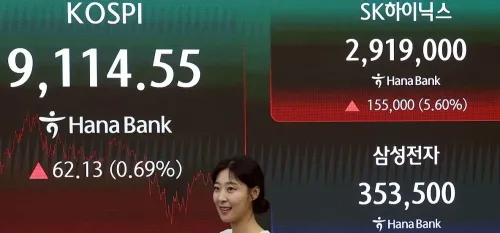
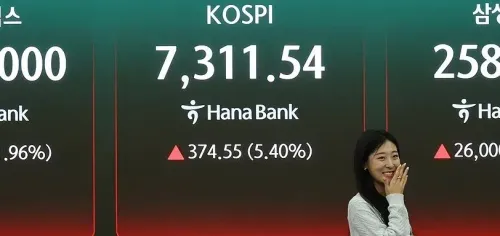
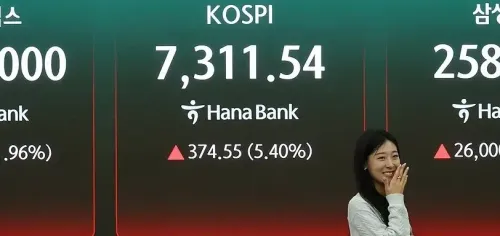
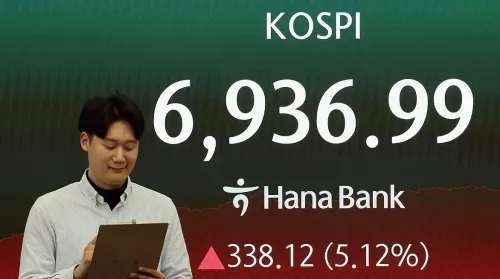
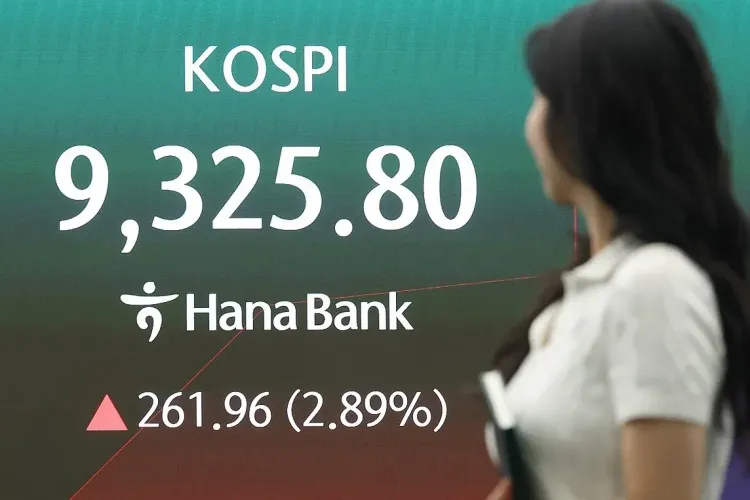
KOSPI surges 200 points past 9,264 on chip rally after historic 9,000 break
Synopsis
The KOSPI's breach of the historic 9,000 mark wasn't just a milestone — it was a chip-driven signal. Intel's Apple deal, announced by President Trump, sent semiconductor stocks surging from Wall Street to Seoul, with SK Hynix jumping nearly 6% in a single session. Meanwhile, BOK data quietly flagged a structural shift: South Korea's US surplus is shrinking, and its deficits with China and Japan are growing.
Key Takeaways
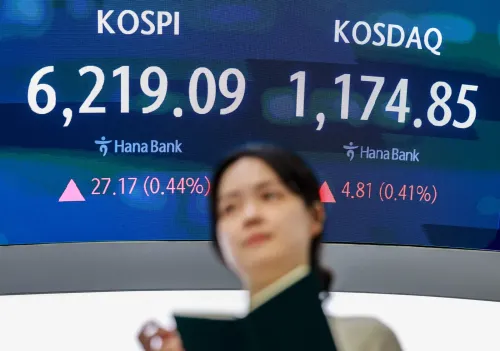
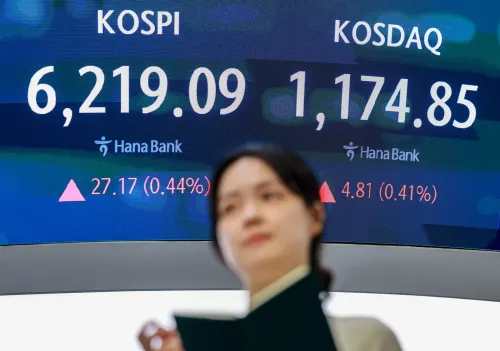
KOSPI rose 200.67 points (2.21%) to 9,264.51 as of 11:20 am on 19 June , a day after breaching the historic 9,000 level.
SK Hynix surged 5.92% and Samsung Electronics gained 1.38% , leading the chip-driven rally.
The catalyst: President Donald Trump announced an Intel-Apple chip design and manufacturing deal in the United States .
The Korean won weakened to 1,538.1 per US dollar , down 11 won on the session.
South Korea's current account surplus with the US fell for the first time in six years to US$111.42 billion , per Bank of Korea data.
Deficits with China and Japan widened to US$25.32 billion and US$20.3 billion respectively.
South Korea's benchmark Korea Composite Stock Price Index (KOSPI) surged 200.67 points, or 2.21%, to 9,264.51 as of 11:20 am local time on Friday, 19 June, extending a historic run after the index breached the 9,000 milestone for the first time in the previous session. The rally was powered by semiconductor and technology heavyweights, tracking overnight gains on Wall Street.
The Chip Catalyst
The primary trigger was a surge in US semiconductor stocks, led by Intel, after President Donald Trump announced that the company had agreed to a deal with Apple to design and manufacture chips in the United States. The announcement lifted chipmaker sentiment globally, with the momentum spilling directly into Seoul trading.
In Seoul, market heavyweight Samsung Electronics rose 1.38%, while its key rival SK Hynix jumped 5.92% — one of the sharpest single-session gains among large-caps. The KOSPI briefly peaked above 9,300 intraday before easing slightly.
Broader Market Moves
The rally was not limited to chips. Top carmaker Hyundai Motor moved up 1.33%, while battery manufacturer LG Energy Solution climbed 1.88%. The lone notable decliner among blue-chips was nuclear power plant builder Doosan Enerbility, which retreated 2.41%, bucking the broader uptrend.
The Korean won, however, weakened against the greenback, quoted at 1,538.1 won per US dollar as of 11:23 am — down 11 won from the previous session — reflecting some currency pressure even as equities surged.
South Korea's Current Account Shift
Separately, data released by the Bank of Korea (BOK) on Friday showed that South Korea's current account surplus with the United States fell for the first time in six years in the previous calendar year, totalling US$111.42 billion, down from an all-time high of US$116.97 billion in 2024.
The decline was driven by a widening services account deficit with the US, which expanded to US$14.62 billion from US$8.88 billion a year earlier, according to the central bank. The goods account surplus, by contrast, rose 2.53% on-year to US$111.98 billion, supported by strong exports of semiconductors and smartphones.
Trade Deficits with China and Japan Widen
The BOK data also revealed that South Korea's current account deficit with China widened 7.97% on-year to US$25.32 billion, while its deficit with Japan expanded 13% to US$20.3 billion. On the positive side, the surplus with the European Union rose 9.9% to US$24.42 billion, and the surplus with Southeast Asian nations climbed 13.24% to US$71.84 billion. The deficit with the Middle East narrowed 26.8% to US$49.75 billion.
With the KOSPI now firmly above the 9,000 mark and chip sentiment buoyed by US policy signals, analysts will be watching whether the index can sustain momentum above 9,300 in the sessions ahead.
Point of View
000 is a headline, but the Intel-Apple deal is the real story — it signals that US chip policy under Trump is actively reshaping global semiconductor supply chains, and Seoul is a direct beneficiary. SK Hynix's near-6% single-session jump suggests the market is pricing in more than just sentiment. The BOK current account data, however, adds a cautionary layer: South Korea's services deficit with the US is ballooning, and its goods-account strength rests heavily on chips and smartphones — precisely the sectors most exposed to US policy whiplash. The widening deficits with China and Japan point to structural trade pressures that a stock rally cannot paper over for long.
NationPress
20 Sept 2026
Frequently Asked Questions
Why did the KOSPI surge on 19 June?
The KOSPI rose 200.67 points to 9,264.51 on 19 June, driven by a global chip rally after President Donald Trump announced an Intel-Apple deal to design and manufacture chips in the United States. The index had already crossed the historic 9,000 mark in the previous session.
Which South Korean stocks gained the most?
SK Hynix was the standout, jumping 5.92% in the session. Samsung Electronics rose 1.38%, Hyundai Motor gained 1.33%, and LG Energy Solution climbed 1.88%. Doosan Enerbility was a notable decliner, falling 2.41%.
What did the Bank of Korea current account data show?
Bank of Korea data released on 19 June showed South Korea's current account surplus with the US fell for the first time in six years to US$111.42 billion, down from a record US$116.97 billion in 2024. A widening services account deficit with the US was the primary drag.
How did the Korean won perform during the rally?
Despite the equity surge, the Korean won weakened, trading at 1,538.1 won per US dollar as of 11:23 am — down 11 won from the previous session — reflecting some currency pressure amid the broader risk-on move.
How is South Korea's trade balance shifting with China and Japan?
South Korea's current account deficit with China widened 7.97% on-year to US$25.32 billion, while its deficit with Japan grew 13% to US$20.3 billion, according to Bank of Korea data. Both trends point to growing import dependence or weakening export competitiveness in those corridors.