KOSPI drops 2% as tech stocks slide on US-Iran deal uncertainty
Synopsis
South Korea's KOSPI shed over 2% in Monday morning trade as US-Iran ceasefire jitters and surging oil prices hammered tech heavyweights — Samsung Electronics lost 5.15% and SK Square sank 7.62%. With chip giants' long-term investment plans still pending announcement and the Strait of Hormuz under renewed threat, the market has more than one reason to stay on edge.
Key Takeaways
KOSPI fell 170.78 points (2.03%) to 8,240.43 as of 11:20 am on 29 June .
Samsung Electronics dropped 5.15% and SK hynix fell 3.29% , leading tech losses.
SK Square sank 7.62% ; LG Energy Solution bucked the trend, surging 14.18% .
Fresh US-Iran strikes over the weekend raised concerns over Strait of Hormuz shipping and energy supplies.
South Korea's finance ministry plans to issue 160 billion won in retail government bonds next month, part of a 2 trillion won annual target.
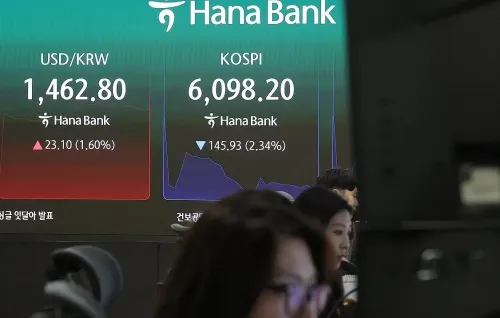
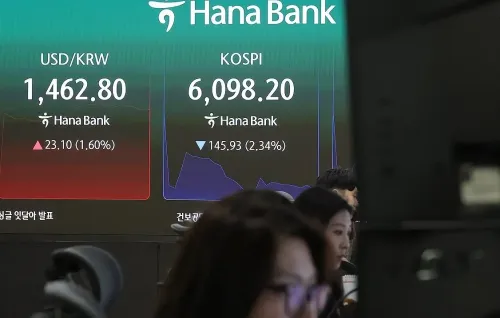
The Korean won traded at 1,542.65 per US dollar during the session.
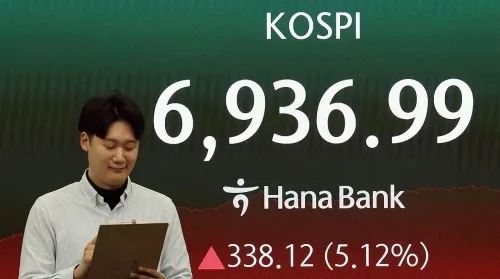
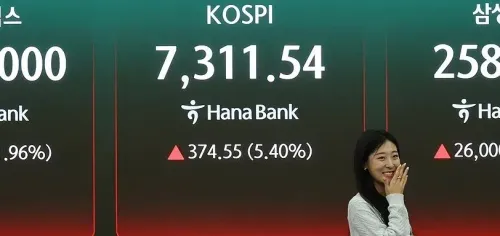
South Korea's benchmark Korea Composite Stock Price Index (KOSPI) tumbled 170.78 points, or 2.03 percent, to 8,240.43 as of 11:20 am local time on Monday, 29 June, as investors turned cautious amid renewed uncertainty over the US-Iran ceasefire and a fresh spike in global oil prices. Tech shares bore the brunt of the selloff, dragging the index well below its opening level.
What Triggered the Fall
Oil prices climbed after the United States and Iran exchanged fresh strikes over the weekend, stoking fresh fears over energy supplies and shipping traffic through the Strait of Hormuz. The two sides subsequently agreed to halt recent hostilities and resume negotiations, according to reports, but the fragile nature of the truce kept investor sentiment subdued.
Adding to the cautious mood, Wall Street ended last week in the red: the S&P 500 slipped 0.05 percent, the Nasdaq Composite declined 0.24 percent, and the Dow Jones Industrial Average fell 0.09 percent on Friday.
Tech Heavyweights Lead Losses
Market bellwether Samsung Electronics fell 5.15 percent, while chip giant SK hynix retreated 3.29 percent. Artificial intelligence investment firm SK Square sank 7.62 percent, deepening the tech-led rout.
In contrast, battery maker LG Energy Solution bucked the trend, surging 14.18 percent — a notable outlier amid the broad market weakness, likely reflecting renewed interest in energy storage as oil-market volatility intensifies.
Chip Giants' Investment Plans in Focus
Investors were also sitting on the sidelines ahead of an anticipated announcement of major long-term investment plans by Samsung Electronics and SK hynix at a high-level meeting chaired by President Lee Jae Myung later on Monday. The outcome of that meeting is expected to shape near-term sentiment for South Korea's semiconductor sector.
The Korean won was trading at 1,542.65 won against the US dollar during the session.
Government Bond Move for Retail Investors
Separately, South Korea's finance ministry announced on Monday that it will issue 160 billion won (approximately $104 million) in government bonds targeted at individual investors next month. The issuance is part of a broader plan to sell 2 trillion won in retail government bonds this year — up significantly from the 1.2 trillion won sold to retail investors in the previous year.
The ministry said it will also begin issuing new three-year bonds for retail investors from April, responding to rising demand for shorter-duration instruments. Officials said the move is aimed at reducing the holding burden for investors and diversifying available investment options.
With geopolitical risk from the Gulf still unresolved and chip-sector investment plans pending clarity, South Korean markets are likely to remain volatile in the near term.
Point of View
Which could be the more durable trade if Gulf tensions persist. The retail bond issuance announcement, meanwhile, suggests Seoul is quietly trying to deepen domestic investor participation to cushion against exactly this kind of FII-driven volatility — a playbook India knows well.
NationPress
27 Sept 2026
Frequently Asked Questions
Why did the KOSPI fall on 29 June?
The KOSPI fell 2.03% to 8,240.43 on 29 June due to renewed uncertainty over the US-Iran ceasefire and a rise in oil prices following fresh strikes between the two countries over the weekend. Tech stocks, particularly Samsung Electronics and SK hynix, led the decline.
How much did Samsung Electronics and SK hynix fall?
Samsung Electronics fell 5.15% and SK hynix retreated 3.29% during Monday morning trade. SK Square, an AI-focused investment firm, declined even more sharply at 7.62%.
What is the significance of the US-Iran ceasefire for South Korean markets?
The fragile US-Iran ceasefire has raised fears about oil supply disruptions and restricted shipping through the Strait of Hormuz. Higher oil prices and geopolitical uncertainty weigh on risk appetite, particularly for export-heavy economies like South Korea.
What did South Korea's finance ministry announce on 29 June?
The finance ministry said it will issue 160 billion won (approximately $104 million) in retail government bonds next month, as part of a plan to sell 2 trillion won to individual investors this year — up from 1.2 trillion won sold in the previous year.
Why did LG Energy Solution rise while the rest of the market fell?
LG Energy Solution surged 14.18% against the broader market decline, likely driven by renewed investor interest in energy storage solutions as oil-market volatility and geopolitical tensions in the Gulf intensified.