South Korean Stocks Decline Amid Middle East Tensions and US Rate Hold
Synopsis
South Korean stocks fell nearly 2 percent due to rising tensions in the Middle East and uncertainties about U.S. monetary policy despite a rate freeze. Investor sentiment waned as regional conflicts intensified, impacting major companies and the financial market.
Key Takeaways
South Korean stocks fell nearly 2 percent due to market volatility.
U.S. monetary policy uncertainties contributed to investor caution.
Major companies like Samsung Electronics and Hyundai Motor saw significant declines.
The Korean won weakened against the U.S. dollar.
Financial stocks showed some resilience amidst the downturn.
Seoul, March 19 (NationPress) Shares in South Korea experienced a decline of nearly 2 percent on Thursday, driven by increased market turmoil due to intensifying conflicts in the Middle East and doubts regarding the U.S. monetary policy outlook, even after the decision to maintain interest rates.
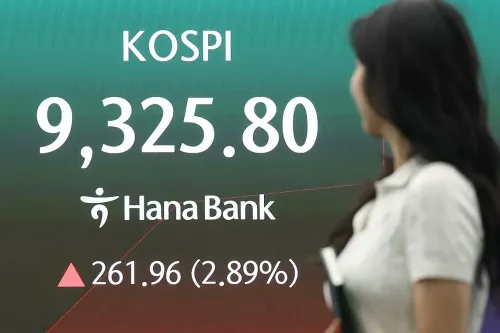
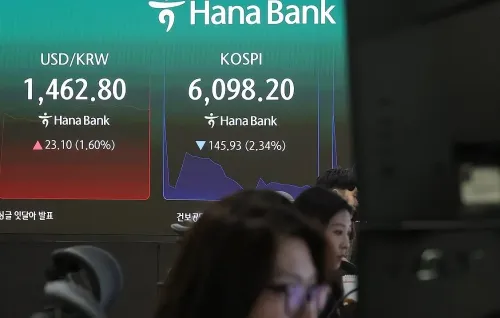
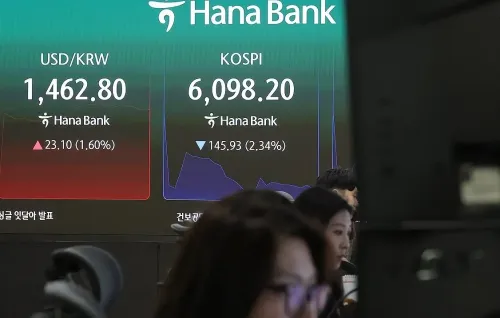
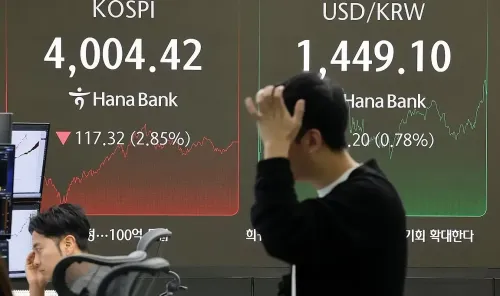
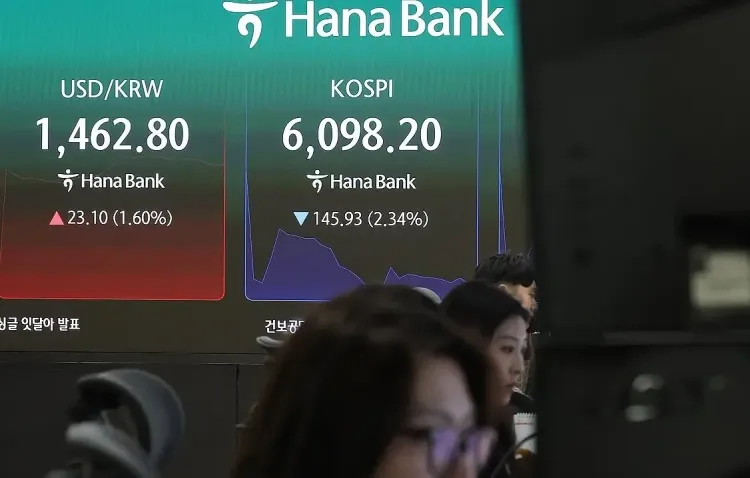
The Korea Composite Stock Price Index (KOSPI) fell by 112.91 points, or 1.19 percent, settling at 5,812.12 around 11:20 a.m.
In the U.S., the Dow Jones Industrial Average dropped by 1.63 percent, while the tech-heavy Nasdaq Composite fell by 1.46 percent, and the S&P 500 decreased by 1.36 percent, according to reports from Yonhap news agency.
Investor confidence was shaken as Israel launched an offensive against Iran's largest gas facility, South Pars, prompting Iran to retaliate with a strike on a significant liquefied natural gas installation in Qatar, which in turn pushed global oil prices higher.
Comments from U.S. Federal Reserve Chair Jerome Powell following the Fed's decision to keep interest rates within the 3.5-3.75 percent range also dampened market morale.
During a press briefing, Powell indicated that the spike in oil prices has intensified inflationary pressures, suggesting a cautious approach regarding potential future rate cuts.
In Seoul, the market giant Samsung Electronics saw a decrease of 2.64 percent, while its competitor SK Hynix experienced a 3.12 percent drop.
Automaker Hyundai Motor lost 3.3 percent, and its affiliate Kia fell by 1.6 percent.
Investment firm SK Square, focused on artificial intelligence, slipped 2.7 percent, and LG Energy Solution, a leader in battery production, fell by 1.69 percent.
Prominent defense contractor Hanwha Aerospace saw a decline of 1.22 percent, while major shipbuilder HD Hyundai Heavy lost 2.54 percent.
Doosan Enerbility, a manufacturer of power plants, was one of the few companies to gain, rising by 0.84 percent.
Financial stocks also showed resilience, with KB Financial increasing by 1.1 percent and Shinhan Financial rising by 0.42 percent.
As of 11:20 a.m., the Korean won was trading at 1,496.9 against the U.S. dollar, down 13.8 won from the previous session, having initially dipped below the 1,500 won mark at the start of the day.
Point of View
It's crucial to highlight the broader implications of the current geopolitical tensions and their impact on the South Korean market. The intertwining of international conflicts and economic policies emphasizes the need for vigilance among investors.
NationPress
19 Sept 2026
Frequently Asked Questions
What caused the decline in South Korean shares?
The decline was driven by rising tensions in the Middle East and uncertainties regarding U.S. monetary policy, despite a rate freeze.
How did the U.S. stock market perform?
The U.S. stock market saw declines, with the Dow Jones falling by 1.63 percent and the Nasdaq by 1.46 percent.
Which companies experienced significant losses?
Major losses were seen in Samsung Electronics, Hyundai Motor, and LG Energy Solution, among others.
How did the Korean won perform against the U.S. dollar?
The Korean won traded at 1,496.9 against the U.S. dollar, down 13.8 won from the previous session.
What is the outlook for future rate cuts by the U.S. Federal Reserve?
Fed Chair Jerome Powell indicated a cautious stance on further rate cuts due to increased inflationary pressures from rising oil prices.