KOSPI tumbles 5.25% to 7,083 as US-Iran strikes fuel Middle East crisis
Synopsis
South Korea's KOSPI crashed 5.25% in a single session after the US and Iran exchanged military strikes over the Strait of Hormuz — a waterway that carries a fifth of global oil. With Samsung down 5% and SK hynix plunging 9%, Seoul's chipmaker-heavy index is on the front line of every geopolitical shock that threatens global trade and energy flows.
Key Takeaways
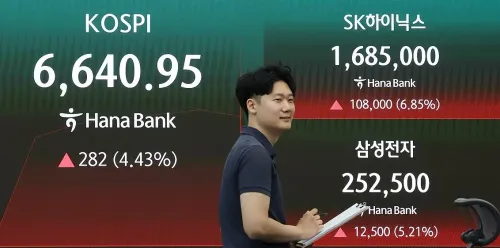
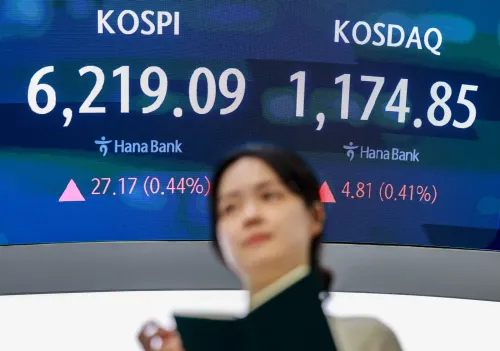
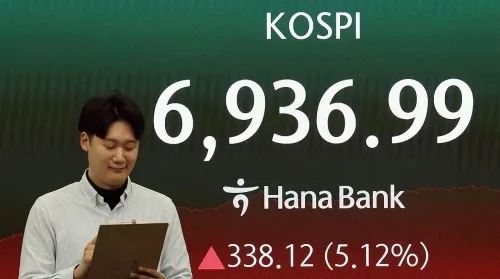
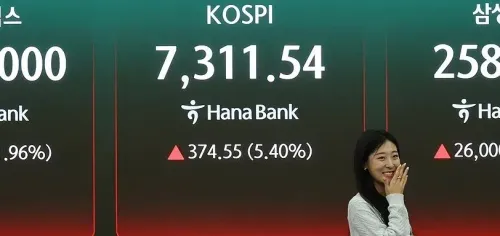
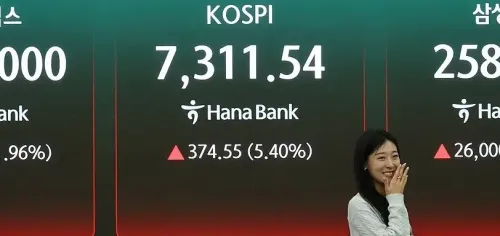
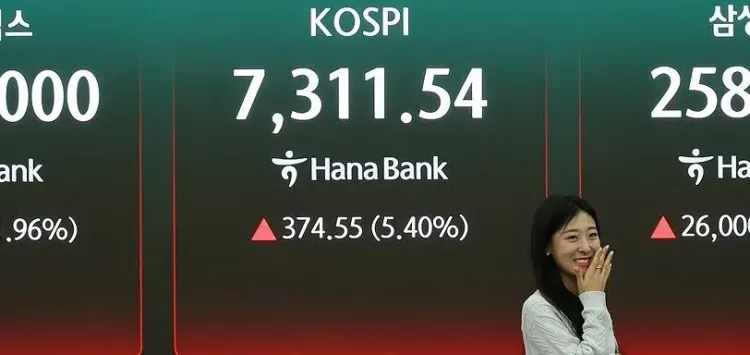
KOSPI plunged 392.53 points (5.25%) to 7,083.41 as of 11:20 am on 13 July .
Trigger: US military strikes on Iran and Iranian drone attacks on US allies sparked fresh Strait of Hormuz tensions.
Samsung Electronics fell 5.09% ; SK hynix plunged 9.08% , reversing gains from its recent Nasdaq ADR debut at US$168 .
Foreign investors net-sold 906.28 billion won ; institutions sold a net 501.77 billion won ; individuals bought a net 1.38 trillion won .
South Korea's bourse operator activated a sell-side sidecar circuit-breaker amid extreme selling pressure.
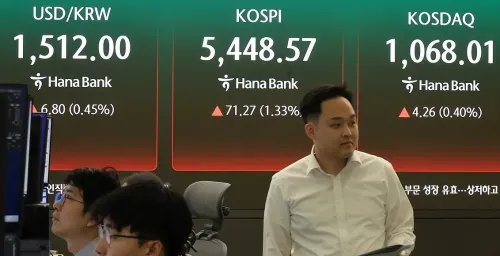
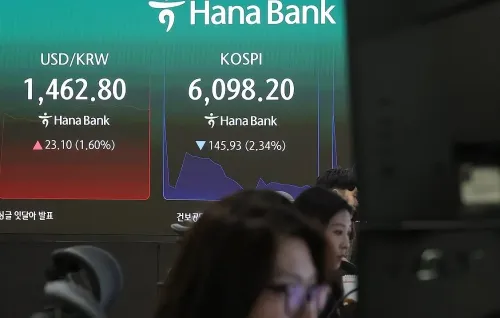
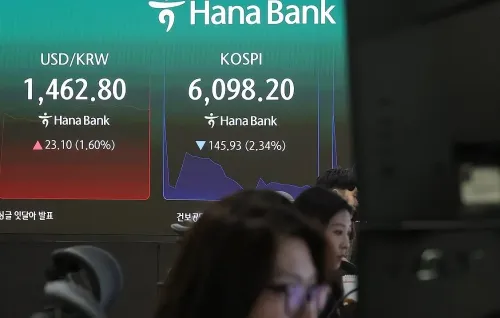
The Korean won weakened to 1,505.35 per US dollar, down 6.85 won on the session.
South Korea's benchmark Korea Composite Stock Price Index (KOSPI) plunged 392.53 points, or 5.25 percent, to 7,083.41 as of 11:20 am on Monday, 13 July, as fresh US-Iran military exchanges over control of the Strait of Hormuz rattled investor sentiment in Seoul. The index had already opened 0.85 percent lower before extending its losses sharply, bucking a positive close on Wall Street the previous session.
What Triggered the Sell-Off
The immediate catalyst was a sharp escalation in Middle East tensions. On Sunday (US time), the US military launched strikes against Iran in retaliation for Iranian drone attacks on US allies in the region. The two sides then exchanged fresh strikes over the contested status of the Strait of Hormuz — a critical global oil transit chokepoint — sending shockwaves through Asian markets.
South Korea's bourse operator activated a sell-side sidecar for the KOSPI after the index tumbled sharply, a circuit-breaker mechanism triggered when selling pressure becomes extreme. Institutions and foreign investors offloaded a net 501.77 billion won (approximately US$333 million) and 906.28 billion won worth of stocks, respectively. Individual investors stepped in as buyers, absorbing a net 1.38 trillion won in stocks.
Tech and Chipmakers Lead Losses
Technology stocks bore the brunt of the decline. Market bellwether Samsung Electronics fell 5.09 percent, while its chipmaking rival SK hynix plunged 9.08 percent — a particularly sharp reversal given that SK hynix had just completed a multibillion-dollar American depositary receipt (ADR) offering on the Nasdaq, with its ADRs closing at US$168 each, well above the offering price of US$149.
Flag carrier Korean Air declined 2.24 percent, and defence conglomerate Hanwha Aerospace shed 1.65 percent. Among the few gainers, top automaker Hyundai Motor edged up 0.22 percent, while Hyundai Steel climbed 4.09 percent, likely buoyed by defence and infrastructure demand expectations.
Won Weakens Against the Dollar
The Korean won weakened to 1,505.35 won per US dollar as of 11:20 am, down 6.85 won from the previous session's close. A weaker won compounds import costs — particularly for energy — at a time when oil supply disruption fears from the Hormuz standoff are already elevated.
Wall Street Context and What Comes Next
The Seoul sell-off came despite a positive Friday session in the United States, where the Dow Jones Industrial Average gained 0.29 percent and the tech-heavy Nasdaq Composite also climbed 0.29 percent, partly lifted by SK hynix's ADR debut. The divergence underscores how geopolitical risk is now overriding earnings-season optimism in Asian markets.
Analysts will be watching whether the US-Iran situation stabilises or escalates further around the Strait of Hormuz, as any sustained disruption to oil flows through the waterway — which handles roughly 20 percent of global oil trade — could trigger a broader regional and commodity-market shock. South Korean markets, heavily reliant on imported energy and exposed to global tech demand cycles, remain particularly vulnerable to both channels of risk.
Point of View
And South Korea, which imports virtually all of its crude, is structurally exposed to any disruption there. What is notable here is the divergence: Wall Street closed up on Friday while Seoul crashed on Monday, suggesting that US equity markets have not yet priced in the same tail risk. SK hynix's 9% fall is especially telling — the stock had just priced an ADR above offer, only to be punished by a geopolitical event entirely outside its control. If the Hormuz standoff persists, the pressure will spread from energy to logistics to semiconductor supply chains, and Seoul will not be the only market feeling it.
NationPress
12 Oct 2026
Frequently Asked Questions
Why did the KOSPI fall sharply on 13 July?
The KOSPI fell 392.53 points, or 5.25%, to 7,083.41 after the US military launched strikes on Iran and both sides exchanged fresh attacks over the Strait of Hormuz, triggering a risk-off sell-off in Seoul. Tech and chipmaker stocks led the decline.
Which stocks were worst hit in the Seoul market sell-off?
SK hynix plunged 9.08% and Samsung Electronics fell 5.09%, making chipmakers the hardest-hit segment. Korean Air dropped 2.24% and Hanwha Aerospace shed 1.65%, while Hyundai Motor and Hyundai Steel were among the few gainers.
What is a sell-side sidecar and why was it activated?
A sell-side sidecar is a circuit-breaker mechanism used by South Korea's bourse operator to temporarily pause program selling when the market falls sharply in a short period. It was activated on 13 July after the KOSPI tumbled under heavy institutional and foreign selling pressure.
How did foreign and institutional investors react?
Foreign investors net-sold 906.28 billion won worth of stocks, while institutions offloaded a net 501.77 billion won. Individual retail investors moved in the opposite direction, buying a net 1.38 trillion won during the session.
Why does the Strait of Hormuz matter to South Korean markets?
The Strait of Hormuz handles roughly 20% of global oil trade, and South Korea is heavily dependent on imported energy. Any sustained disruption to oil flows through the strait raises energy costs and threatens the broader export-driven South Korean economy, making its equity markets particularly sensitive to escalation in the region.