KOSPI circuit breaker triggered as index crashes 8% on tech selloff
Synopsis
South Korea's stock exchange triggered its fifth circuit breaker of the year after KOSPI crashed more than 8% in a single session, as foreign and institutional investors fled tech stocks following the previous day's 5.42% rally. Samsung Electronics and SK hynix led the carnage, with AI investment jitters and stubbornly high US inflation adding fuel to the fire.
Key Takeaways
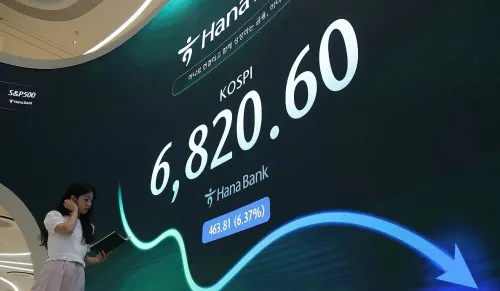
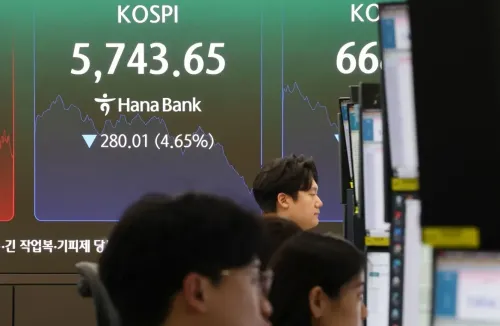
The Korea Exchange (KRX) activated a circuit breaker on 26 June after KOSPI fell more than 8 percent , halting trading for 20 minutes .
This was the fifth circuit breaker activation on the KRX this year.
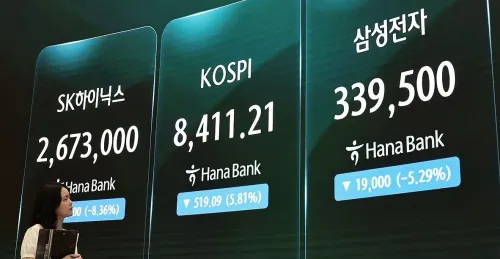
Samsung Electronics fell 6.56% ; SK hynix slumped 7.16% ; SK Square tumbled 9.58% .
The selloff followed a 5.42 percent spike the previous session, with foreign and institutional investors taking profits.
US consumer prices rose 4.1 percent in May , well above the Fed's 2 percent target, adding to global market anxiety.
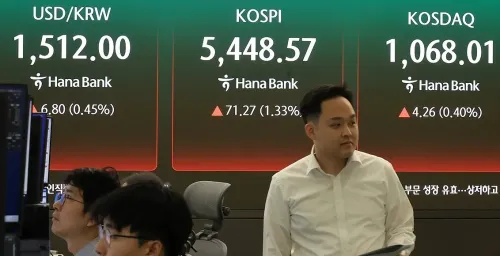
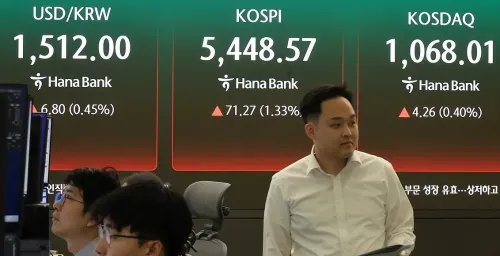
The Korean won weakened to 1,548.75 per US dollar, down 6.65 won on the session.
South Korea's Korea Exchange (KRX) activated a circuit breaker for the benchmark Korea Composite Stock Price Index (KOSPI) on Friday, 26 June, after the index plummeted more than 8 percent from the previous session's close, halting trading for 20 minutes. The crash was driven by a sweeping selloff in large-cap technology stocks, marking the fifth circuit breaker activation on the KRX this year.
What Triggered the Crash
The selloff came as foreign and institutional investors dumped tech shares to lock in profits following a 5.42 percent spike the previous session. Lingering uncertainty over the sustainability of large-scale artificial intelligence (AI) infrastructure investment weighed on sentiment, mirroring choppy trading on Wall Street where tech heavyweights also closed in negative territory.
Adding to the pressure, the latest US data showed consumer prices rose 4.1 percent in May — well above the Federal Reserve's 2 percent target — stoking expectations that the central bank may tighten its monetary stance further to contain inflation.
Semiconductor Stocks Lead Losses
Semiconductor shares bore the brunt of the selloff. Samsung Electronics sank 6.56 percent, while chipmaking rival SK hynix slumped 7.16 percent. SK Square, the parent company of SK hynix, tumbled 9.58 percent, the steepest single-stock fall among blue chips.
Chip equipment manufacturer Hanmi Semiconductor dropped 4.4 percent. Beyond semiconductors, major shipbuilder Hanwha Ocean skidded 4.92 percent and pharmaceutical giant Celltrion dipped 4.04 percent, reflecting broad-based risk aversion across sectors.
Currency Under Pressure
The Korean won weakened alongside equities, trading at 1,548.75 won against the US dollar at 11:20 am local time, down 6.65 won from the previous session. A weaker won can amplify import costs and compound inflationary pressures already flagged by US price data.
Context and What Comes Next
This is the fifth time in 2025 that the KRX has been forced to invoke its circuit breaker mechanism — a frequency that underscores the elevated volatility gripping South Korean markets this year. The pattern of sharp rally followed by steep correction reflects deep investor ambivalence about AI-driven tech valuations, particularly as US monetary policy remains in flux.
Market participants will be watching for further US Federal Reserve signals and any corporate guidance from major chipmakers on AI capital expenditure plans, which have become the primary swing factor for tech-heavy indices like the KOSPI.
Point of View
But the frequency of circuit breaker activations — five in a single year — signals something more structural: South Korean markets are caught in a volatile loop driven by AI hype cycles and US macro data, with no clear floor in sight. The real concern is not the single-session drop but the pattern it reveals. Tech-heavy indices like KOSPI have become hyper-sensitive to US Fed signals and AI capex narratives, meaning domestic fundamentals matter less than ever. With US inflation at 4.1% against a 2% Fed target, the rate environment remains hostile to growth-stock valuations. Until AI investment translates into verifiable earnings rather than infrastructure promises, sharp reversals like this will keep recurring.
NationPress
24 Sept 2026
Frequently Asked Questions
Why was the KOSPI circuit breaker triggered on 26 June?
The KRX activated the circuit breaker after KOSPI fell more than 8 percent from the previous session's close, halting trading for 20 minutes. The crash was driven by profit-taking in large-cap tech stocks following a 5.42 percent rally the day before, compounded by concerns over AI infrastructure investment and rising US inflation.
Which stocks fell the most during the KOSPI crash?
SK Square was the steepest faller, tumbling 9.58 percent. SK hynix dropped 7.16 percent and Samsung Electronics sank 6.56 percent. Hanwha Ocean fell 4.92 percent, Hanmi Semiconductor dropped 4.4 percent, and Celltrion dipped 4.04 percent.
How many times has the KRX triggered a circuit breaker in 2025?
Friday's activation was the fifth circuit breaker triggered by the Korea Exchange in 2025, reflecting the elevated volatility that has characterised South Korean markets this year.
What role did US inflation data play in the KOSPI selloff?
US consumer prices rose 4.1 percent in May — more than double the Federal Reserve's 2 percent target — raising expectations of further monetary tightening. This added to global risk-off sentiment and weighed on tech-heavy markets including KOSPI.
How did the Korean won perform during the selloff?
The Korean won weakened to 1,548.75 won per US dollar at 11:20 am local time on Friday, down 6.65 won from the previous session, reflecting broader risk aversion in South Korean financial markets.