KOSPI triggers sell-side sidecar as AI trade rethink sparks sharp fall
Synopsis
South Korea's stock exchange activated a rare sell-side sidecar on 8 July as the KOSPI plunged on a sweeping reassessment of the AI trade. With foreign and retail investors offloading over ₩784 billion in stocks and tech giants Samsung and SK Hynix both falling, the session signals that the AI-driven bull run is facing its stiffest credibility test yet.
Key Takeaways
The Korea Exchange (KRX) activated a sell-side sidecar on 8 July , suspending programme trading for five minutes at around 1:31 pm .
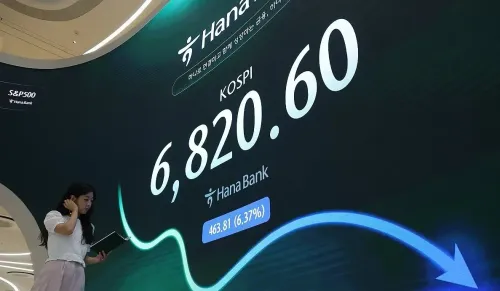
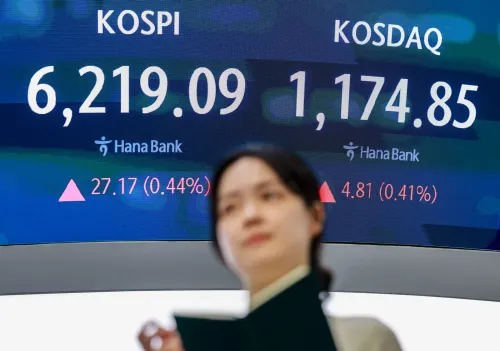
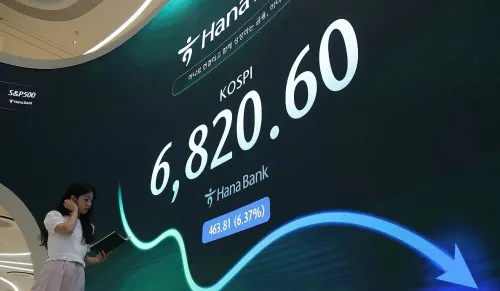
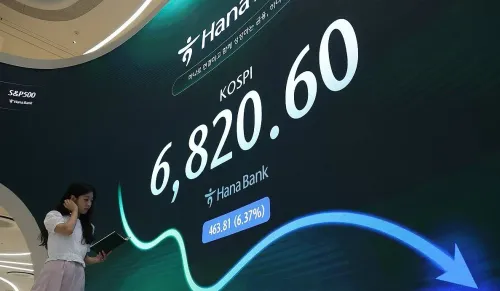
The KOSPI opened 2.7 per cent lower before paring losses to trade down 108.18 points (1.41%) at 7,548.13 .
Foreign and individual investors sold a combined 784 billion won (US$519 million) , exceeding institutional buying of 767.9 billion won .
Samsung Electronics fell 1.69% , SK Hynix dropped 0.95% , and Hanwha Ocean plunged 5.46% .
LG Display bucked the trend, rising 5.33% ; the Korean won slipped to 1,518.65 against the US dollar.
South Korea's benchmark Korea Composite Stock Price Index (KOSPI) triggered a sell-side sidecar on Wednesday, 8 July, after the index tumbled sharply amid a broad reassessment of the artificial intelligence trade. The Korea Exchange (KRX) suspended programme trading for five minutes at around 1:31 pm local time, a circuit-breaker mechanism activated when selling pressure breaches defined thresholds.
Scale of the Selling Pressure
Foreigners and individual investors offloaded a combined 784 billion won (approximately US$519 million) worth of stocks as of 1:40 pm, outpacing institutional buying of 767.9 billion won. The KOSPI had opened as much as 2.7 per cent lower before paring some losses, trading down 108.18 points or 1.41 per cent at 7,548.13 as of 9:15 am local time.
What Drove the Decline
The sell-off tracked overnight weakness on Wall Street, where the Dow Jones Industrial Average fell 0.25 per cent and the tech-heavy Nasdaq Composite declined 1.16 per cent. Investors are increasingly questioning whether surging capital expenditure, intensifying competition, and expanding production capacity in the AI sector will generate the earnings growth needed to justify elevated valuations of technology companies. This marks a notable shift in sentiment from the AI-driven rally that dominated markets through much of the past year.
Stocks That Fell and Rose
Technology and large-cap names bore the brunt of the selling. Market bellwether Samsung Electronics fell 1.69 per cent, while chip giant SK Hynix declined 0.95 per cent. Top carmaker Hyundai Motor dropped 3.2 per cent, and shipping firm Hanwha Ocean plunged 5.46 per cent. Not all stocks ended lower: home appliance maker LG Electronics rose 1.06 per cent, and LG Display climbed 5.33 per cent, bucking the broader trend.
Currency Under Pressure
The Korean won weakened alongside equities, trading at 1,518.65 won against the US dollar as of 9:15 am — down 2.85 won from the previous session. A weaker won compounds import costs and adds another layer of uncertainty for foreign investors already reassessing exposure to Korean tech.
What to Watch Next
The activation of the sidecar underscores how fragile sentiment has become around the AI trade globally. Markets will be watching upcoming earnings from major US technology firms for clearer signals on whether AI capital spending is translating into commensurate revenue growth. Any further softness on Wall Street could put the KOSPI under renewed pressure in the sessions ahead.
Point of View
But the signal beneath it is strategic: markets are beginning to price in the possibility that the AI trade has run ahead of its earnings reality. South Korea is particularly exposed — Samsung and SK Hynix together represent a disproportionate share of the KOSPI, and both are tied to AI chip demand cycles that are now under scrutiny. The fact that institutional buying nearly matched foreign and retail selling suggests domestic funds are still defending positions, but that buffer is thin. If US tech earnings disappoint this cycle, the KOSPI's AI-heavy composition becomes a liability rather than an asset.
NationPress
6 Oct 2026
Frequently Asked Questions
What is a sell-side sidecar and why was it triggered on the KOSPI?
A sell-side sidecar is a circuit-breaker mechanism that temporarily suspends programme trading when a market index falls sharply within a short period. The Korea Exchange activated it on 8 July after the KOSPI tumbled sharply, halting programme trades for five minutes at around 1:31 pm to prevent a cascade of automated selling.
How much did the KOSPI fall on 8 July?
The KOSPI opened as much as 2.7 per cent lower before paring some losses, trading down 108.18 points or 1.41 per cent at 7,548.13 as of 9:15 am local time. The decline was driven by heavy selling in technology and large-cap stocks.
Which South Korean stocks fell the most?
Hanwha Ocean was among the steepest fallers, plunging 5.46 per cent. Hyundai Motor dropped 3.2 per cent, Samsung Electronics fell 1.69 per cent, and SK Hynix declined 0.95 per cent. LG Display was a notable gainer, rising 5.33 per cent.
Why are investors reassessing the AI trade?
Investors are questioning whether the massive capital spending, intensifying competition, and expanding production capacity in the AI sector will generate sufficient earnings growth to justify the elevated valuations technology companies currently carry. This reassessment follows a prolonged AI-driven rally across global markets.
How did Wall Street influence the KOSPI selloff?
The KOSPI opened lower tracking overnight losses on Wall Street, where the Dow Jones Industrial Average fell 0.25 per cent and the Nasdaq Composite declined 1.16 per cent, as investors globally reassessed the sustainability of the AI-driven trade.