Seoul's KOSPI dives 3.73% as AI sector jitters and France unrest rattle markets
Synopsis
South Korea's KOSPI shed nearly 4% in a single session as profit-taking in chip giants collided with unresolved questions about AI investment returns — and unrest in France added a geopolitical twist. With Samsung and SK hynix both posting sharp losses and foreign institutions selling over 1.5 trillion won combined, the two-day rebound after a 21% slide has already been erased.
Key Takeaways
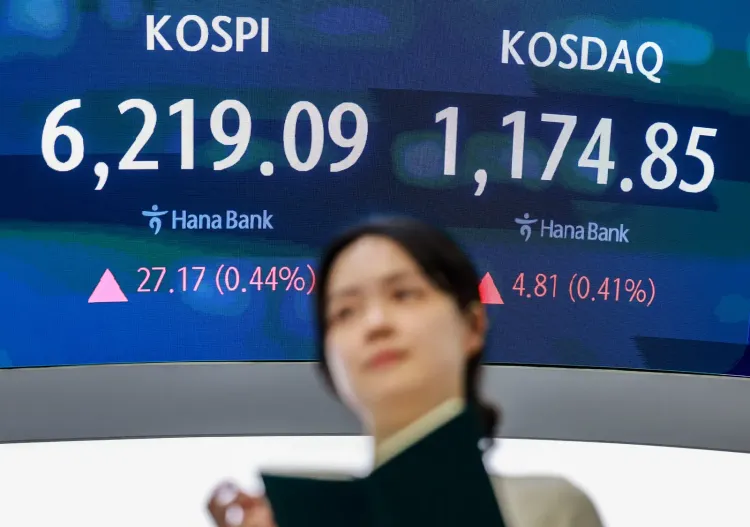
KOSPI closed down 215.27 points (3.73%) at 5,552.74 on 20 October .
The index had already fallen ~21% over seven sessions from 6 October , driven by AI investment anxiety.
Samsung Electronics shed 2.98% ; SK hynix declined 4.23% — near its lowest close since April .
Foreign and institutional investors sold a combined net of over 1.5 trillion won ; retail buyers absorbed 900 billion won .
Daishin Securities analyst Lee Kyoung-min cited unresolved AI credit-risk concerns as limiting the rebound's sustainability.
The Korean won strengthened to 1,328.1 per US dollar, up 2.2 won from the prior session.
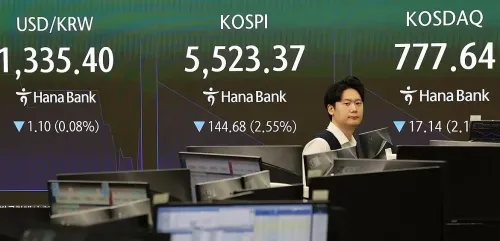
South Korea's benchmark Korea Composite Stock Price Index (KOSPI) plunged 215.27 points, or 3.73 percent, to close at 5,552.74 on Tuesday, 20 October, as investors locked in profits on recently rallied chip stocks amid mounting anxiety over the artificial intelligence (AI) value chain. The index fell as low as 5,493.24 during the session before a partial recovery.
What Triggered the Sell-Off
The KOSPI opened 0.6 percent lower and extended losses through the day as two distinct pressures converged: deepening scepticism over the profitability of AI-related investments, and escalating street protests in France that broadly reduced appetite for risky assets globally. The sell-off came after the index had rebounded for two consecutive sessions following a sharp 21 percent plunge across seven trading sessions from 6 October through the previous Thursday.
Overnight, US equities ended on a mixed note, with technology shares clawing back some ground after their steepest weekly drop since June — offering only partial relief to Seoul traders.
What Analysts Are Saying
Lee Kyoung-min, an analyst at Daishin Securities, said: 'Concerns over credit risks and profitability surrounding AI investment have yet to be fully resolved, limiting the sustainability of the rebound. Profit-taking emerged following the previous session's gains, sending the market back into negative territory.'
The assessment underscores a broader market worry: that the AI investment supercycle, which drove chipmakers to record highs, may be running ahead of actual monetisation timelines.
Technology Heavyweights Take the Hit
Market bellwether Samsung Electronics fell 2.98 percent, closing at 211,500 won, while rival chipmaker SK hynix declined 4.23 percent to 1.22 million won — heading for its lowest close since April. SK Square, the parent company of SK hynix, dropped 5 percent to 741,000 won. Samsung Electro-Mechanics, an electronics component affiliate of Samsung Electronics, slipped 1.28 percent to 1.16 million won.
Trading Flows and Currency
Trade volume was light at 259.75 million shares worth 16 trillion won (approximately US$12.97 billion), with decliners far outpacing advancers at 771 to 117. Foreign investors sold a net 535.4 billion won, institutions offloaded a net 1 trillion won, while retail investors absorbed a net 900 billion won.
The Korean won strengthened, quoting at 1,328.1 won per US dollar as of 3:30 pm local time, up 2.2 won from the previous session's close. Bond prices rose inversely to yields: the three-year Treasury yield fell 3.7 basis points to 3.840 percent, and the five-year government bond yield dropped 2.4 basis points to 3.990 percent.
What Comes Next
With AI credit-risk concerns still unresolved and European political uncertainty adding volatility, South Korean equities face continued headwinds in the near term. All eyes are now on whether US technology earnings and upcoming Fed commentary can stabilise sentiment before the KOSPI tests lower technical support levels.
Point of View
And the signal is increasingly clear: investors are questioning whether chipmaker valuations are built on revenue that has actually arrived. Samsung and SK hynix rode the AI wave to record highs on the premise of insatiable HBM and advanced chip demand, but analyst warnings about credit risk and profitability suggest the earnings runway may be shorter than priced in. The France unrest is a convenient narrative add-on, but the real driver is endogenous — South Korea's equity market is essentially a leveraged bet on AI capex cycles, and when that cycle wobbles, Seoul feels it first. The retail investor absorption of 900 billion won in a falling market is also a pattern worth watching: it echoes earlier episodes where domestic retail stepped in at volatile bottoms, sometimes correctly, sometimes prematurely.
NationPress
20 Oct 2026
Frequently Asked Questions
Why did Seoul's KOSPI fall nearly 4% on 20 October?
The KOSPI fell 3.73% to 5,552.74 on 20 October as investors took profits on chip stocks following a brief two-session rebound, while persistent concerns over AI investment profitability and escalating protests in France reduced global risk appetite. It was the latest in a series of sharp moves after a 21% slide over seven sessions earlier in the month.
Which stocks were hit hardest in the South Korean market?
Technology and chip stocks led the decline. SK hynix fell 4.23% to 1.22 million won, its lowest close since April, while Samsung Electronics dropped 2.98% to 211,500 won. SK Square, the parent of SK hynix, slid 5%, and Samsung Electro-Mechanics declined 1.28%.
What did analysts say about the KOSPI's outlook?
Daishin Securities analyst Lee Kyoung-min said concerns over credit risks and profitability surrounding AI investment remain unresolved, limiting the durability of any rebound. Profit-taking after the previous session's gains was cited as the immediate catalyst for returning the market to negative territory.
How did the Korean won and bond markets react?
The Korean won strengthened slightly, trading at 1,328.1 won per US dollar as of 3:30 pm, up 2.2 won from the prior session. Bond prices rose, with the three-year Treasury yield falling 3.7 basis points to 3.840% and the five-year yield dropping 2.4 basis points to 3.990%.
Who was buying and selling during the KOSPI session?
Foreign investors net sold 535.4 billion won and institutions offloaded a net 1 trillion won, while individual retail investors absorbed a net 900 billion won. Decliners outnumbered advancers by 771 to 117 on light volume of 259.75 million shares worth 16 trillion won.