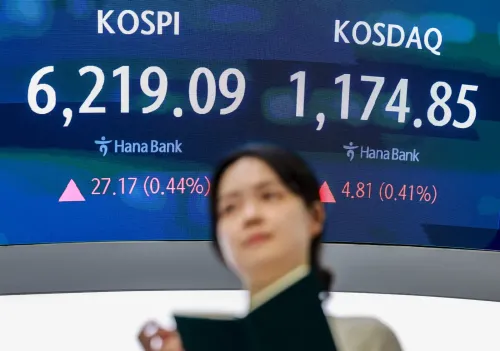
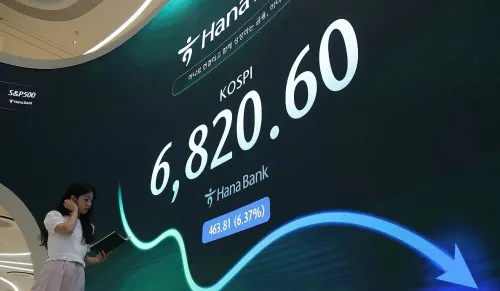
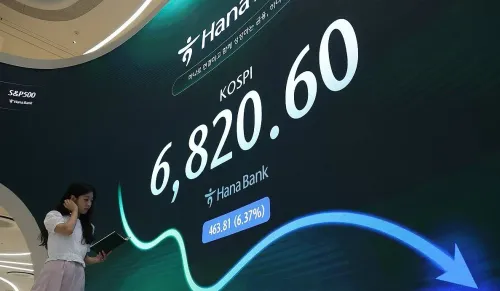
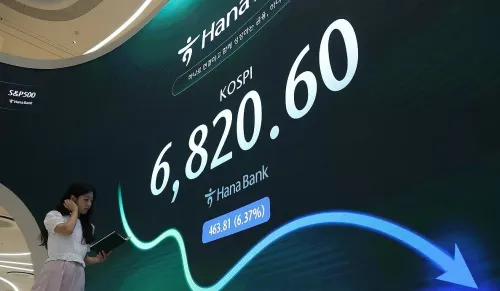
KOSPI plunges 6.73% to 5,604 as AI fears and US inflation data rattle Seoul markets
Synopsis
Seoul's KOSPI shed nearly 7% in a single session on 15 October — one of its sharpest drops in recent memory — after a hotter US inflation print and growing doubts about AI spending collided to wipe out chip giant valuations. SK Hynix's near-10% plunge is a stark signal that the AI-driven semiconductor rally may be entering a reality check.
Key Takeaways
The KOSPI fell 404.21 points (6.73%) to 5,604.6 on 15 October 2026 , triggering a 5-minute circuit breaker in early trade.
Samsung Electronics lost 7.87% and SK Hynix plunged 9.87% amid AI sector concerns.
The trigger was the US CPI for September rising 0.6% month-on-month — the fastest pace since April .
The Korean won weakened to 1,350 per US dollar , down 7.7 won on the session.
Bank of Korea data showed household loan growth slowed to a 7-month low of 0.6 trillion won in September.
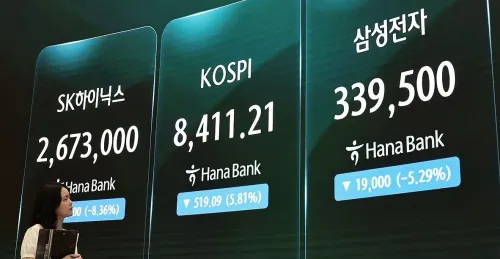
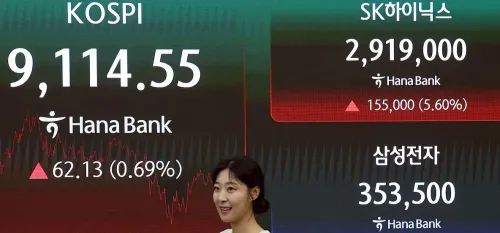
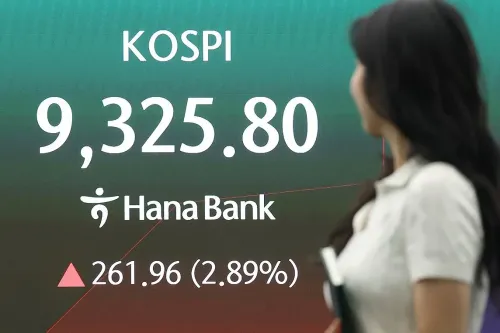
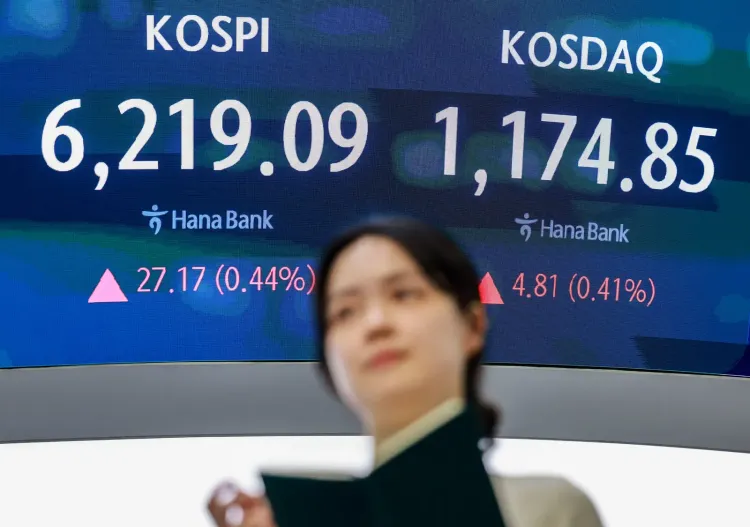
The Korea Composite Stock Price Index (KOSPI) crashed 404.21 points, or 6.73%, to 5,604.6 as of 11:20 am on Thursday, 15 October, as a dual shock — mounting scepticism over artificial intelligence (AI) spending sustainability and a hotter-than-expected US Consumer Price Index (CPI) print — triggered a broad sell-off of major technology shares in Seoul.
Circuit Breaker Triggered in Early Trade
The slide was severe enough in the opening minutes that Korea's bourse operator temporarily suspended trading for five minutes after the benchmark index shed more than 5% in early session — a circuit-breaker threshold designed to prevent panic-driven cascades. The brief halt did little to stem the broader decline, as selling pressure resumed once the pause lifted.
Tech Heavyweights Bear the Brunt
Semiconductor giants led the carnage. Samsung Electronics tumbled 7.87% while SK Hynix plunged a steeper 9.87% — a particularly sharp drop for a chipmaker that had been riding AI-driven memory demand optimism for much of the year. Hyundai Motor fell 5.1%, KB Financial slid 1.13%, and defence conglomerate Hanwha Aerospace dipped 1.54%. Among the rare bright spots was biotech firm Celltrion, which bucked the trend to add 3.13%.
What Spooked Global Markets Overnight
The catalyst came from Wall Street, where US stocks closed lower on Wednesday (US time) after official data showed the US CPI for September rose 0.6% from the previous month — the fastest monthly increase since April. The print stoked fears that the US Federal Reserve may have less room to ease monetary policy, compounding existing anxiety about whether large-scale AI infrastructure spending by major technology companies is commercially sustainable at current valuations. Seoul's tech-heavy index, deeply exposed to both AI supply chains and US macro conditions, was among the hardest-hit markets in the region. Notably, this marks one of the sharpest single-session declines for the KOSPI in recent memory.
Won Weakens, Household Loan Growth Slows
The Korean won weakened to 1,350 won per US dollar as of 11:20 am, down 7.7 won from the previous session's close — reflecting broader risk aversion. Separately, data from the Bank of Korea (BOK) released on Thursday showed that outstanding household loans extended by banks reached 1,198.9 trillion won (approximately US$895.5 billion) in September, rising by just 0.6 trillion won month-on-month. That is the smallest monthly increase since March 2026, when such loans grew by 0.5 trillion won, and a sharp slowdown from the prior month's 3.5 trillion-won rise. According to the BOK, tightened lending regulations and higher interest rates are credited with cooling credit growth. Outstanding mortgage loans rose 2.9 trillion won on-month to 955.5 trillion won, while other household loans contracted by 2.3 trillion won to 242.6 trillion won.
What to Watch Next
All eyes will be on upcoming US Federal Reserve guidance and any further AI earnings commentary from major US technology firms, both of which could determine whether Thursday's rout deepens or stabilises. For Korean chip stocks, the trajectory of AI hardware orders and US inflation expectations through the fourth quarter will be the critical variables.
Point of View
Which tightens the financial conditions that fund large-scale AI capex. For Indian markets watching from the sidelines, the parallels to domestic IT and semiconductor-adjacent plays are worth monitoring — a sustained AI scepticism wave in global markets will not stop at Seoul.
NationPress
15 Oct 2026
Frequently Asked Questions
Why did the KOSPI crash on 15 October 2026?
The KOSPI fell 6.73% to 5,604.6 on 15 October due to a combination of rising scepticism about AI spending sustainability and a hotter-than-expected US CPI print for September, which rose 0.6% month-on-month — the fastest since April. The dual shock triggered a broad sell-off in tech-heavy Korean shares.
What happened to Samsung Electronics and SK Hynix stocks?
Samsung Electronics fell 7.87% and SK Hynix dropped 9.87% on Thursday, making them among the worst performers on the KOSPI. Both companies are heavily exposed to AI-driven semiconductor demand, which came under scrutiny following overnight weakness in US tech stocks.
Was trading halted on the Seoul stock exchange?
Yes. Korea's bourse operator temporarily suspended trading for five minutes after the KOSPI fell more than 5% in early session, triggering an automatic circuit-breaker mechanism. Trading resumed shortly after, though selling pressure continued.
How did the Korean won react to the market turmoil?
The Korean won weakened to 1,350 won per US dollar as of 11:20 am on Thursday, a decline of 7.7 won from the previous session's close, reflecting broader risk-off sentiment across the market.
What does the Bank of Korea household loan data show?
Bank of Korea data released Thursday showed outstanding household bank loans grew by just 0.6 trillion won in September to 1,198.9 trillion won — the smallest monthly increase since March 2026 and a sharp deceleration from August's 3.5 trillion-won rise, attributed to tightened lending rules and higher interest rates.