Karnataka CM's Office Pledges Equal Society on Basavanna's Path
Synopsis
The Chief Minister's Office of Karnataka invoked 12th-century reformer Basavanna and the Sharana movement on November 4, 2026, pledging to build an egalitarian society offering every citizen equal share and equal living — a commitment with direct implications for welfare policy in the next assembly session.
Key Takeaways
The Chief Minister's Office of Karnataka posted its commitment on November 4, 2026 , citing the path of Basavanna and the Sharanas .
The Kannada pledge calls for 'samapalu-samabalu' — equal share and equal life — for all citizens .
Basavanna , a 12th-century poet-philosopher, founded the Anubhava Mantapa in Kalyana , an early deliberative assembly that rejected caste hierarchy.
Successive Karnataka governments across parties have invoked the Sharana movement to frame welfare, reservation, and inclusive growth policies.
Observers will track the next assembly session for budget allocations or legislative proposals that operationalise the 'equal share' pledge.
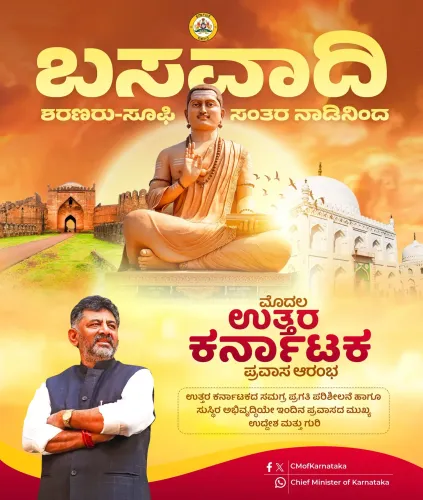
Walking the path laid by Basavanna and the Sharanas, the Karnataka government has reaffirmed its commitment to building an egalitarian society — one where every citizen receives equal share and equal dignity. The Chief Minister's Office of Karnataka posted this pledge on Wednesday, November 4, 2026, invoking the 12th-century social reform movement as the moral compass for its governance agenda.
What the Kannada pledge actually says
The post, written in Kannada, reads: 'ಬಸವಾದಿ ಶರಣರು ಹಾಕಿಕೊಟ್ಟ ದಾರಿಯಲ್ಲಿ ಸಾಗುತ್ತಾ, ಸರ್ವರಿಗೂ ಸಮಪಾಲು-ಸಮಬಾಳು ನೀಡುವ ಜನಪರ ಸಮಾಜ ನಿರ್ಮಿಸಲು ನಮ್ಮ ಸರ್ಕಾರ ಬದ್ಧ.' Translated: 'Walking on the path shown by Basavanna and other Sharanas, our government is committed to building a people-friendly society that provides equal share and equal life to all.' The twin phrase 'samapalu-samabalu' — equal share, equal living — is deliberate. It is the kind of formulation that cuts through rhetoric and names a standard: not aspiration, but obligation.
Basavanna and the Sharana movement: the 900-year foundation
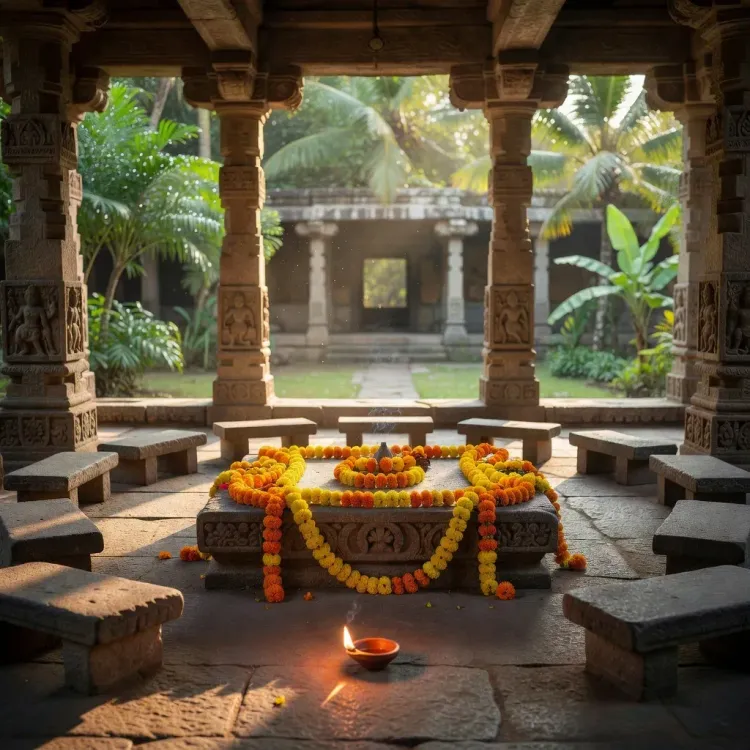
Basavanna, the 12th-century Kannada poet-philosopher, didn't just preach equality — he institutionalised it. His Anubhava Mantapa in Kalyana (present-day northern Karnataka) was arguably South Asia's earliest democratic deliberative assembly, where men and women of every caste spoke, debated, and legislated social norms together. The Sharanas, his followers, translated that philosophy into everyday practice: dignifying manual labour, rejecting caste hierarchy, and asserting that honest work was worship.
That legacy did not freeze in the 12th century. It became the living grammar of Karnataka's political culture. Successive state governments — across party lines — have returned to Basavanna's framework when framing welfare policy, reservation debates, and inclusive growth programmes. The reference is never neutral; it signals an intent to widen the circle of the state's concern.
Why the pledge matters for marginalised communities
Karnataka is a state where caste inequity, agrarian distress, and urban-rural gaps remain live political fault lines. When the official account of the Chief Minister's Office invokes 'samabalu' — a life of equal dignity — for all citizens, it is a statement directed squarely at the communities that have historically been left at the margins: Dalits, backward classes, women, and the rural poor. The Sharana movement's original constituency was precisely these groups.
The government's framing also carries a legislative signal. Observers will now watch the next assembly session closely — whether the pledge translates into budget allocations, expanded welfare schemes, or policy proposals that operationalise 'equal share' beyond the symbolic.
Point of View
One that speaks directly to Lingayat identity, Dalit aspirations, and OBC constituencies simultaneously. By framing governance as a continuation of the Sharana movement, the government positions its welfare agenda as culturally rooted and morally unassailable, raising the political cost of opposing it. The 'samapalu-samabalu' formulation, however, will now be measured against hard legislative outcomes — budget lines, scheme coverage, and reservation policy — in the sessions ahead. If those outcomes fall short, the invocation of Basavanna becomes a double-edged sword.
NationPress
4 Nov 2026
Frequently Asked Questions
What did the Karnataka CM's Office post on November 4, 2026?
The Chief Minister's Office of Karnataka posted a Kannada pledge committing the government to building an egalitarian society by following the path of Basavanna and the 12th-century Sharana movement, promising equal share and equal living for all citizens.
Who was Basavanna and why is he important in Karnataka?
Basavanna was a 12th-century Kannada poet, philosopher and social reformer who founded the Lingayat tradition and established the Anubhava Mantapa — a deliberative assembly in Kalyana that rejected caste hierarchy and upheld equality and labour dignity.
What does 'samapalu-samabalu' mean?
'Samapalu-samabalu' is a Kannada phrase meaning 'equal share, equal living' — a formulation that expresses the goal of providing every citizen not just economic parity but equal dignity in daily life.
What is the Sharana movement?
The Sharana movement was a 12th-century social reform wave led by Basavanna and his followers in the Kalyana region of present-day Karnataka, which promoted egalitarian values, the dignity of labour, rejection of caste discrimination, and inclusive social participation.
What policy actions might follow Karnataka's equal-society pledge?
Observers will watch the next Karnataka assembly session for concrete follow-through — including budget allocations, expanded welfare schemes, and legislative proposals aimed at equal access to resources and opportunities for marginalised communities.