Karnataka CM's Independence Day Call: Pull the Chariot Together
Synopsis
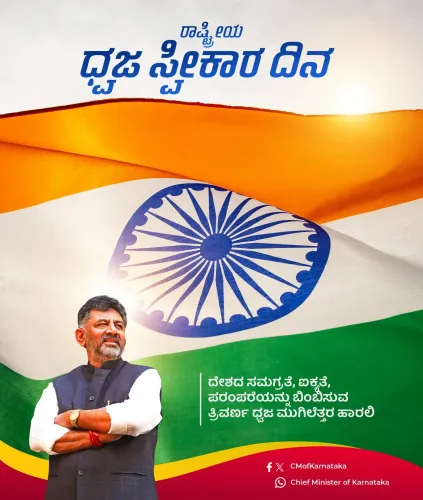
On Independence Day 2026, the Chief Minister's Office of Karnataka posted a Kannada address calling citizens to collectively drive state development, pledging lasting accountability, and closing with Rashtrakavi Kuvempu's universalist poem Anikethana.
Key Takeaways
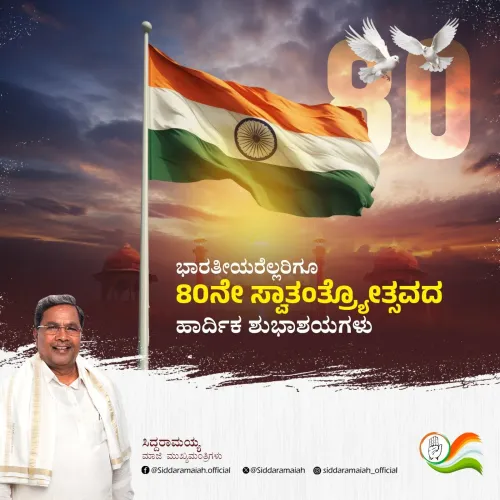
The Chief Minister's Office of Karnataka posted an Independence Day address on 15 August 2026 in Kannada.
The CM used the metaphor of a 'chariot of development' ( abhivruddhiya tera ) requiring the collective effort of crores of Kannada citizens .
The address included a personal pledge of accountability to the people who placed their trust in the CM.
The post quoted Rashtrakavi Kuvempu's poem Anikethana , which promotes universal humanism beyond caste, religion, and doctrine.
The address closed with Jai Hind!
Jai Karnataka! , linking national and state pride.
On Independence Day, 15 August 2026, the Chief Minister's Office of Karnataka issued a stirring appeal to the people of the state — not a routine address, but a call to shared labour: two hands alone, the message declared, cannot pull the chariot of development. A crore Kannada hands must join in.
The Chariot Metaphor and What It Demands
The post, written in Kannada, opens with a vivid image rooted in folk and devotional tradition — the abhivruddhiya tera, the 'chariot of progress' — and frames governance not as a top-down delivery but as a collective pull. 'My two hands are not enough to draw this chariot of my ambitious development agenda,' the message reads. 'The crore hands of Kannada people must join mine. Come, let us pull the chariot of development together.'
The language is deliberate. The chariot is a recurring metaphor in Kannada public life, evoking both the Dasara procession and the idea of a community moving as one. Invoking it on Independence Day ties national pride to state-level aspiration.
A Promise Anchored in Accountability
The address also carries a personal pledge. The Chief Minister's Office states that the CM will leave behind a legacy — referenced by the Kannada phrase 'Sakshigudde', meaning roughly 'a hill that bears witness' or an enduring testament — for the people who brought him to this position through their trust. The sentiment is one of accountability: the public's faith must be honoured with visible, lasting results.
The research notes that this reference to 'Sakshigudde' and its precise political context in 2026 cannot be independently verified from established public record, so it is reported here as stated in the address.
Kuvempu's 'Anikethana' and the Values of Kannada Soil
The address closes on a literary note that elevates it beyond political speech. The CM invokes Rashtrakavi Kuvempu — Karnataka's poet laureate and one of modern Kannada literature's towering figures — quoting lines from his celebrated poem Anikethana ('The Homeless One' or 'The Boundless One'):
'Nooru matada hotta toori, ella tatvada elle meeri, nirddigantavaagi eri, O nanna chetana, aagu nee anikethana' — 'Sifting through the chaff of a hundred opinions, crossing the borders of every doctrine, rise without horizon — O my spirit, become boundless.'
Kuvempu, who lived from 1904 to 1994, championed a philosophy of universal humanism he called Vishwa Manava — the 'World Human' — that explicitly transcended caste, religion, and narrow identity. Quoting him on Independence Day is a well-worn but resonant tradition among Karnataka's political leaders, one that simultaneously asserts Kannada cultural pride and gestures toward a broader, pluralist ideal.
The message closes: 'Let us practise these values in our daily lives. Victory to human dharma. Jai Hind! Jai Karnataka!'
Independence Day as a Stage for State Identity
Karnataka Chief Ministers have long used the 15 August platform to weave together calls for development, invocations of Kannada literary giants, and national integration themes — a formula that speaks to a state with a strong regional identity and a proud literary tradition. This address fits squarely in that lineage, but the emphasis on collective participation — every hand, not just the government's — signals a political posture that places co-ownership of progress at the centre of the CM's pitch heading into the year ahead.
The chariot will not move on its own. That, in essence, is the message from Bengaluru this Independence Day.
Point of View
Firmly national — without choosing between the two. Invoking Kuvempu's Anikethana is not merely cultural decoration; it is a deliberate signal that the CM's development agenda aspires to a pluralist, inclusive legitimacy. The 'chariot' framing is politically shrewd: it distributes ownership of outcomes to citizens, pre-empting blame if delivery lags while maximising credit if it succeeds. The accountability pledge, anchored in the untranslatable 'Sakshigudde', is a high-stakes promise that will be measured against the government's actual record as the term progresses.
NationPress
29 Sept 2026
Frequently Asked Questions
What did the Karnataka CM say on Independence Day 2026?
The Chief Minister's Office of Karnataka posted a Kannada address on 15 August 2026 calling on all citizens to collectively pull the 'chariot of development', pledging personal accountability and quoting Kuvempu's poem Anikethana.
What is the poem Anikethana by Kuvempu?
Anikethana, meaning 'The Boundless One', is a celebrated poem by Rashtrakavi Kuvempu that urges the human spirit to rise above narrow doctrines and identities, embodying his philosophy of universal humanism called Vishwa Manava.
Who is Kuvempu and why is he significant to Karnataka?
Kuvempu (1904-1994) is Karnataka's Rashtrakavi or poet laureate, one of the greatest figures in modern Kannada literature. He championed a philosophy of universal humanism and is widely revered across the state.
What does the Karnataka CM's 'chariot of development' metaphor mean?
The metaphor of the 'chariot of development' (abhivruddhiya tera in Kannada) is a call for collective citizen participation in the state's progress, suggesting that government alone cannot drive development without the active involvement of all Kannada people.
What is 'Sakshigudde' referenced in the Karnataka CM's Independence Day post?
Sakshigudde is a Kannada term roughly meaning 'a hill that bears witness' — an enduring testament or legacy. The CM used it to pledge that he would leave behind a lasting, visible legacy for the people who trusted him.