Karnataka CM's Independence Day Address: State as Nation's Pillar
Synopsis
On Independence Day 2026, Karnataka's Chief Minister framed states as pillars of India's temple, honoured national and Kannada freedom fighters including Kittur Rani Chennamma, and pledged to grow Karnataka's leadership in technology, agriculture, and culture.
Key Takeaways
Karnataka CM used Independence Day 2026 to articulate a cooperative federalism vision: 'If India is a temple, states are its pillars.' The post named eight national freedom fighters — Gandhi, Nehru, Patel, Maulana Azad, Sarojini Naidu, Bhagat Singh, Ashfaqulla Khan, and Subhas Chandra Bose.
The 1924 Belagavi Congress Session was recalled as a source of enduring inspiration for Karnataka's role in the independence movement.
Kittur Rani Chennamma , Sangolli Rayanna , and Mailar Mahadeva were honoured as Karnataka's own freedom heroes.
The CM identified seven sectors — knowledge, science, technology, industry, economy, agriculture, and culture — as Karnataka's strengths to be grown further.
The message is part of a 20-part Independence Day thread from the Chief Minister's Office.
On Independence Day, 15 August 2026, the Chief Minister's Office of Karnataka shared a sweeping vision from the Chief Minister — one that reframes Karnataka not merely as a state to be governed, but as a load-bearing pillar in the temple of the Indian republic. The message is part of a 20-part thread, and it lands with the weight of both history and ambition.
The temple metaphor that frames Karnataka's place in India
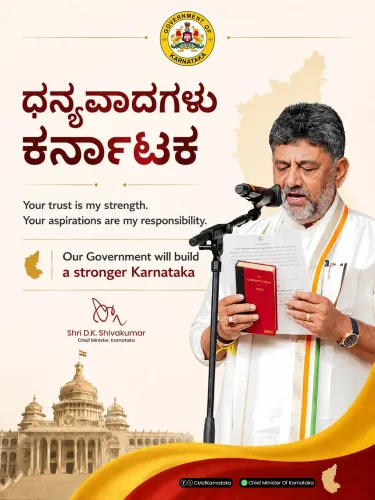
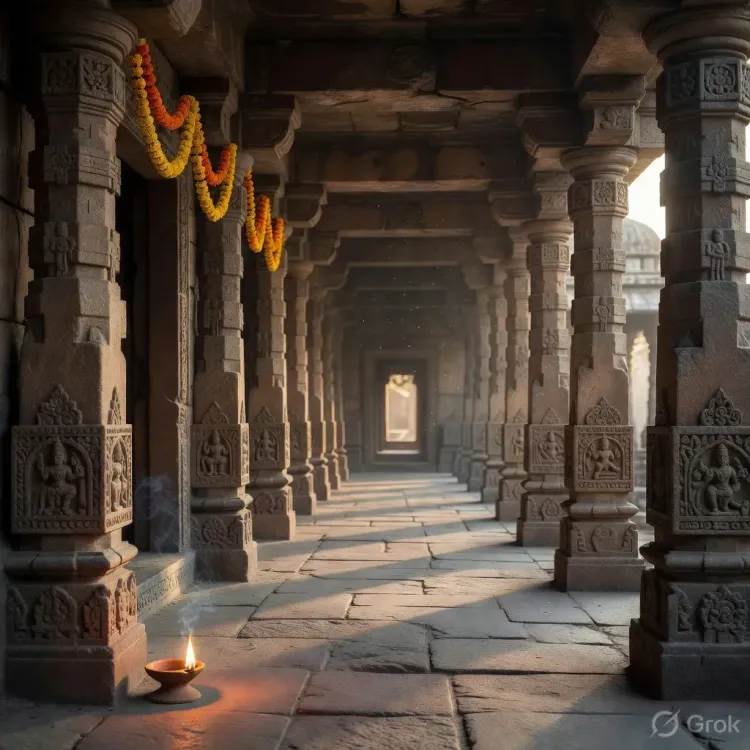
The Chief Minister's post, written in Kannada, opens with a striking architectural image: 'ಭಾರತ ಒಂದು ದೇಗುಲವಾದರೆ, ರಾಜ್ಯಗಳು ದೇಗುಲದ ಕಂಬಗಳು' — 'If India is a temple, the states are its pillars.' The bond between the two, the Chief Minister argues, must only grow stronger. It is a deliberate invocation of cooperative federalism, articulated not in bureaucratic language but in imagery every Kannada speaker feels.
The statement goes further, identifying knowledge, science, technology, industry, economy, agriculture, and culture as the domains in which Karnataka already leads the nation — and pledges to grow that strength further. Since assuming office, the Chief Minister notes, the government has taken up several schemes aligned with this vision, though specific details were not listed in this part of the thread.
Freedom's debt — and the long list of those who paid it
The post pivots to Independence Day's solemn core: the recognition that today's freedoms are the direct inheritance of sacrifice. The Chief Minister names a broad, deliberately inclusive roster of freedom fighters — Mahatma Gandhi, Pandit Jawaharlal Nehru, Sardar Vallabhbhai Patel, Maulana Azad, Sarojini Naidu, Bhagat Singh, Ashfaqulla Khan, and Subhas Chandra Bose — framing their sacrifice as a collective, cross-community legacy that free India must never forget.
The post also recalls the 1924 Belagavi Congress Session — a landmark moment when the Indian National Congress, under Mahatma Gandhi's presidency, held its annual session in what is now Karnataka, giving the region a direct stake in the national independence narrative. That session remains a point of pride for the state and a recurring touchstone in Karnataka's political memory.
Karnataka's own freedom fighters take centre stage
The Chief Minister's message does not stop at the national pantheon. It specifically honours Kittur Rani Chennamma, the 19th-century queen who mounted one of the earliest armed resistances to British colonial rule; Krantiveera Sangolli Rayanna, her military commander and a symbol of grassroots rebellion; and Mailar Mahadeva, another regional freedom fighter. Their courage, the post says, will always show the way.
The choice to name Karnataka's own heroes alongside the national icons is pointed — it grounds a pan-Indian Independence Day message firmly in Kannada soil and identity.
The challenge now is to match the metaphor with measurable delivery: pillars hold temples up only when they are built to last.
Point of View
Not against, the national framework, at a time when centre-state fiscal and political tensions run high across India. Invoking the 1924 Belagavi Congress Session is also a deliberate act of political memory, tethering the ruling party's legitimacy to the independence movement itself. The inclusive list of freedom fighters — spanning Gandhi, Bhagat Singh, and Ashfaqulla Khan — signals a broad, secular nationalist identity that the Karnataka government has consistently projected. Whether the 'several schemes' referenced in the post translate into tangible state-centre coordination will determine how much structural weight the pillar metaphor actually carries.
NationPress
30 Sept 2026
Frequently Asked Questions
What did Karnataka CM say on Independence Day 2026?
The Karnataka Chief Minister's Office shared a message framing India as a temple and states as its pillars, pledging to grow Karnataka's strengths in technology, agriculture, and culture, and paying tribute to both national and Kannada freedom fighters.
What is the 1924 Belagavi Congress Session?
The 1924 Belagavi Congress Session was the annual meeting of the Indian National Congress held in Belagavi (then Belgaum), Karnataka, presided over by Mahatma Gandhi . It is a landmark moment in Karnataka's connection to the national independence movement.
Who was Kittur Rani Chennamma?
Kittur Rani Chennamma was a 19th-century queen of the Kittur kingdom in present-day Karnataka who led one of the earliest armed resistances against British colonial rule, making her a celebrated symbol of Kannada and Indian freedom.
What is cooperative federalism and how does Karnataka CM's speech relate to it?
Cooperative federalism refers to a model where the central government and states work as partners rather than in hierarchy. The Karnataka CM's 'temple and pillars' metaphor directly invokes this idea, arguing that state growth and national growth are complementary and mutually reinforcing.
Who is Sangolli Rayanna?
Krantiveera Sangolli Rayanna was a military commander who fought alongside Kittur Rani Chennamma against British forces in the 19th century and is revered as a symbol of popular resistance in Karnataka.