CM Shivakumar's govt links Kittur's heritage to its future
Synopsis
The Karnataka government, led by CM D.K. Shivakumar, has announced a series of historic decisions to permanently honour Rani Chennamma's legacy and bring development to the people of Kittur in Belagavi district — fusing the town's anti-colonial heritage with a vision for its future.
Key Takeaways
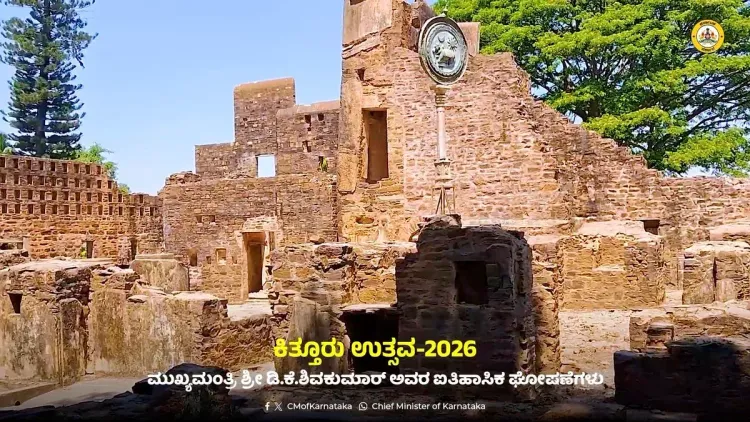
The Chief Minister's Office of Karnataka announced on October 28, 2026 that the state government has taken multiple 'historic decisions' to immortalise the name of Rani Chennamma .
Shivakumar is named as leading the government behind these decisions.
Rani Chennamma led an armed revolt against the British East India Company from Kittur fort in 1824 , decades before the 1857 uprising.
The announcement frames the effort as linking Kittur's historical glory to future development that brings 'new hope' to local residents.
Kittur is located in Belagavi district, Karnataka , and its fort complex is a key heritage site for the state.
Exact project details were not itemised in the post; specifics will be tracked through state budget and cultural department announcements.
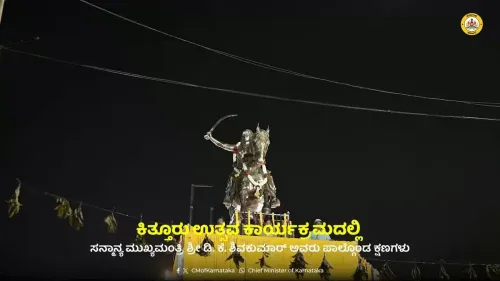
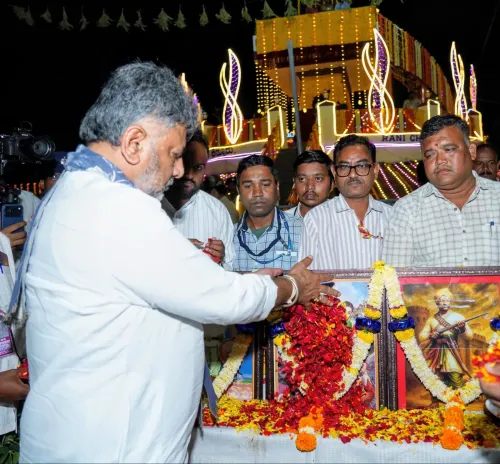
History and development rarely travel together — but in Kittur, Belagavi district, the Karnataka government is attempting exactly that convergence. On Wednesday, October 28, 2026, the Chief Minister's Office of Karnataka announced that the government, under the leadership of Chief Minister D.K. Shivakumar, has taken a series of historic decisions to immortalise the name of Rani Chennamma — and to bring new hope to the people of Kittur through concrete development work.
The post, written in Kannada, states: 'ಚೆನ್ನಮ್ಮನ ಹೆಸರನ್ನು ಚಿರಸ್ಥಾಯಿಗೊಳಿಸಲು ವಿವಿಧ ಐತಿಹಾಸಿಕ ನಿರ್ಧಾರಗಳನ್ನು ತೆಗೆದುಕೊಳ್ಳಲಾಗಿದೆ' — 'Various historic decisions have been taken to immortalise Chennamma's name.' It describes the government's effort as a bold step to weave together the glory of the past and the progress of the future through development works that fill the lives of Kittur's people with new hope.Who was Rani Chennamma — and why does Kittur still carry her weight?
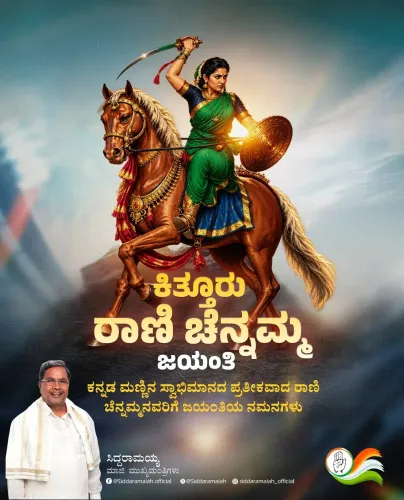
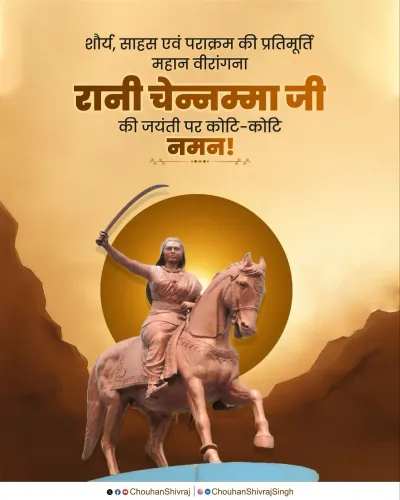
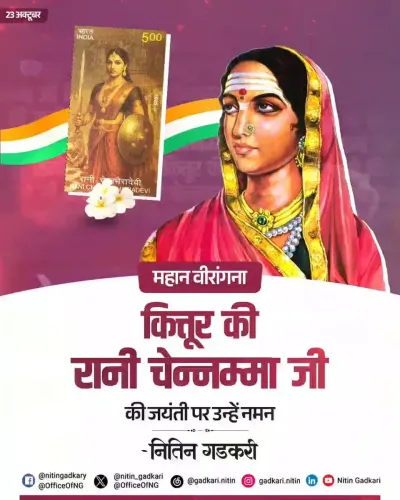
Rani Chennamma of Kittur is one of India's earliest armed resisters against British colonial rule. In 1824 — more than three decades before the 1857 uprising — she led her forces against the British East India Company when it sought to annex her kingdom under the Doctrine of Lapse. The revolt, launched from the Kittur fort in what is today Belagavi district, ended in her capture and eventual death in captivity. To generations of Kannadigas, she is not a footnote; she is a founding symbol of defiance.
That symbolic weight makes Kittur politically and culturally significant for any Karnataka government. State administrations across party lines have organised annual commemorations of the 1824 revolt, maintained the historic fort, and periodically announced development schemes for the town as part of broader heritage-linked programmes.
Linking memorialisation to development in Kittur
The announcement fits a well-established pattern across Indian state governments: pairing the memorialisation of regional anti-colonial icons with infrastructure upgrades at their associated historic sites. The logic is dual — cultural identity is reinforced, and local economies receive a boost through heritage tourism and civic improvements. Karnataka has followed this model with multiple 19th-century rulers and freedom-era figures from the region.
The specific decisions referenced in today's post were not itemised, but the framing — 'historic decisions' combined with 'development works' — suggests a package that spans both commemoration and local infrastructure. The Kittur fort complex and the town's broader civic fabric stand as the most likely sites of any such intervention.
For residents of Kittur, the promise is pointed: that honouring a queen who died for her land will translate into something tangible for the people who still live on it. Whether that promise holds will be visible in the rollout timelines and budget allocations that follow.
Point of View
Rani Chennamma is an ideologically safe, cross-caste symbol that allows CM Shivakumar to project a legacy-building image ahead of future electoral cycles. The Kittur region in Belagavi also sits in a politically contested belt, making heritage investment there doubly strategic. The real test will be whether the 'historic decisions' translate into funded, time-bound projects or remain aspirational statements.
NationPress
28 Oct 2026
Frequently Asked Questions
Who was Rani Chennamma of Kittur?
Rani Chennamma was the queen of the princely state of Kittur in present-day Belagavi district, Karnataka . In 1824 , she led one of India's earliest armed uprisings against the British East India Company , resisting the annexation of her kingdom. She was captured and died in captivity, becoming a revered anti-colonial symbol in Karnataka.
What decisions has the Karnataka government taken for Kittur?
The Chief Minister's Office of Karnataka announced on October 28, 2026 that the government under CM D.K. Shivakumar has taken various 'historic decisions' to immortalise Rani Chennamma's name and bring development to Kittur. The specific decisions were not detailed in the announcement.
Where is Kittur located?
Kittur is a town in Belagavi district in the northern part of Karnataka . It is home to the historic Kittur fort associated with the 1824 revolt led by Rani Chennamma.
Who is DK Shivakumar?
D.K. Shivakumar is a senior Karnataka politician who serves as the Chief Minister of Karnataka. He is a prominent leader of the Indian National Congress in the state.
When is the Kittur annual festival held?
Karnataka holds annual commemorations of the Kittur revolt of 1824 , typically around late October, marking Rani Chennamma's armed resistance against British forces. The Kittur Utsav is a state-level heritage event organised at or near the Kittur fort in Belagavi district.