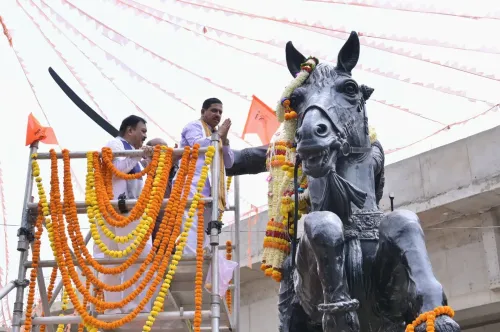
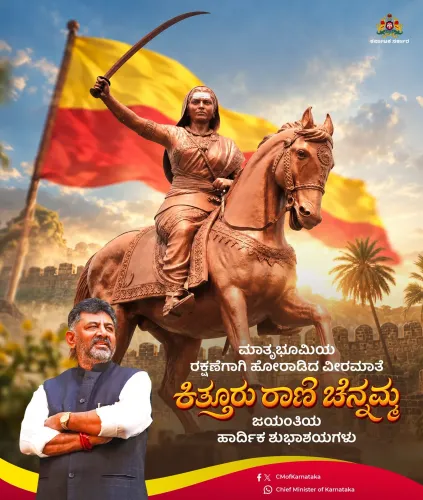
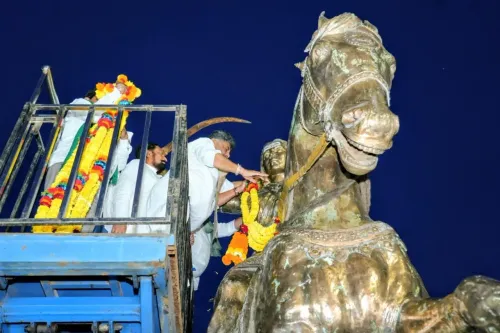
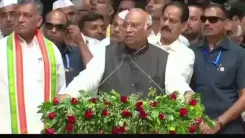
CM Karnataka pays floral tribute to Rani Chennamma in Kittur
Synopsis
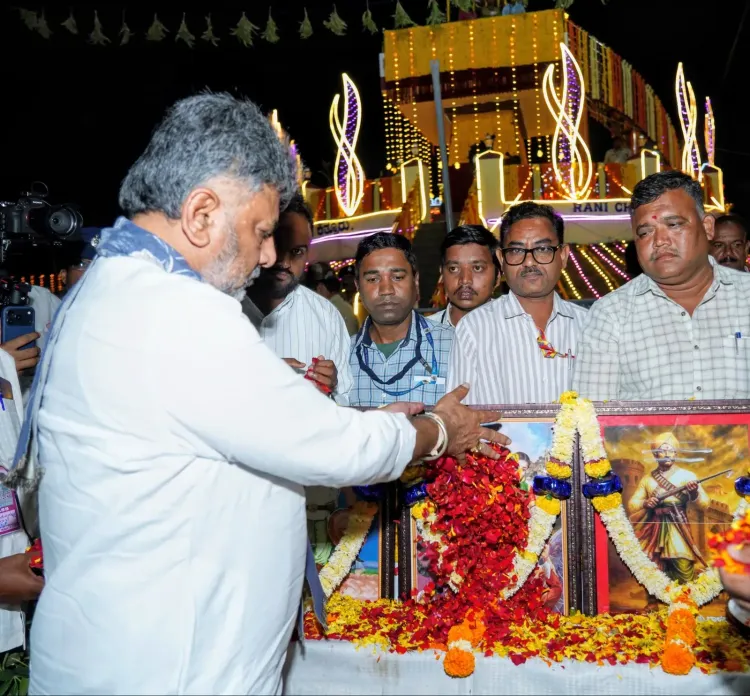
Karnataka CM DK Shivakumar visited Kittur in Belagavi district on 25 October 2026 to offer floral tributes at the statue of Rani Chennamma, the 19th-century queen who led one of India's earliest armed revolts against British colonial rule.
Key Takeaways
DK Shivakumar , Karnataka Chief Minister, paid floral tributes at the Kittur Rani Chennamma Circle in Belagavi district on 25 October 2026 .
Rani Chennamma led an armed revolt against the British East India Company in 1824 , one of the earliest anti-colonial uprisings in peninsular India.
The queen resisted the Company's Doctrine of Lapse after being denied the right to adopt an heir, and her forces killed a senior British officer in battle.
She was subsequently captured and died imprisoned at Bailhongal fort in 1829 .
The tribute is part of a broader tradition of Karnataka's political leadership marking the state's regional heritage through visits to Kittur.
At the Kittur Rani Chennamma Circle in Kittur, Belagavi district, Karnataka Chief Minister DK Shivakumar offered floral tributes on Sunday, 25 October 2026, honouring the warrior queen whose defiance of British colonial power nearly two centuries ago made her one of Karnataka's most enduring icons of resistance.
The Chief Minister's Office of Karnataka confirmed the visit, noting that Shivakumar garlanded the statue of Rani Chennamma at her namesake circle in Kittur and paid his respects to the 'veeravanithe' — the brave woman — as she is reverentially known in Kannada tradition.
The queen who said no to the East India Company
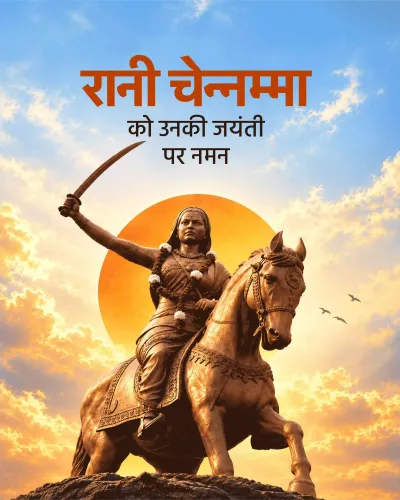
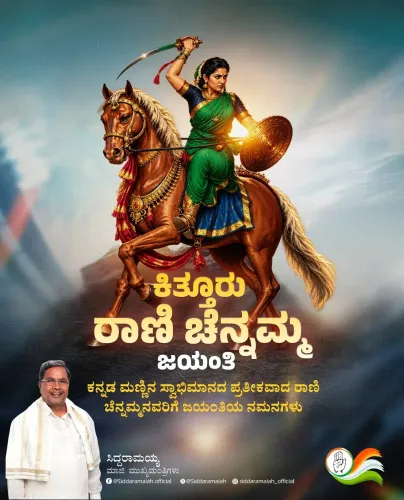
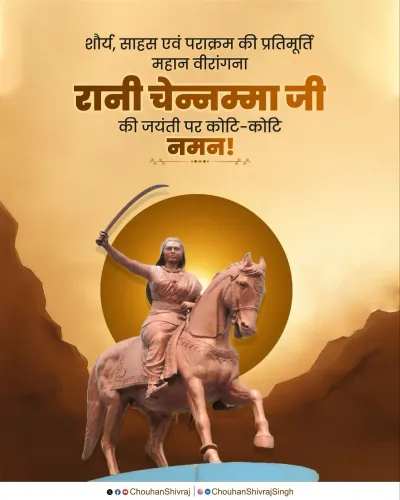
Rani Chennamma, queen of the princely state of Kittur, mounted an armed revolt against the British East India Company in 1824 — decades before the more widely remembered uprising of 1857. Her resistance was triggered by the Company's application of the Doctrine of Lapse, which sought to deny her the right to adopt an heir after the death of her husband. She not only refused to submit but led forces that killed a senior British officer in battle, making Kittur one of the earliest flashpoints of anti-colonial defiance in peninsular India.
Though ultimately captured and imprisoned at Bailhongal fort, where she died in 1829, Rani Chennamma's legacy endures as a symbol of sovereignty, courage, and the long arc of resistance that eventually led to independence. Her statue at Kittur stands at the very circle named in her honour — a permanent civic reminder of that history.
Belagavi, Kittur, and the politics of regional heritage
Belagavi district carries deep historical and political weight in Karnataka. Home to the Kittur fort complex and the site of several Congress sessions from the colonial era, the region is a touchstone for both state pride and political mobilisation. Karnataka's political leadership — across parties — has long made ceremonial visits to Kittur a part of public life, linking present governance to the region's storied past.
For the ruling Congress government, such tributes also carry a quiet message: that the party sees itself as the inheritor of a tradition of resistance and people-first politics that stretches back to figures like Rani Chennamma.
Two hundred years after her revolt, Rani Chennamma's circle in Kittur remains a living civic space — and the flowers laid there today are a reminder that some defiances are never forgotten.
Point of View
The optics of paying homage to a 19th-century queen who defied imperial overreach carry clear symbolic resonance — connecting the ruling party's identity to a pre-independence lineage of people's sovereignty. Belagavi district, which also sits at the heart of the Maharashtra-Karnataka border dispute, is politically sensitive terrain, and visible engagement with its heritage is rarely incidental. The visit signals sustained attention to north Karnataka, a region that historically swings state electoral fortunes.
NationPress
25 Oct 2026
Frequently Asked Questions
Who is Rani Chennamma and why is she important?
Rani Chennamma was the queen of Kittur in present-day Belagavi district, Karnataka. She led one of India's earliest armed revolts against the British East India Company in 1824, resisting the Doctrine of Lapse that denied her the right to adopt an heir. Her rebellion is considered a landmark moment of anti-colonial defiance in southern India.
Where is Kittur and what is the Kittur Rani Chennamma Circle?
Kittur is a town in Belagavi district in northern Karnataka. The Kittur Rani Chennamma Circle is a prominent public space in the town featuring a statue of the warrior queen, named in her honour and regularly visited by political leaders paying tribute to her legacy.
Why did DK Shivakumar visit Kittur on 25 October 2026?
Karnataka CM DK Shivakumar visited Kittur to offer floral tributes at the statue of Rani Chennamma, as part of the tradition of Karnataka's political leaders honouring the state's historical freedom fighters at significant heritage sites.
What was the Doctrine of Lapse that triggered Rani Chennamma's revolt?
The Doctrine of Lapse was a British East India Company policy that refused to recognise an adopted heir and used that pretext to annex a princely state. When applied to Kittur after her husband's death in 1824, Rani Chennamma rejected it outright and took up arms.
When did Rani Chennamma die and where was she imprisoned?
Rani Chennamma was captured after the British suppressed her revolt and was imprisoned at Bailhongal fort in present-day Karnataka, where she died in 1829.