Sonowal meets Indian shipbuilding diaspora in Busan
Synopsis
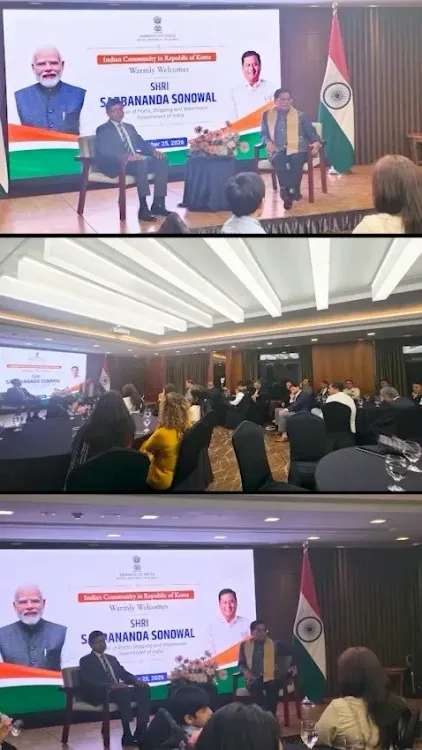
Union Minister Sarbananda Sonowal met the Indian shipbuilding diaspora in Busan on 25 October 2026, positioning them as a 'living bridge' under the VOYAGES framework to advance India's ambition of becoming a top-five shipbuilding nation by 2047.
Key Takeaways
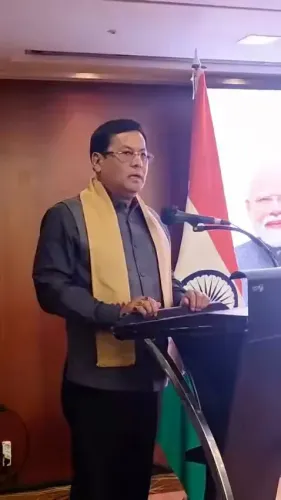
Sarbananda Sonowal held an interaction with Indian shipbuilding professionals in Busan, South Korea on 25 October 2026 .
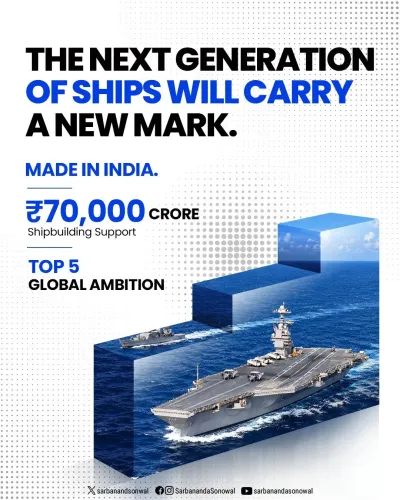
India has set a target to become a top-five shipbuilding nation by 2047 , aligned with PM Modi's Viksit Bharat vision.
The minister invoked the VOYAGES framework — a bilateral maritime cooperation structure — as the channel for diaspora-led knowledge transfer.
India's shipbuilding revival is underpinned by the Sagarmala Project (2015) and Maritime India Vision 2030 (2021) .
South Korea, home to firms like Hyundai Heavy Industries , represents the technological benchmark India is targeting.
The Busan engagement signals that diaspora communities are being activated as an instrument of industrial diplomacy, not just soft power.
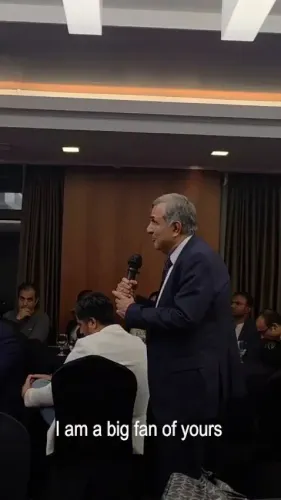
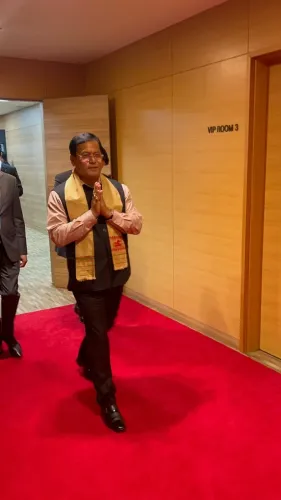
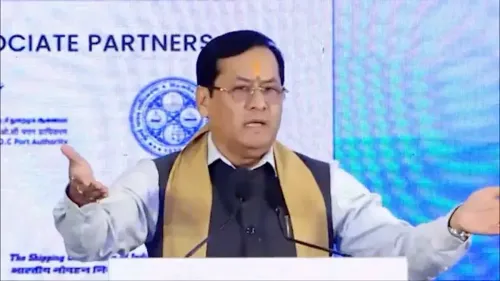
In the port city that built a third of the world's ships last year, Union Minister of Ports, Shipping and Waterways Sarbananda Sonowal sat down with members of the Indian shipbuilding community in Busan on Sunday, 25 October 2026 — and walked away calling them a 'living bridge' between two maritime nations with serious ambitions for each other.
Why Busan, why now
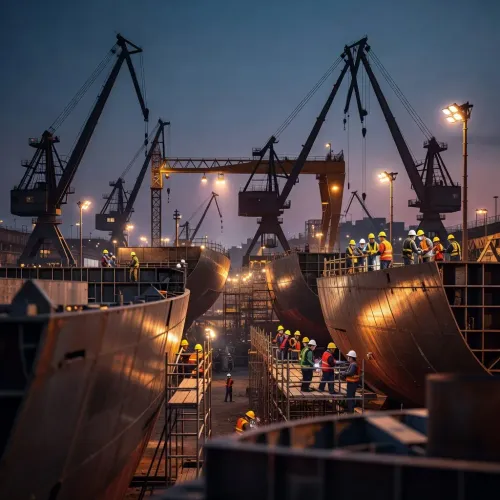
Busan is not incidental to this conversation. South Korea's largest port city is the nerve centre of an industry that gave the world Hyundai Heavy Industries and a cluster of yards that have long defined what high-value vessel construction looks like. For India, which still builds a fraction of the ships it operates, that model is both a benchmark and a blueprint.
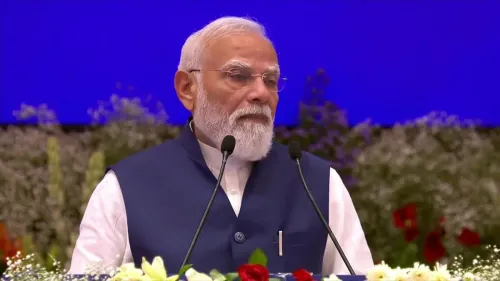
Sonowal framed the meeting in the context of Prime Minister Narendra Modi's stated goal of making India a top-five shipbuilding nation by 2047 — the centenary of independence and the horizon year for the Viksit Bharat (Developed India) mission. The minister described the diaspora's expertise across top maritime organisations as 'a matter of immense pride for India.'
The VOYAGES framework and diaspora as policy instrument
Sonowal specifically invoked the VOYAGES framework, a bilateral maritime cooperation structure between India and South Korea, as the channel through which the diaspora can operationalise that bridge role. The framing is deliberate: rather than treating overseas professionals merely as a source of remittances or soft diplomacy, the minister positioned them as active vectors for technology transfer, institutional knowledge, and industry linkage.
India's shipbuilding revival has structural roots stretching back to the Sagarmala Project of 2015, designed for port-led coastal development, and the Maritime India Vision 2030 launched in 2021, which set out a comprehensive modernisation agenda for ports, shipping lanes, and domestic yards. What has been harder to close is the gap in high-end vessel design and construction — precisely where South Korea's accumulated expertise sits.
Atmanirbhar at sea: the strategic logic
India's dependence on foreign shipyards for complex vessels — naval vessels aside — is a well-documented structural weakness. The wider Atmanirbhar Bharat push has identified shipbuilding as a strategic sector where domestic capacity must grow, not just for commercial reasons but for supply-chain sovereignty. South Korea's ascent from a late industrialiser to the world's dominant shipbuilding force within a generation is the arc Indian policymakers cite most often when articulating what is possible.
The Busan interaction signals that engagement is not waiting for a formal bilateral summit. Diaspora communities in maritime hubs are being activated as an informal but consequential layer of India's industrial diplomacy — cheaper, faster, and often more credible than government-to-government channels alone.
What comes next for India-South Korea maritime ties
The immediate watch point is whether the Busan conversations produce any follow-through — specific technology-sharing agreements, talent pipelines back to Indian yards, or dedicated line items in an upcoming Union Budget that sharpen the shipbuilding incentive structure. The India–South Korea bilateral relationship has already deepened across defence and electronics; maritime is the next logical frontier.
With 2047 as the declared finish line and a diaspora in one of the world's premier shipbuilding cities as the starting point, India's ambition to build its way into the top five is no longer just a vision document. The minister just put people to work on it.
Point of View
But the South Korean model proves rapid ascent is structurally possible with sustained state-backed incentives and institutional capacity. The VOYAGES framework, if it produces binding cooperation mechanisms, could accelerate the kind of design and engineering transfer that no government tender or budget line alone can deliver. The real test is whether this diaspora engagement translates into measurable orders, apprenticeships, or joint ventures at Indian yards within the next budget cycle.
NationPress
25 Oct 2026
Frequently Asked Questions
What is India's shipbuilding target for 2047?
India aims to become a top-five shipbuilding nation globally by 2047, the centenary of its independence, as part of the Viksit Bharat development mission led by Prime Minister Narendra Modi.
What is the VOYAGES framework between India and South Korea?
The VOYAGES framework is a bilateral maritime cooperation structure between India and South Korea. Minister Sonowal described the Indian diaspora in Busan as a 'living bridge' to drive cooperation under this framework, though full details of its provisions have not been officially published.
Why did Sarbananda Sonowal visit Busan?
Sonowal visited Busan, South Korea's premier port and shipbuilding hub, to interact with Indian maritime professionals based there and to advance India-South Korea cooperation in the shipping and shipbuilding sector.
What is Maritime India Vision 2030?
Maritime India Vision 2030 is a government policy launched in 2021 to modernise India's ports, promote domestic shipbuilding, and enhance coastal and inland waterway logistics as part of a broader port-led development strategy.
How does South Korea's shipbuilding compare to India's?
South Korea is one of the world's top shipbuilding nations, home to globally dominant yards such as Hyundai Heavy Industries, and commands a large share of high-value vessel construction. India, by contrast, builds a relatively small share of the ships it operates and is actively working to close this gap through policy incentives and international partnerships.