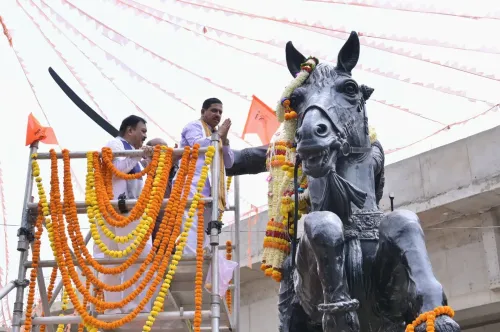
Rajnath Singh pays tribute to Rani Chennamma on her birth anniversary
Synopsis
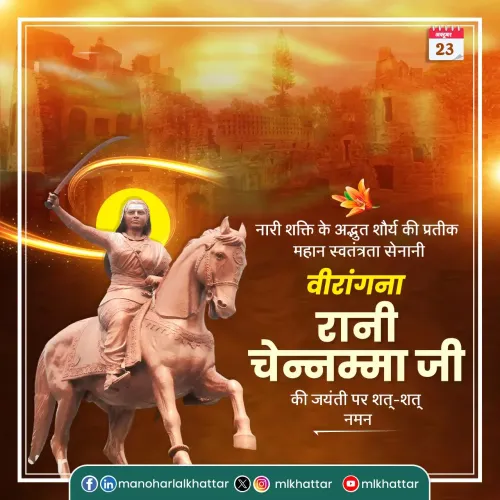
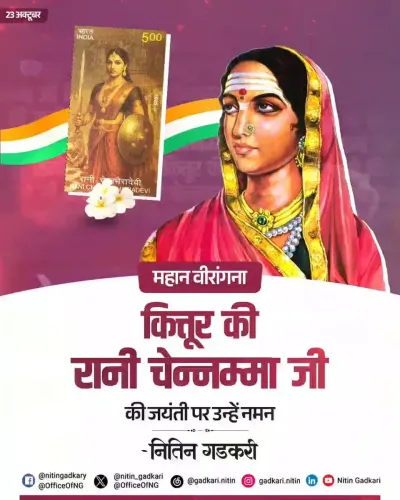
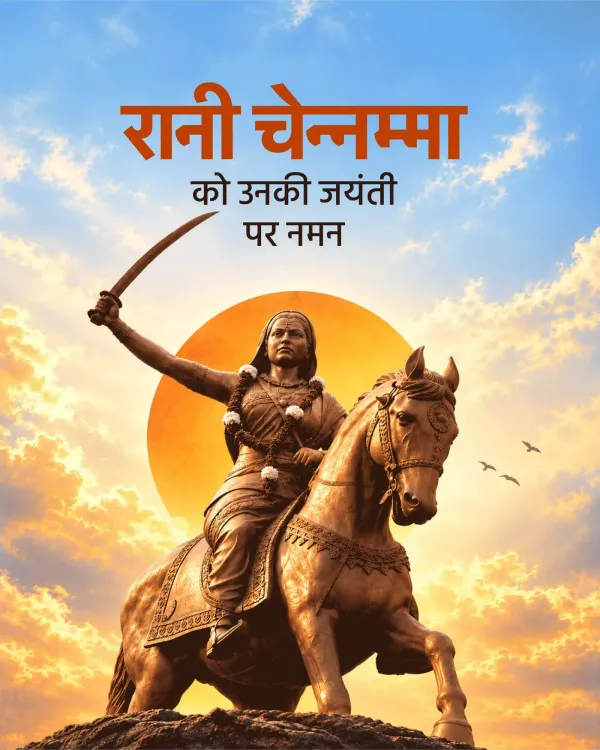
Union Defence Minister Rajnath Singh on 23 October 2026 paid tribute to Rani Chennamma of Kittur on her birth anniversary, hailing the queen's 1824 armed revolt against the British as a glorious chapter of Indian history and an immortal example of women's patriotism.
Key Takeaways
Rajnath Singh posted a birth-anniversary tribute to Rani Chennamma of Kittur on 23 October 2026 .
He described her armed resistance against British rule as 'a glorious chapter in Indian history' and an 'immortal example of Indian women's power and patriotism'.
Rani Chennamma led one of India's earliest armed revolts against the British East India Company in 1824 , resisting the doctrine of lapse.
Kittur , her princely state, is located in present-day Karnataka ; her forces defeated a British contingent in the initial engagement.
The tribute fits a consistent BJP pattern of honouring pre-1857 women resisters to foreground their role in India's anti-colonial history.
Nearly two centuries after she picked up arms against the British East India Company, Rani Chennamma of Kittur is remembered once again — this time by Union Defence Minister Rajnath Singh, who on Friday, 23 October 2026 paid homage to the warrior queen on her birth anniversary, calling her an unmatched symbol of courage and valour.
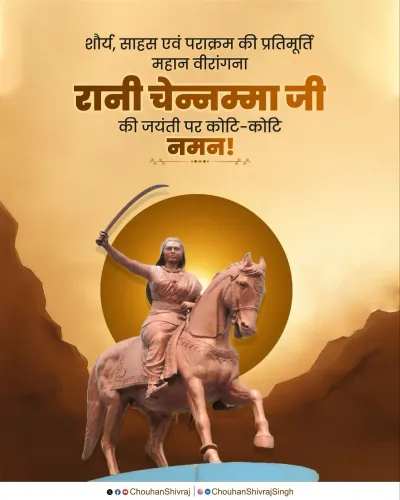
Singh wrote on X: 'Advitiya shaurya aur veerta ki prateek Veerangana Kittur ki Rani Chennamma ko unki jayanti par koti-koti naman' — 'Heartfelt salutations to Veerangana Rani Chennamma of Kittur, the embodiment of unparalleled bravery, on her birth anniversary.' He described her defiance against the oppressive policies of British rule as 'a glorious chapter in Indian history', and hailed her unwavering resolve to protect the freedom and honour of the motherland as 'an immortal example of Indian women's power and patriotism'.
The queen who said no to the Doctrine of Lapse
Rani Chennamma ruled the princely state of Kittur, located in present-day Karnataka. In 1824, she mounted one of the earliest armed revolts against the British East India Company after it moved to annex Kittur under the doctrine of lapse — a colonial policy that denied Indian rulers the right to adopt heirs. Her resistance was not merely symbolic: Kittur's forces defeated a British contingent in the initial engagement, making her among the first rulers in southern India to inflict a military loss on colonial troops.
She was eventually captured and died in British captivity, but her legacy endured as a forerunner of the 1857 uprising. Singh's tribute underscores this lineage — framing Chennamma's sacrifice not as a regional footnote, but as a foundational moment in India's long arc toward independence.
BJP's consistent spotlight on pre-1857 women resisters
Senior BJP ministers have made it a consistent practice to mark the birth and death anniversaries of pre-1857 figures who took up arms against colonial expansion, with a particular emphasis on women leaders. The language Singh deployed — 'rashtra-hit ko sarvopari' ('keeping national interest paramount') — tracks closely with tributes issued across multiple ministerial accounts on similar occasions, reflecting a deliberate political and cultural emphasis on early armed resistance.
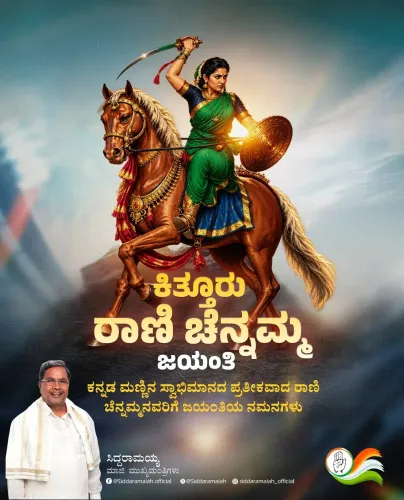
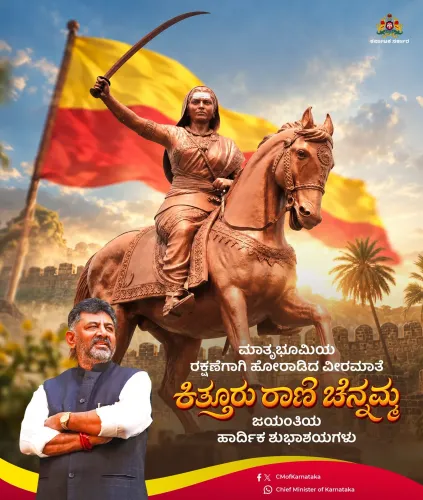
Karnataka, home to Kittur, has its own tradition of state-level commemorations around 23 October, and the Defence Minister's post amplifies that regional remembrance on a national platform.
A queen who chose the battlefield over submission, Rani Chennamma's story is a reminder that India's freedom was not won in a single moment — it was built across centuries of defiance, and its architects were not always who history's first drafts recorded.
Point of View
Spotlighting regional and women resisters who pre-date the more canonical independence movement. By invoking themes of 'national interest paramount' and 'defiance against injustice', the Defence Minister's language serves a dual purpose: honouring genuine historical courage while reinforcing a particular vision of Hindu-nationalist patriotism rooted in armed sacrifice. The consistent ministerial calendar of such tributes signals institutional messaging, not just individual sentiment. For Karnataka, where Kittur occupies a proud place in local memory, the national-level amplification also carries subtle electoral resonance.
NationPress
23 Oct 2026
Frequently Asked Questions
Who was Rani Chennamma of Kittur?
Rani Chennamma was the queen of the princely state of Kittur in present-day Karnataka. In 1824, she led one of India's earliest armed revolts against the British East India Company, which was attempting to annex Kittur under the doctrine of lapse. Her forces initially defeated a British contingent before she was captured and died in British captivity.
Why is 23 October significant for Rani Chennamma?
23 October is observed as Rani Chennamma's birth anniversary and is commemorated with state-level events in Karnataka and tributes from national leaders. Karnataka holds official celebrations honouring her legacy on this date.
What is the Kittur revolt of 1824?
The Kittur revolt of 1824 was an armed uprising led by Rani Chennamma against the British East India Company's attempt to annex Kittur using the doctrine of lapse — a colonial policy that denied Indian rulers the right to adopt heirs. It is considered one of the earliest instances of armed resistance to British expansion in southern India.
Why did Rajnath Singh pay tribute to Rani Chennamma?
Union Defence Minister Rajnath Singh posted the tribute on X on her birth anniversary, 23 October 2026, calling her courage an 'immortal example of Indian women's power and patriotism'. The tribute is also part of a consistent BJP practice of honouring pre-1857 figures who resisted British rule.
Where is Kittur located?
Kittur is a town located in present-day Karnataka, India. It was once an independent princely state whose queen, Rani Chennamma, became a symbol of early resistance to British colonial rule.