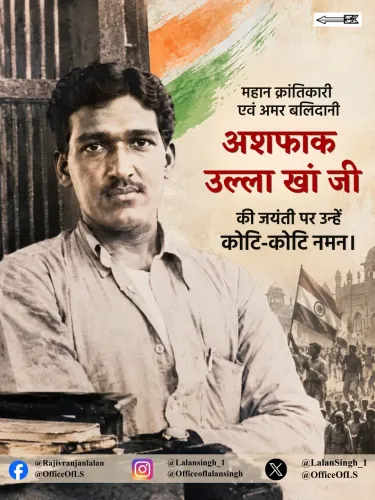
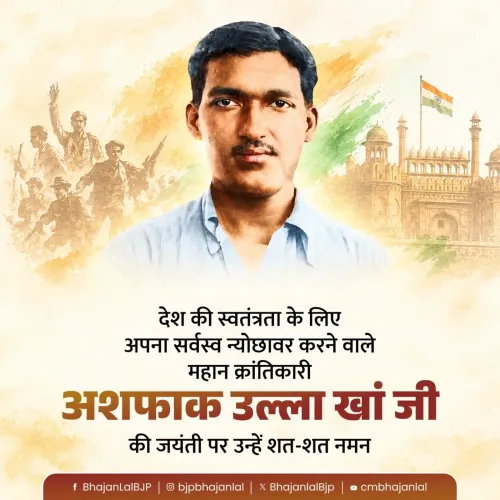
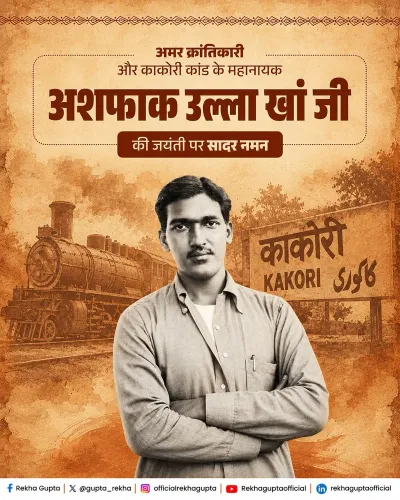
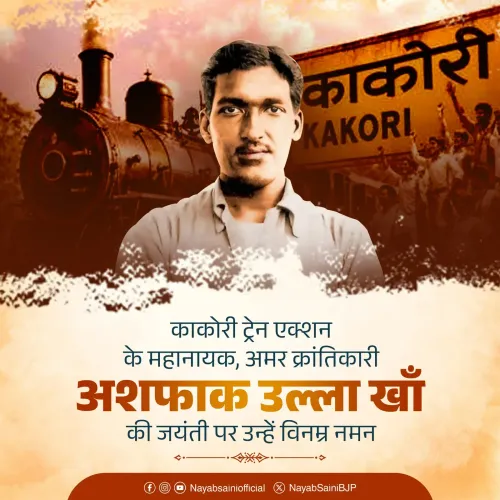
Rajnath Singh pays tribute to martyr Ashfaqulla Khan on birth anniversary
Synopsis
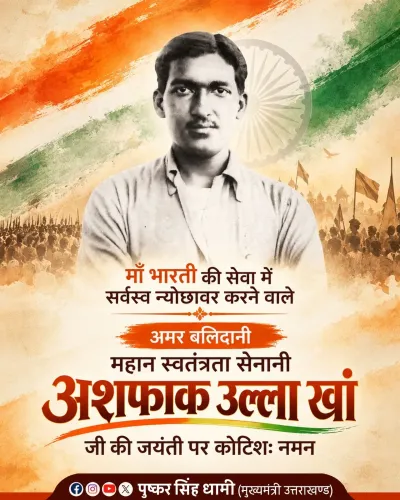
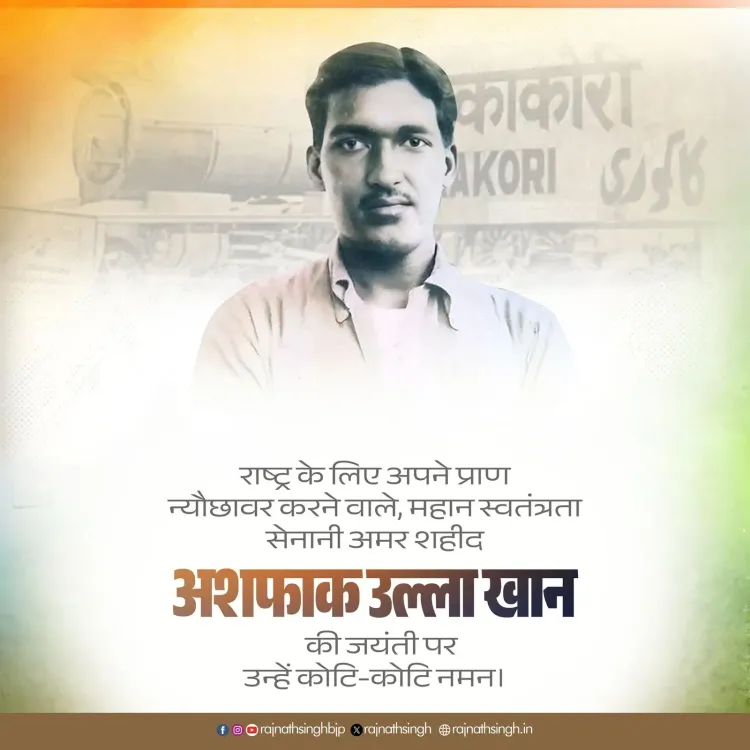
Union Defence Minister Rajnath Singh on 22 October 2026 honoured revolutionary martyr Ashfaqulla Khan on his birth anniversary, saluting the Kakori conspirator's supreme sacrifice and calling his patriotism an eternal inspiration for future generations.
Key Takeaways
Rajnath Singh posted a formal tribute to Ashfaqulla Khan on his birth anniversary on 22 October 2026 .
Ashfaqulla Khan was a member of the Hindustan Republican Association and a key participant in the Kakori train robbery of 1925 .
Khan was executed by British colonial authorities in 1927 , becoming one of the era's most celebrated revolutionary martyrs.
Singh praised Khan's 'unwavering dedication,' 'bravery,' and 'selflessness,' saying his legacy will inspire future generations to serve the nation.
The tribute reflects the BJP-led government's broader practice of honouring diverse figures from the independence movement, including those outside the dominant Congress narrative.
A century after he faced the gallows for daring to challenge British rule, Ashfaqulla Khan continues to command salutes from the highest offices of the Indian republic. On 22 October 2026 — his birth anniversary — Union Defence Minister Rajnath Singh offered a formal tribute to the revolutionary, honouring his sacrifice and enduring legacy.
Posting on X, Rajnath Singh wrote: 'Bharat ki aazadi ke liye apna sarvasva nyochhawar karne wale amar krantikari Shaheed Ashfaqulla Khan ji ki jayanti par unhe saadar naman.' — 'Respectful salutations to immortal revolutionary Martyr Ashfaqulla Khan, who sacrificed everything for India's freedom.' Singh added that Khan's 'unwavering dedication and supreme sacrifice for the nation will always be remembered,' and that his 'bravery, selflessness, and patriotism will forever inspire coming generations to serve the nation.'
The Kakori conspirator who gave everything
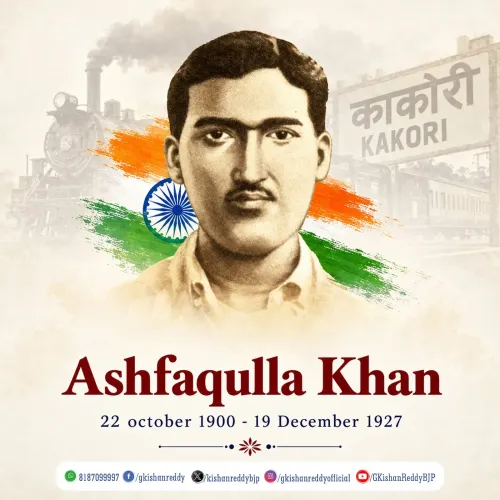
Ashfaqulla Khan was a central figure in the Hindustan Republican Association, the revolutionary organisation that shook the British administration in the mid-1920s. He was a close comrade of Ram Prasad Bismil and took part in the audacious Kakori train robbery of 1925 — an act designed to seize British government funds and finance the armed independence struggle. Arrested in the aftermath, he was tried by colonial authorities and executed in 1927, becoming one of the youngest martyrs of that era.
What made Khan's story resonate across generations was not just his courage but his identity — a young Muslim revolutionary whose commitment to a unified, free India cut across communal lines at a time when the British were actively working to exploit those divisions. His bond with Bismil, a Hindu revolutionary, became an enduring symbol of composite nationalism.
Why the BJP frames these tributes broadly
Successive Indian governments have long marked the birth and death anniversaries of independence-era revolutionaries through official statements, with the Ministry of Culture and state administrations routinely joining in. The BJP-led central government has notably expanded this tradition to highlight figures — particularly those outside the mainstream Congress-centric narrative of the freedom movement — as part of a broader effort to present a more pluralistic account of the independence struggle. Honouring a figure like Ashfaqulla Khan, who embodies both revolutionary militancy and cross-communal solidarity, carries weight in that framing.
For Rajnath Singh, a leader with deep roots in Uttar Pradesh — the very state where Kakori occurred and where Khan was born — the tribute also carries regional resonance. As a former Chief Minister of the state and long-time political figure there, Singh's acknowledgement of Khan connects the national narrative to local memory.
Similar official tributes are expected in the coming months as anniversaries of other Kakori-era revolutionaries approach. The revolution they sparked has never really gone quiet.
Point of View
Countering the perception that the party's nationalism is exclusionary. Honouring a Muslim revolutionary who embodied Hindu-Muslim solidarity in the freedom struggle is politically pointed without being polemical. The choice of Ashfaqulla Khan, a figure closely associated with Uttar Pradesh's revolutionary heritage, also reinforces Singh's personal connect with the state where he built his political career. As anniversaries of other Kakori figures approach, expect this pattern of plural, cross-community nationalist commemoration to continue.
NationPress
22 Oct 2026
Frequently Asked Questions
Who was Ashfaqulla Khan?
Ashfaqulla Khan was a revolutionary freedom fighter and member of the Hindustan Republican Association who participated in the 1925 Kakori train robbery against British colonial rule. He was executed by British authorities in 1927 and is remembered as one of India's celebrated martyrs.
What was the Kakori train robbery?
The Kakori train robbery of 1925 was an audacious act by revolutionary members of the Hindustan Republican Association, including Ashfaqulla Khan and Ram Prasad Bismil, who looted British government funds from a train in Uttar Pradesh to finance the armed independence movement.
Why did Rajnath Singh pay tribute to Ashfaqulla Khan?
Rajnath Singh paid tribute on 22 October 2026, Ashfaqulla Khan's birth anniversary, honouring his sacrifice for India's independence and calling his patriotism an eternal inspiration for future generations.
What is Ashfaqulla Khan's connection to Uttar Pradesh?
Ashfaqulla Khan was born in Uttar Pradesh and the Kakori train robbery that made him famous also took place in the state. Uttar Pradesh has long honoured him as one of its most celebrated revolutionary sons.
How does the BJP government approach freedom fighter tributes?
The BJP-led central government has regularly issued tributes on the anniversaries of independence-era revolutionaries, including figures from diverse backgrounds who were not central to the Congress-led mainstream narrative of the freedom movement.