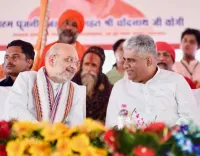
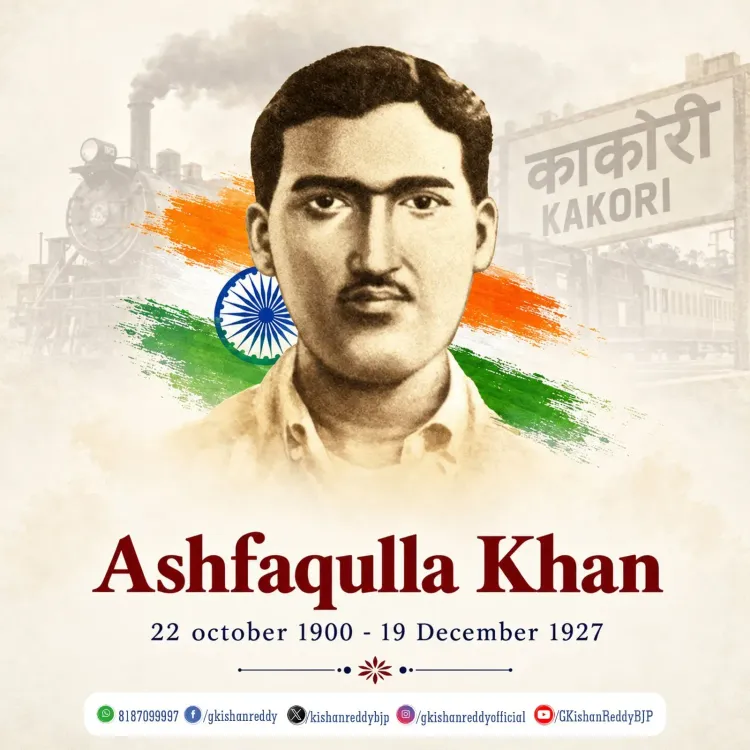
Kishan Reddy Remembers Shaheed Ashfaqulla Khan on Birth Anniversary
Synopsis
Union Coal and Mines Minister G. Kishan Reddy honoured Shaheed Ashfaqulla Khan on his birth anniversary, recalling the revolutionary's co-founding of the HRA and his pivotal role in the 1925 Kakori Train Action alongside Ram Prasad Bismil, for which he was hanged at 27.
Key Takeaways
Kishan Reddy paid tribute to Shaheed Ashfaqulla Khan on his birth anniversary on October 22, 2026 .
Ashfaqulla Khan was a co-founder of the Hindustan Republican Association (HRA) , established in 1924 to organise armed resistance against British rule.
Khan was a key participant in the Kakori Train Action of August 9, 1925 , alongside revolutionary poet Ram Prasad Bismil .
The subsequent Kakori Conspiracy Trial (1925–1927) resulted in his death sentence; he was hanged on December 19, 1927 , aged just 27 .
BJP ministers regularly mark anniversaries of armed revolutionaries as part of a wider effort to integrate the revolutionary strand into mainstream national memory.
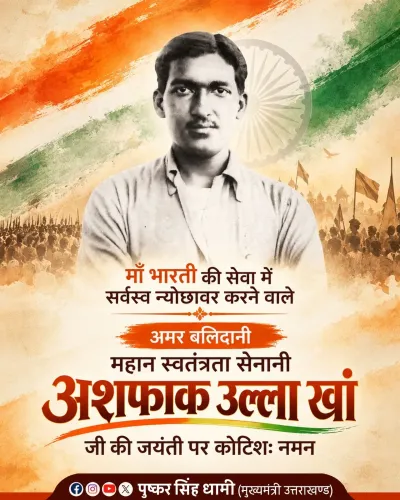
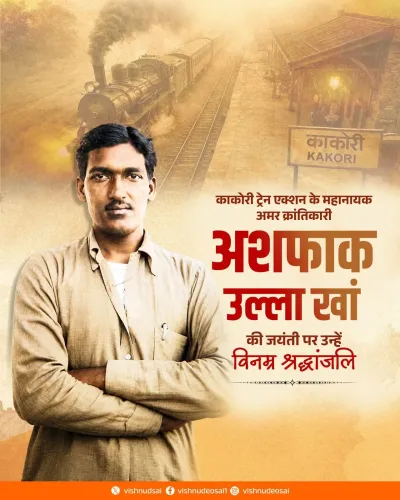
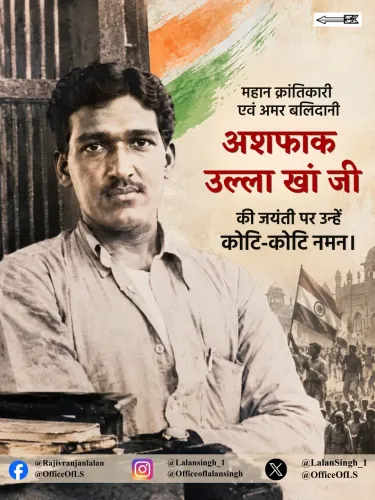
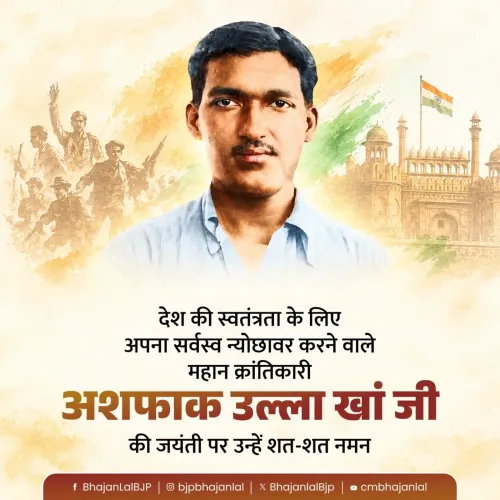
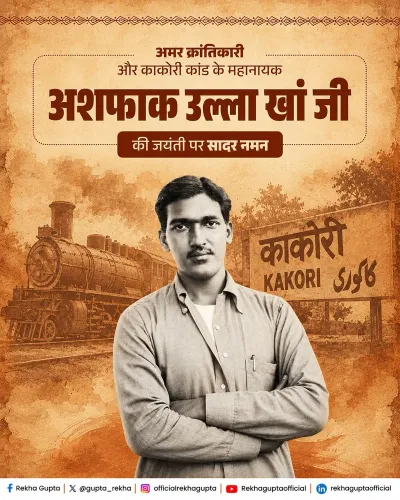
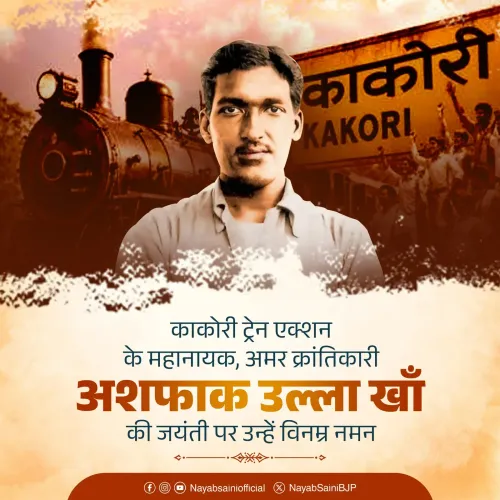
At 27 years old, Ashfaqulla Khan walked to the gallows — and Union Coal and Mines Minister G. Kishan Reddy marked the revolutionary's birth anniversary on Thursday, October 22, with a tribute on X, honouring the man whose courage helped ignite an armed challenge to British rule a century ago.
The Man Behind the Kakori Action
Ashfaqulla Khan, born in 1900 in Shahjahanpur, was a central figure in the Hindustan Republican Association (HRA) — the underground revolutionary organisation founded in 1924 with the explicit aim of organising armed resistance against colonial rule. He was not just a foot soldier; he was one of its architects. His closest revolutionary bond was with Ram Prasad Bismil, poet, tactician, and the driving force behind the audacious plan that would define both their legacies.
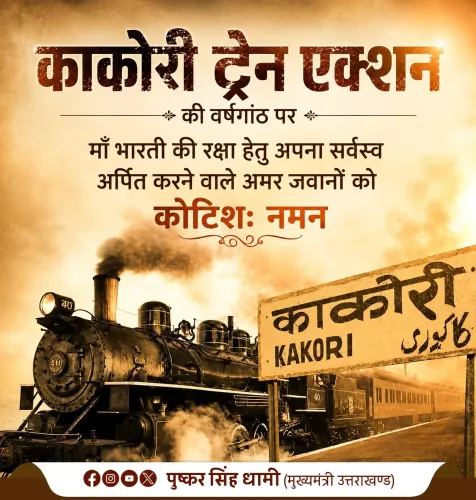
On August 9, 1925, Khan, Bismil, and a small band of HRA members stopped a government train near Kakori in present-day Uttar Pradesh and seized its treasury — not for personal gain, but to fund the revolution. The British response was swift and overwhelming. The Kakori Conspiracy Trial of 1925–1927 became one of colonial India's most politically charged legal proceedings.
The Conspiracy Trial and the Gallows
The trial ended with death sentences for Ashfaqulla Khan, Ram Prasad Bismil, Roshan Singh, and Thakur Roshan Singh, among others. Ashfaqulla Khan was hanged on December 19, 1927 — at just 27 years of age. The HRA, shaken but not broken, would later reconstitute itself as the Hindustan Socialist Republican Association (HSRA), the organisation that would go on to include figures like Bhagat Singh and Chandrashekhar Azad.
Minister Reddy's post specifically highlighted the 'supreme sacrifice' of Khan alongside his co-conspirator Bismil, calling it 'a proud chapter in India's freedom struggle and a lasting symbol of selfless devotion to the motherland.' The tribute underscores a broader pattern: BJP ministers have consistently and deliberately elevated armed revolutionaries — long overshadowed by the Congress-centric narrative of the independence movement — into the mainstream of national memory.
Integrating the Revolutionary Strand into National Memory
The HRA's story occupies a distinct and sometimes contested corner of India's freedom struggle historiography. Its members believed that petitions and civil disobedience alone would not break imperial power — only direct action would. That ideological fork in the road between constitutionalist and revolutionary approaches to independence has always made figures like Khan and Bismil politically resonant in contemporary India.
For the BJP and its broader ideological ecosystem, commemorating these fighters serves a dual purpose: honouring genuine martyrs and broadening the party's claim to the complete legacy of India's independence movement. Reddy's post — 'Jai Hind!' — lands with exactly that weight.
Point of View
But also the armed revolutionary tradition. For a party that has historically contested the Congress's ownership of the freedom struggle narrative, figures like Khan and Bismil offer powerful, non-partisan symbols of sacrifice that transcend party lines. Reddy's tribute, coming from a prominent minister who doubles as Telangana BJP president, also signals how national historical memory is mobilised at every level of the party's leadership. The pattern will almost certainly continue on the anniversaries of Bhagat Singh, Chandrashekhar Azad, and other HSRA figures.
NationPress
22 Oct 2026
Frequently Asked Questions
Who was Ashfaqulla Khan?
Ashfaqulla Khan was an Indian revolutionary born in 1900 who co-founded the Hindustan Republican Association (HRA) and played a central role in the Kakori Train Action of 1925 . He was hanged by the British on December 19, 1927 , at the age of 27 .
What was the Kakori Train Action?
The Kakori Train Action took place on August 9, 1925 , when members of the HRA, including Ashfaqulla Khan and Ram Prasad Bismil, stopped a British government train near Kakori in present-day Uttar Pradesh and seized its treasury to fund revolutionary activities against colonial rule.
What was the Hindustan Republican Association?
The Hindustan Republican Association (HRA) was an underground revolutionary organisation founded in 1924 with the goal of using armed resistance to overthrow British rule in India. It later reorganised as the Hindustan Socialist Republican Association (HSRA) , which included Bhagat Singh and Chandrashekhar Azad.
Why did G. Kishan Reddy post a tribute to Ashfaqulla Khan?
October 22 marks the birth anniversary of Ashfaqulla Khan. Union Minister G. Kishan Reddy posted the tribute as part of a wider practice among BJP leaders to honour revolutionary freedom fighters on their birth and martyrdom anniversaries.
What was the connection between Ashfaqulla Khan and Ram Prasad Bismil?
Ashfaqulla Khan and Ram Prasad Bismil were close comrades and co-leaders of the HRA . They planned and executed the Kakori Train Action together and were both sentenced to death in the Kakori Conspiracy Trial, with Bismil hanged on December 19, 1927 — the same day as Khan.