Kishan Reddy: Chhendipada mine turned green ecosystem
Synopsis
Union Coal and Mines Minister G. Kishan Reddy announced the scientific closure of Chhendipada OCP in Odisha, with 13.6 hectares reclaimed, 64,350 saplings planted, and a 5-hectare water recharge zone created by Mahanadi Coalfields Limited.
Key Takeaways
Chhendipada Open Cast Project (OCP) in Angul district, Odisha , operated by Mahanadi Coalfields Limited , has been scientifically closed.
13.6 hectares of mined land have been reclaimed as part of the ecological restoration effort.
Over 64,350 saplings have been planted across the reclaimed site.
A 5-hectare water recharge zone has been developed to restore groundwater levels.
The closure is cited as aligned with the Ministry of Coal's Sustainable Development Cell , established in 2019 .
The project sets a template for end-of-life mine restoration across Coal India's wider portfolio of subsidiaries.
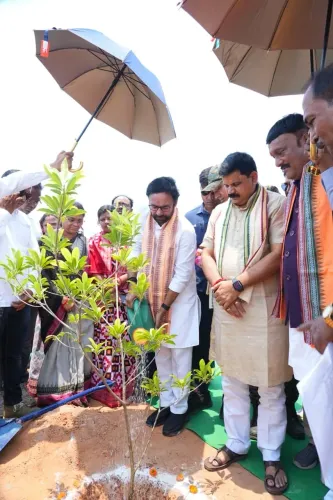
A former open-cast coal mine in Odisha has been handed back to nature. Union Coal and Mines Minister G. Kishan Reddy on Thursday, 22 October 2026, announced the scientific closure of the Chhendipada Open Cast Project (OCP) — a milestone he framed as a direct expression of Prime Minister Narendra Modi's sustainable-development vision, citing the reclamation of 13.6 hectares of mined land, the planting of over 64,350 saplings, and the creation of a 5-hectare water recharge zone on what was once an active mining site.
From coal face to green cover at Chhendipada
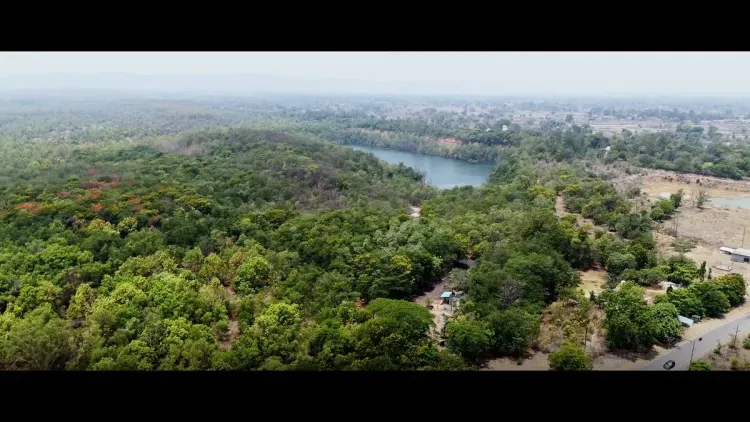
The Chhendipada Open Cast Project sits in Angul district, Odisha, and was operated by Mahanadi Coalfields Limited (MCL), a subsidiary of Coal India Limited. Its scientific closure converts a stripped landscape into a functioning ecosystem — with plantation cover, restored topsoil, and a recharge zone designed to replenish groundwater drawn down during years of mining. The numbers tell a precise story: more than 64,350 saplings across 13.6 hectares, and a five-hectare water body engineered not just for aesthetics but for hydrological recovery.
Minister Reddy's post tagged the Ministry of Mines, the Ministry of Coal, and Mahanadi Coalfields directly — signalling institutional ownership of the outcome across the full chain of command. The project is one of the more tangible outputs of the Ministry of Coal's Sustainable Development Cell, set up in 2019 to oversee ecological restoration across Coal India subsidiaries.
The policy machinery behind mine closures
India's coal sector has been tightening mine-closure norms incrementally since the mid-2010s, driven by obligations under the Mines and Minerals (Development and Regulation) Act framework. Coal India and its subsidiaries have carried out progressive land reclamation and afforestation on mined-out patches for over a decade — but 'scientific closure,' with formal reclamation targets and verified ecological outcomes, represents a higher bar than routine greening drives.
The Chhendipada closure follows that stricter template: land reclaimed to a measurable hectarage, saplings counted, and a hydrological intervention built in. For Angul district's local communities — who live alongside a coal belt that also powers a significant share of eastern India's grid — the conversion of a defunct pit into green cover and a water recharge zone carries direct quality-of-life stakes.
What the Chhendipada template signals for Coal India's wider estate
Coal India manages hundreds of projects across subsidiaries, and the Chhendipada model — systematic planting, topsoil restoration, and engineered water recharge — is precisely what regulators and communities will look for as older, exhausted mines reach end-of-life. The Ministry of Coal's annual mine-closure compliance reports will be the document to watch: they will show whether Chhendipada is a showcase exception or the leading edge of a system-wide shift.
India cannot decarbonise overnight, and coal will remain central to its energy mix for years. The question is whether the industry leaves behind scarred land or restored ecosystems — and Chhendipada, at least on paper, has chosen the latter.
Point of View
' the Ministry of Coal is consciously threading ecological restoration into the ruling party's development narrative. The harder test is whether the Ministry's Sustainable Development Cell can scale this model across Coal India's vast estate — most mine-closure compliance in India has historically lagged regulatory timelines. Chhendipada's numbers, if independently verified in forthcoming compliance reports, could strengthen the case for mandatory ecological bonds on future mining leases.
NationPress
22 Oct 2026
Frequently Asked Questions
What is the Chhendipada Open Cast Project?
The Chhendipada Open Cast Project (OCP) is a coal mine in Angul district, Odisha, operated by Mahanadi Coalfields Limited, a subsidiary of Coal India Limited. It has recently undergone scientific closure with land reclamation and afforestation.
What is scientific mine closure in India?
Scientific mine closure refers to the systematic process of restoring a mined site after operations end — including reclaiming land, planting vegetation, and restoring hydrology — as required under India's Mines and Minerals (Development and Regulation) Act framework.
How many saplings were planted at Chhendipada OCP?
Over 64,350 saplings have been planted at the Chhendipada OCP site as part of its ecological restoration under scientific mine closure.
What is Mahanadi Coalfields Limited?
Mahanadi Coalfields Limited (MCL) is a subsidiary of Coal India Limited that manages coal mining operations in Odisha, including the Chhendipada Open Cast Project.
What is the Ministry of Coal's Sustainable Development Cell?
The Ministry of Coal established a Sustainable Development Cell in 2019 to oversee ecological restoration and mine closure activities across Coal India subsidiaries, ensuring environmental obligations are met at end-of-life mine sites.