Kishan Reddy Reviews MCL, NLCIL Projects in Bhubaneswar
Synopsis
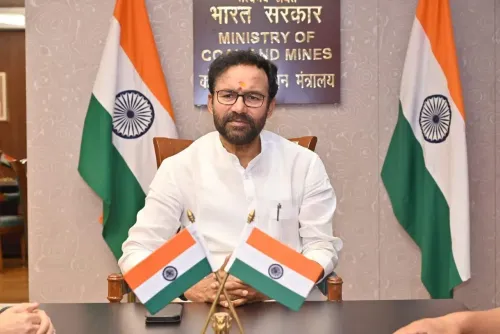
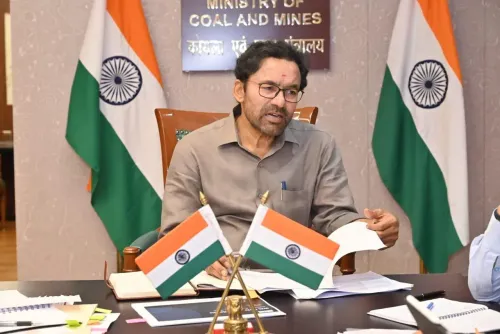
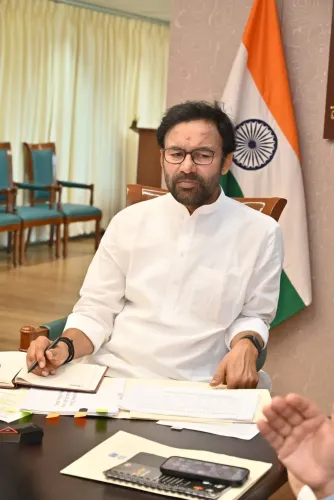
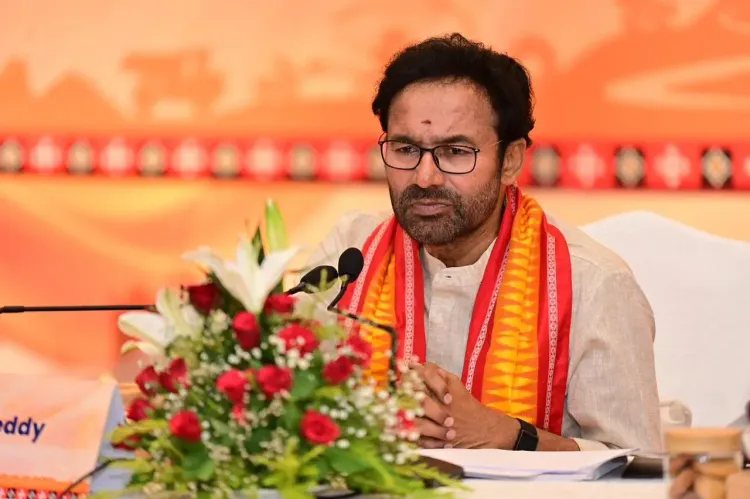
Union Coal and Mines Minister G. Kishan Reddy chaired a performance review of Mahanadi Coalfields Limited and NLC India Limited in Bhubaneswar on June 1, 2026, directing faster project execution and resolution of pending issues to advance India's energy self-reliance goals.
Key Takeaways
Kishan Reddy held a review of MCL and NLCIL projects in Bhubaneswar on June 1, 2026 .
The review covered execution pace, production targets, and future expansion plans for both PSUs in Odisha .
The minister directed immediate resolution of pending issues to ensure faster implementation and operational excellence.
The exercise is part of the central government's ongoing push to raise domestic coal output and reduce import dependence since 2019-20 .
Both MCL and NLCIL operate key mining and power generation assets in Odisha, a state with substantial coal reserves.
Outcomes will be tracked through next quarterly production data from Coal India and NLCIL .
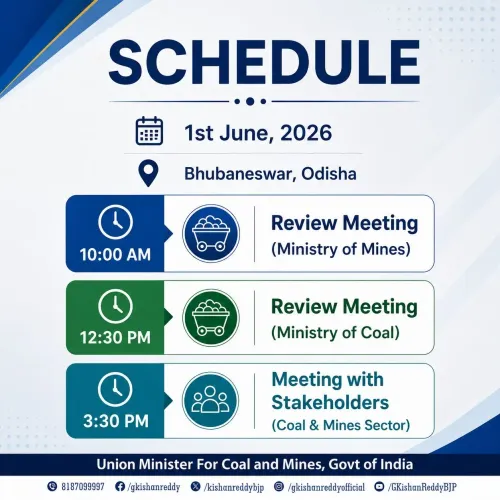
Union Coal and Mines Minister G. Kishan Reddy on Monday, June 1, 2026, chaired a performance review of Mahanadi Coalfields Limited (MCL) and NLC India Limited (NLCIL) in Bhubaneswar, Odisha, focusing on project execution, production targets, and future expansion plans.
Context
The Bhubaneswar meeting brought together senior officials from both central public sector undertakings to assess the pace of ongoing projects in Odisha, a state that holds some of India's most significant coal reserves. The minister directed the immediate resolution of pending operational and administrative issues to accelerate project implementation and improve output.
Reddy framed the review within the broader national goal of energy self-reliance, stating that faster execution and 'operational excellence' would contribute to Prime Minister Narendra Modi's vision of Viksit Bharat.
Policy Backdrop
MCL, a subsidiary of Coal India Limited, is one of the country's largest coal producers and operates several high-output mines across Odisha's Ib Valley and Talcher coalfields. NLCIL, originally a lignite miner, has expanded its footprint into coal-based power generation in Odisha in recent years.
The review is consistent with the central government's sustained push since 2019-20 to assign successive annual production targets to Coal India and its subsidiaries, aimed at meeting rising domestic power demand and reducing dependence on coal imports. The Atmanirbhar Bharat initiative, launched in 2020, explicitly identified energy self-reliance as a strategic pillar, and ministerial reviews of PSU performance have become a regular instrument of that policy.
Commercial coal mining was also opened to private players in 2020, increasing competitive pressure on state-owned producers to raise efficiency and hit output milestones.
Stakeholders and Impact
Odisha's power utilities and industrial consumers are among the most direct beneficiaries of higher MCL and NLCIL output, as the state's thermal power plants rely heavily on locally mined coal. Faster project execution could also translate into additional royalties and employment in mining districts.
For the Ministry of Coal, resolving land acquisition, environmental clearance, and logistical bottlenecks at the subsidiary level is a recurring challenge. Ministerial-level intervention of this kind is typically intended to cut through inter-departmental delays that routine administrative channels have failed to resolve.
What's Next
Attention will now turn to the next quarterly production data releases by Coal India and NLCIL to gauge whether the directives issued at the Bhubaneswar review translate into measurable output gains. Any fresh government orders on project timelines, coal gasification pilots, or capacity additions in Odisha will be closely watched by the sector.
With India's electricity demand continuing to climb, the pressure on coal PSUs to deliver on expansion commitments is unlikely to ease, and ministerial reviews of this nature are expected to remain a regular feature of the Ministry of Coal's oversight calendar.
Point of View
Hands-on oversight of its largest Odisha-based PSUs at a time when domestic power demand is placing sustained pressure on production targets. By personally chairing the meeting and directing immediate resolution of bottlenecks, Kishan Reddy is reinforcing the government's accountability framework for coal PSUs — a pattern that has intensified since the commercial mining reforms of 2020. The explicit linkage to the Viksit Bharat narrative also reflects the political imperative to embed routine ministerial work within the larger Modi-government development story. Whether the directives convert into tangible output gains will depend on how quickly land, environmental, and logistical hurdles at the project level are actually cleared.
NationPress
20 Sept 2026
Frequently Asked Questions
What is Mahanadi Coalfields Limited and where does it operate?
Mahanadi Coalfields Limited (MCL) is a subsidiary of Coal India Limited and one of India's largest coal producers, operating primarily in the Ib Valley and Talcher coalfields of Odisha.
What did Kishan Reddy review in Bhubaneswar on June 1, 2026?
Union Coal and Mines Minister G. Kishan Reddy reviewed the performance and progress of MCL and NLCIL projects in Odisha, focusing on project execution, production targets, and future expansion plans, and directed resolution of pending operational issues.
What is NLC India Limited's role in Odisha?
NLC India Limited (NLCIL) is a central public sector undertaking originally known for lignite mining that has expanded into coal-based power generation, with active operations in Odisha.
How does this review relate to India's energy self-reliance goals?
The review is part of the central government's broader push under the Atmanirbhar Bharat initiative, launched in 2020, to raise domestic coal output, reduce import dependence, and support rising electricity demand across India.
What challenges do coal PSUs face in Odisha?
Coal PSUs operating in Odisha routinely face bottlenecks related to land acquisition, environmental clearances, and logistical constraints, which ministerial-level reviews are intended to help resolve more quickly.