Asian Games 2026 Teqball: India's Dsouza, Anas Beg finish 4th after bronze-match loss to Vietnam
Synopsis
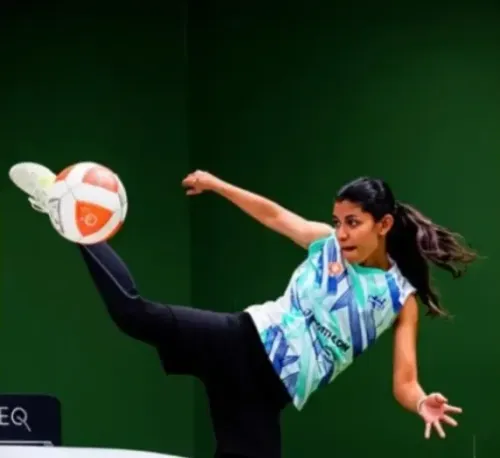
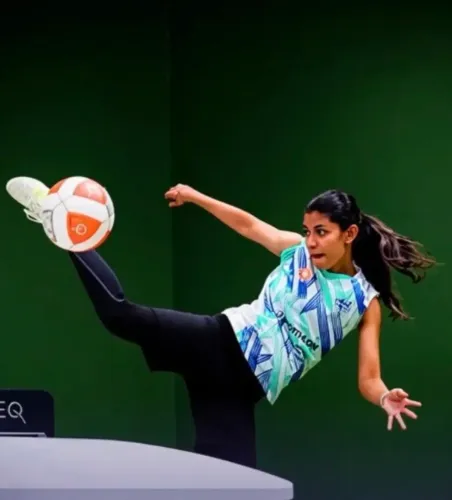
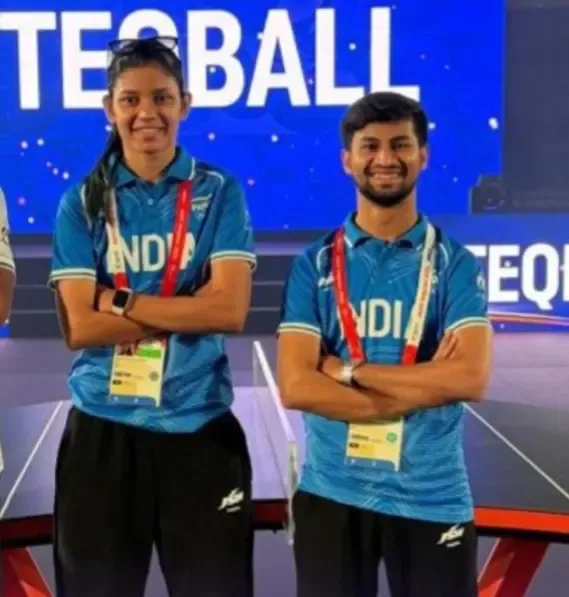
India's Quimcy Dsouza finished her Asian Games debut with two fourth-place finishes in a single day — women's singles and mixed doubles — both in bronze-medal matches. An injury during the second set against Vietnam compounded the heartbreak, leaving India's Teqball campaign without a medal despite reaching two podium deciders.
Key Takeaways
Quimcy Dsouza and Mohamed Anas Imran Beg lost 9-12, 6-12 to Vietnam in the Teqball mixed doubles bronze-medal match at the 2026 Asian Games in Nagoya on 20 September .
India led 8-6 in the opening set but conceded a five-point run that swung the match in Vietnam's favour.
Quimcy sustained an injury to her back and right leg during the second set, requiring an extended medical break; India were 5-9 down when play resumed.
Quimcy also finished fourth in the women's singles after losing the bronze playoff to Japan's Yuina Sakamoto earlier the same day.
India concluded its Teqball campaign at the 2026 Asian Games without a medal, despite both athletes reaching bronze-medal matches.
India's Quimcy Dsouza and Mohamed Anas Imran Beg ended their Asian Games Teqball campaign without a medal on Sunday, 20 September, falling 9-12, 6-12 to Vietnam's Nguyen Hoang Minh Tan and Trinh Gia Nghi in the mixed doubles bronze-medal match in Nagoya. The defeat left the Indian pair in fourth place, completing a difficult final day for the country's Teqball contingent.
How the Match Unfolded
India began the opening set with intent, matching Vietnam point for point before nudging ahead 8-6. The advantage proved short-lived, however, as the Vietnamese pair responded with a clinical five-point run to seize control and take the set 12-9.
The second set mirrored the first — India could not convert pressure into sustained momentum, and Vietnam pulled away in the closing stages to seal the match 12-6. Vietnam's composure in critical exchanges across both sets was ultimately the difference.
Quimcy's Injury Complicates the Chase
India's challenge was further hampered by an injury to Quimcy Dsouza, who required an extended medical break during the second set. The Mumbai-based player had already competed in the women's singles bronze-medal match earlier in the day, and by the mixed doubles final she was visibly struggling with her back and right leg.
After returning from treatment, Quimcy was noticeably restricted while serving. India were 5-9 down when play resumed and could add only one more point before Vietnam closed out the contest. The dual burden of two medal matches in a single day had taken a clear physical toll.
A Tough Asian Games Debut for Quimcy
For Quimcy, the result capped a bittersweet Asian Games debut. In the women's singles bronze playoff held earlier the same day, she lost to Japan's Yuina Sakamoto, finishing fourth in that event as well.
Notably, Quimcy had defeated Sakamoto during the group stage — making the reverse result in the medal match all the more difficult. The Japanese player, described as a home favourite in the region, proved more composed when stakes were highest.
India's Teqball Campaign Ends Without Podium Finish
Both Dsouza and Anas Beg had reached bronze-medal matches in their respective events — a commendable achievement for a sport still building its presence in India. However, converting those appearances into medals proved a step too far on this occasion.
India's full Teqball campaign at the 2026 Asian Games in Nagoya concludes without a podium finish, though the performances signal a growing competitive base in the discipline. With the sport's profile rising across Asia, the pair's back-to-back bronze-match appearances will be seen as a foundation to build on ahead of future editions.
Point of View
A sport with a thin competitive ecosystem domestically. But the manner of both defeats — each involving a lead that evaporated — points to a recurring gap in closing out matches under pressure. Scheduling Quimcy for both a singles and mixed doubles bronze playoff on the same day was a significant physical ask, and the injury that slowed her in the second set raises questions about athlete management at the Games. As Teqball eyes Olympic recognition, India's investment in depth beyond a single standout player will determine whether these near-misses become medals in the next cycle.
NationPress
20 Sept 2026
Frequently Asked Questions
What happened in India's Teqball mixed doubles bronze match at the Asian Games?
India's Quimcy Dsouza and Mohamed Anas Imran Beg lost 9-12, 6-12 to Vietnam's Nguyen Hoang Minh Tan and Trinh Gia Nghi in the mixed doubles bronze-medal match at the 2026 Asian Games in Nagoya on 20 September. The defeat left the Indian pair in fourth place.
Why did India lose the Teqball bronze-medal match to Vietnam?
Vietnam won largely due to composure in critical moments, overturning an 8-6 deficit in the first set with a five-point run and pulling away in the second set as well. An injury to Quimcy Dsouza during the second set further limited India's ability to recover, with India managing only one point after play resumed from a 5-9 deficit.
How did Quimcy Dsouza perform overall at the 2026 Asian Games?
Quimcy Dsouza finished fourth in both events she contested — women's singles and mixed doubles — making her Asian Games debut a commendable but ultimately medalless campaign. She had notably defeated Japan's Yuina Sakamoto in the group stage of the singles, but Sakamoto prevailed in their bronze-medal rematch.
Did India win any Teqball medals at the 2026 Asian Games?
No, India did not win a Teqball medal at the 2026 Asian Games in Nagoya. Both Quimcy Dsouza and Mohamed Anas Imran Beg reached bronze-medal matches but finished fourth in their respective events.
What is Teqball and why does it matter for India?
Teqball is a sport played on a curved table using football techniques, and it is growing rapidly across Asia with ambitions for Olympic inclusion. India's performances in Nagoya — reaching two medal matches — represent a meaningful step in the sport's development in the country, even though no medals were won.