India's savings rate must hit 38-40% of GDP to sustain 7-8% growth: NK Singh
Synopsis
India's gross savings rate needs to jump from 34% to 38-40% of GDP to keep the economy on a 7-8% growth path, the 15th Finance Commission Chairman warned at a New Delhi conference. The message: public money alone cannot finance Viksit Bharat — private capital, AI-driven tax administration, and politically difficult factor-market reforms must do the heavy lifting.
Key Takeaways
NK Singh , Chairman of the 15th Finance Commission , said India's savings rate must rise from 34% of GDP to 38-40% to sustain 7-8% annual growth .
Singh called for state-wise debt sustainability assessments and full accounting of off-budget borrowings, guarantees, and arrears .
He advocated using AI and machine learning on existing tax databases to widen the tax base without raising rates.
Capital, labour, and land were identified as the three critical factor-market reform areas for states.
Chief Economic Adviser Dr V Anantha Nageswaran outlined three state priorities: enabling private investment, improving investment quality, and strengthening state capital expenditure.
Both Singh and Nageswaran stressed that private capital — not just public finance — must drive India's development financing going forward.
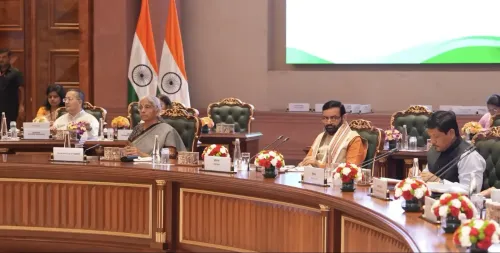
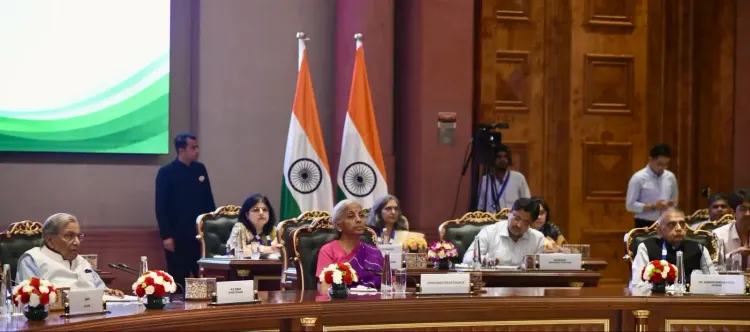
India's gross domestic savings rate, currently at around 34% of GDP, must climb to 38-40% to sustain the 7-8% annual growth needed to realise the Viksit Bharat vision, NK Singh, Chairman of the 15th Finance Commission, said on 20 September 2026. Singh made the remarks while addressing a conference titled 'Financing India's Journey towards Viksit Bharat' in New Delhi, attended by state finance ministers and finance secretaries.
The Savings Gap and Fiscal Transparency
Singh flagged a structural shortfall between India's current savings base and the investment levels required for sustained high growth. He called for state-wise debt sustainability assessments and pushed for greater fiscal transparency — specifically urging that off-budget borrowings, guarantees, arrears, and borrowings routed through state-owned entities be brought fully into the accounting framework.
The call for transparency is notable at a time when several state governments have faced scrutiny for parking liabilities outside their official balance sheets, a practice that obscures the true fiscal position and complicates Centre-state resource discussions.
Technology as a Revenue Tool
Rather than advocating higher tax rates, Singh argued that the larger opportunity lies in leveraging information more effectively. 'AI and machine learning, combined with existing tax databases, can help identify compliance gaps, broaden the effective tax base and improve revenue mobilisation,' he told the gathering. This signals a data-first approach to tax administration — one that multiple advanced economies have adopted to widen their fiscal base without raising headline rates.
Shifting from Public to Private Capital
A central theme of Singh's address was the imperative to move from reliance on public finance toward private capital, with public resources playing a catalytic rather than primary role. He identified three factor-market reform areas as critical: capital, labour, and land. On capital, he noted India's relatively higher cost of borrowing as a drag on investment. On labour, he emphasised productivity gains through skilling, apprenticeships, and stronger university-industry linkages. On land, he urged states to improve land-use efficiency, streamline approvals, and strengthen digital land records.
Singh also stressed the need for predictable rules, enforceable contracts, faster dispute resolution, and stronger investment treaties to attract both domestic and foreign investment — conditions that business groups have repeatedly cited as prerequisites for scaling private capex.
Chief Economic Adviser's Three-Point Agenda for States
Dr V Anantha Nageswaran, Chief Economic Adviser, described the conference as a valuable platform for the Union and states to move beyond resource-sharing debates and deliberate collectively on financing India's development over the next two decades. He noted the quality of discussion and the openness with which states shared their perspectives, and made a case for holding the conference annually.
Nageswaran outlined three priorities for states: first, creating an enabling environment for private investment through availability of land, power, and logistics backed by effective single-window clearances; second, improving investment quality through robust project-preparation pipelines and credible project reports to access domestic and multilateral finance, while directing credit toward underserved districts with growth potential; and third, strengthening states' own capital expenditure even under fiscal constraints.
While India's savings base is substantial, the CEA noted that significantly greater private capital participation would be essential to mobilise the investment scale that Viksit Bharat requires.
What Comes Next
The conference signals a growing institutional consensus that India cannot finance its development ambitions on public resources alone. Whether states follow through on factor-market reforms — particularly land and labour, which have historically been politically sensitive — will determine how quickly the savings-investment gap closes and whether the 7-8% growth trajectory can be sustained through the decade.
Point of View
But Singh's emphasis on off-budget transparency is the sharper edge of this address — several states have systematically used SPVs and guarantees to keep liabilities off their books, distorting fiscal assessments. The call to deploy AI for tax compliance is pragmatic, but only as credible as the data-sharing architecture between Centre and states, which remains patchy. Most telling is the implicit admission that public capex — the workhorse of India's post-pandemic recovery — has hit its limits; if private capital does not step in, the Viksit Bharat timeline slips. The politically sensitive question of labour and land reform, flagged but not detailed, is where grand conferences usually end and hard governance begins.
NationPress
20 Sept 2026
Frequently Asked Questions
What savings rate does India need to sustain 7-8% GDP growth?
India needs its gross domestic savings rate to rise from the current 34% of GDP to 38-40% , according to NK Singh, Chairman of the 15th Finance Commission. This higher savings base is considered essential to mobilise the investment required for the Viksit Bharat growth target.
Who is NK Singh and why does his assessment matter?
NK Singh is the Chairman of the 15th Finance Commission, the constitutional body that determines how tax revenues are shared between the Centre and states. His views on fiscal sustainability and savings carry significant weight in shaping national economic policy and Centre-state financial relations.
What did the Chief Economic Adviser say about financing Viksit Bharat?
Dr V Anantha Nageswaran, Chief Economic Adviser, said private capital participation would be essential alongside India's existing savings base. He outlined three priorities for states: creating an enabling environment for private investment, improving investment quality through better project preparation, and strengthening states' own capital expenditure.
How does NK Singh propose to improve tax revenue without raising rates?
Singh advocated using AI and machine learning on existing tax databases to identify compliance gaps and broaden the effective tax base. The approach focuses on improving revenue mobilisation through better information use rather than increasing headline tax rates.
What factor-market reforms did NK Singh call for?
Singh identified capital, labour, and land as the three critical factor-market reform areas. He highlighted India's relatively high cost of capital, the need for labour productivity improvements through skilling and apprenticeships, and urged states to streamline land approvals, improve land-use efficiency, and strengthen digital land records.