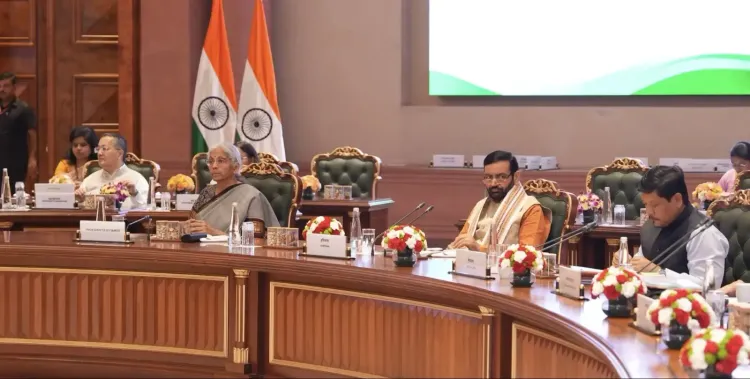
Viksit Bharat financing: FM Sitharaman chairs landmark State meet in New Delhi
Synopsis
For the first time, India convened its state finance ministers and finance secretaries under one roof to co-design the financing roadmap for Viksit Bharat 2047. With 7.8% GDP growth in Q1 FY27 and a fresh credit rating upgrade as backdrop, the conference marks a pivot from top-down Union announcements to a genuinely collaborative fiscal architecture — the real test is whether states follow through in their own budgets.
Key Takeaways
Finance Minister Nirmala Sitharaman chaired the first-ever Conference of State Finance Ministers and Finance Secretaries on 19 September 2026 in New Delhi .
The two-day conference focused on financing Viksit Bharat 2047 , covering macroeconomic outlook, agricultural transformation, and energy transition.
Keynote speaker N.K.
Singh cited India's 7.8% GDP growth in Q1 FY 2026–27 and a credit rating upgrade by the Japan Credit Rating Agency from BBB+ to A– .
The Finance Ministry described the event as embodying the 'Team India' spirit, with Centre and states working toward a shared development vision.
A September report found aerospace and defence, automobiles, and banking as the leading sectors aligning corporate strategy with the Viksit Bharat agenda.
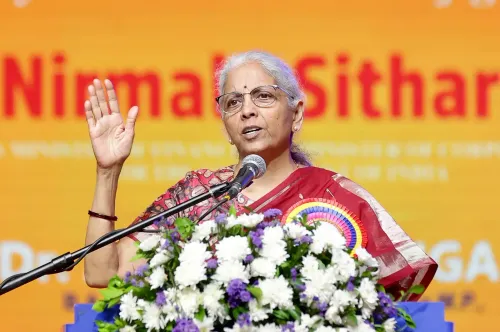
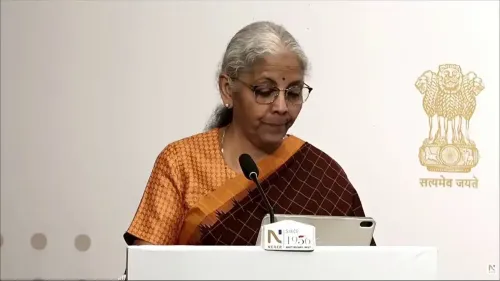
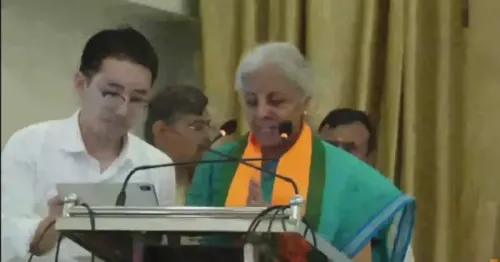
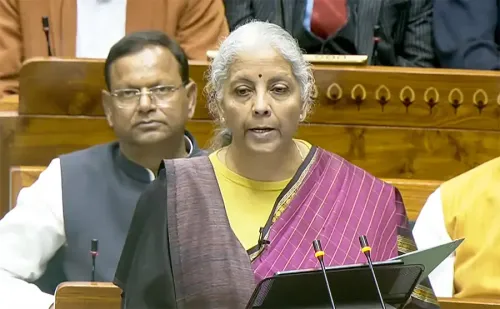
Finance Minister Nirmala Sitharaman on Saturday, 19 September 2026, chaired the concluding session of the first-ever Conference of State Finance Ministers and Finance Secretaries of States and Union Territories with the Legislature in New Delhi, with discussions centred squarely on financing India's path to becoming a Viksit Bharat by 2047. The two-day conference, organised by the Finance Ministry, brought together representatives from the Centre and states to deliberate on key development financing priorities.
What the Conference Covered
Held under the theme 'Financing India's Journey towards Viksit Bharat', the sessions spanned a broad range of interconnected issues: the macroeconomic outlook, financing agricultural transformation, and driving the energy transition. The deliberations drew on expert insights from economists and policymakers including Dr Sajjid Z. Chinoy, Dr Samiran Chakraborty, Professor Ashima Goyal, and Dr Harsh Kumar Bhanwala, among others.
Key Takeaways from Day One
Anuradha Thakur, Secretary of the Department of Economic Affairs (DEA), underscored the novel character of the conference on its opening day, noting that it adopted a longer-term and broader canvas — assembling voices from academia, industry, banking, and policymaking under one roof. States, she indicated, shared perspectives emphasising that the Viksit Bharat journey rests on deep complementarities and a multi-tiered partnership between the Union and the states.
N.K. Singh, President and Life Trustee of the Institute of Economic Growth and former Chairman of the 15th Finance Commission, delivered the keynote address. Singh highlighted India's strong macroeconomic foundation, pointing to 7.8 per cent GDP growth in Q1 of FY 2026–27 and a recent credit rating upgrade by the Japan Credit Rating Agency from BBB+ to A– as evidence of improving sovereign credibility.
The 'Team India' Spirit
The Finance Ministry described the conference as a reflection of the 'Team India' ethos — an acknowledgment that achieving Viksit Bharat demands coordinated fiscal action across all tiers of government, not just Union-level policy. According to the ministry, the deliberations provided a deeper understanding of the financing challenges ahead while highlighting the opportunities available on India's development path. This comes amid growing momentum: a report released earlier in September indicated that India Inc is increasingly aligning its business strategies and disclosures with the Viksit Bharat 2047 vision, with aerospace and defence, automobiles, and banking emerging as the sectors most actively integrating the national development agenda into corporate planning.
Why This Conference Matters
This first-of-its-kind conclave signals a structural shift in how India approaches development finance — moving from siloed Union-level announcements to a collaborative, bottom-up planning architecture that formally incorporates state governments in long-horizon fiscal strategy. Notably, the conference's focus on private finance alongside public expenditure suggests an acknowledgment that government balance sheets alone cannot fund the infrastructure, agriculture, and energy investments required for a developed-nation transition by 2047. All eyes will now be on the follow-up action framework that emerges from these deliberations, and on whether states translate the conference's recommendations into their own budget cycles.
Point of View
But growth quality, fiscal consolidation at the state level, and private investment mobilisation remain unresolved. Whether this conference produces binding coordination mechanisms or remains a consultative exercise will determine whether it was a turning point or a talking shop.
NationPress
19 Sept 2026
Frequently Asked Questions
What is the Viksit Bharat financing conference and who attended?
It is the first-ever Conference of State Finance Ministers and Finance Secretaries of States and Union Territories with the Legislature, chaired by Finance Minister Nirmala Sitharaman on 19 September 2026 in New Delhi. The two-day event brought together Centre and state representatives, along with economists and policy experts, to discuss financing India's development path to 2047.
What topics were discussed at the conference?
The sessions covered the macroeconomic outlook, financing agricultural transformation, and financing the energy transition. Expert presentations were delivered by Dr Sajjid Z. Chinoy, Dr Samiran Chakraborty, Professor Ashima Goyal, and Dr Harsh Kumar Bhanwala, among others.
What is Viksit Bharat 2047?
Viksit Bharat 2047 is India's national vision to become a fully developed nation by 2047, the centenary of its independence. It encompasses goals spanning infrastructure, manufacturing, agriculture, energy, and inclusive economic growth, requiring coordinated action from both Union and state governments.
What did N.K. Singh highlight in his keynote address?
N.K. Singh, former Chairman of the 15th Finance Commission, highlighted India's strong macroeconomic foundation, pointing to 7.8% GDP growth in Q1 of FY 2026–27 and a credit rating upgrade by the Japan Credit Rating Agency from BBB+ to A–. He used these indicators to underscore India's improving fiscal credibility.
How is India Inc responding to the Viksit Bharat vision?
According to a report released earlier in September 2026, Indian companies are increasingly aligning their business strategies and disclosures with the Viksit Bharat 2047 agenda. Aerospace and defence, automobiles, and banking have emerged as the sectors most actively integrating the national development vision into their corporate planning.