Sitharaman Frames Viksit Bharat as India's Restoration
Synopsis
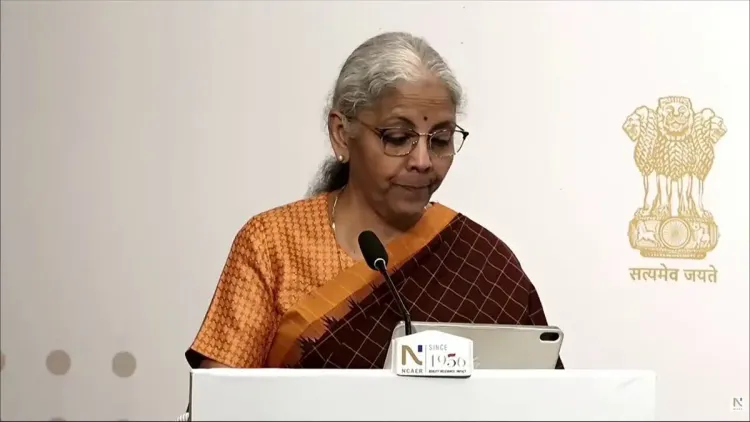
At the C.D. Deshmukh Lecture 2026 in New Delhi, Finance Minister Nirmala Sitharaman defined Viksit Bharat not as a GDP target but as a seven-pillar national vision — zero poverty, universal education, affordable healthcare, youth skilling, women's economic participation, agricultural leadership, and technology supremacy — calling it a 'restoration' of India's civilisational potential.
Key Takeaways
Nirmala Sitharaman spoke at the C.D.
Deshmukh Lecture 2026 in New Delhi on 6 August 2026 .
She defined Viksit Bharat across seven pillars: zero poverty, quality education, affordable healthcare, youth skilling, women's economic participation, agricultural leadership, and technology supremacy.
Sitharaman framed Viksit Bharat as a 'restoration' — not a new ambition — invoking India's historical civilisational standing.
The vision was linked directly to commitments made in the Union Budget speech.
Deshmukh was the first Indian Governor of the Reserve Bank of India , serving from 1943 to 1949 .
PM Narendra Modi first outlined the Viksit Bharat @2047 goal in Independence Day addresses beginning 2023 .
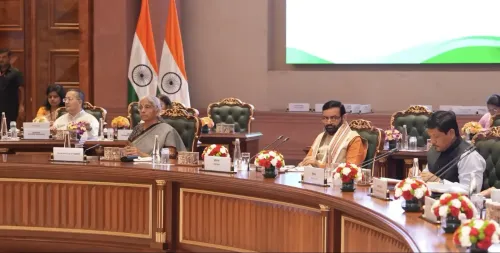
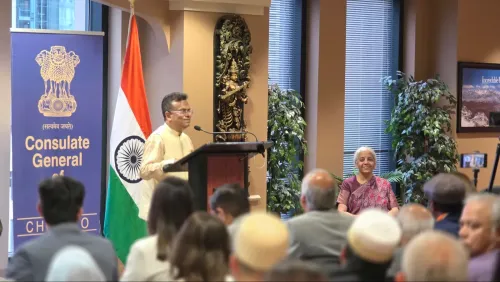
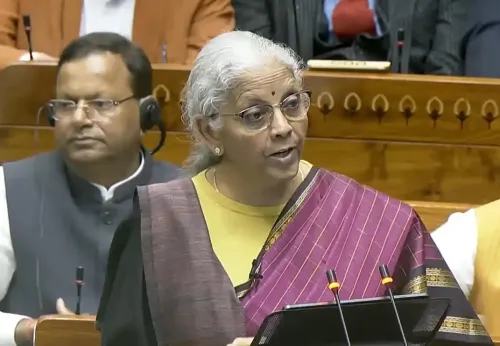
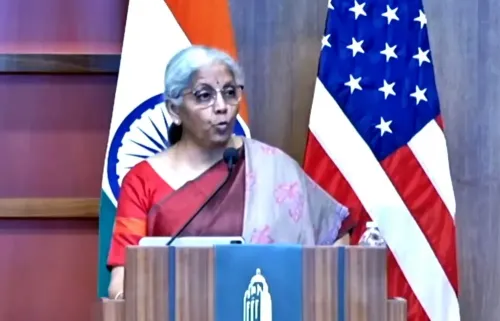
Seven pillars. Zero poverty. Full female economic participation. At the C.D. Deshmukh Lecture 2026 in New Delhi on 6 August 2026, Union Finance Minister Nirmala Sitharaman delivered what may be the most structured public articulation yet of what Viksit Bharat actually means — and she opened with a striking reframe: this is not a new ambition. It is a restoration.
Not a Target — A Nation Redefined
Sitharaman pushed back sharply against the tendency to reduce Viksit Bharat to a single GDP or per capita income milestone. Speaking at the prestigious annual lecture series — named after Chintaman Dwarkanath Deshmukh, the first Indian Governor of the Reserve Bank of India — she laid out a seven-point definition drawn directly from her Union Budget speech. The list is worth reading in full: zero poverty, universal good-quality education, affordable and comprehensive healthcare for every citizen, skills and meaningful employment for every young person, full female economic participation, making India the world's food basket through its farmers, and technology leadership on the global stage.
That is not an economic projection. It is a civilisational checklist. And by invoking the word 'restoration', Sitharaman planted a deliberate historical flag — the suggestion that a prosperous, self-sufficient India is not an imported aspiration but a return to form.
Deshmukh's Legacy and the Weight of the Platform
The choice of venue matters. C.D. Deshmukh served as RBI Governor from 1943 to 1949, steering India's central bank through the turbulence of Partition and the early years of independence. He later served as Finance Minister. Delivering a vision-of-India address on this platform — before an audience steeped in economic and institutional history — was a deliberate signal that Viksit Bharat belongs in the lineage of India's foundational economic thinking, not merely in the register of electoral politics.
From Atmanirbhar to 2047: The Policy Arc
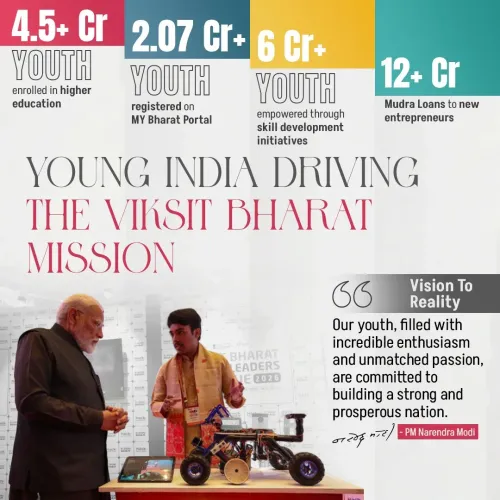
Prime Minister Narendra Modi first publicly anchored the Viksit Bharat @2047 goal in his Independence Day addresses from 2023 onwards, framing developed-nation status by the centenary of independence as the defining national mission. Sitharaman's lecture threads that vision directly into Budget policy — connecting the headline goal to specific sectoral commitments on health, education, skilling, agriculture, and technology. The framing also echoes the Atmanirbhar Bharat self-reliance push, situating Viksit Bharat as its logical evolution: from surviving disruption to leading globally.
The real test, of course, lies in implementation — in whether future Budgets translate these seven pillars into funded, measurable programmes. That is the ledger Parliament, economists, and India's farmers, women workers, and skilled youth will be watching.
Sitharaman has drawn the map. The distance between a map and a destination is everything.
Point of View
Sitharaman is doing something politically and historically deliberate — anchoring a BJP-era ambition in a pre-partisan civilisational narrative that is harder to contest on ideological grounds. Delivering this at the C.D. Deshmukh Lecture — a platform associated with institutional economic seriousness — signals an attempt to move the vision from campaign rhetoric into policy canon. The seven-pillar framework also broadens the accountability surface: by naming specific outcomes (zero poverty, full female participation, food basket status), the government invites measurement, which is a risk as much as a commitment. The real political question is whether successive Budgets will fund these pillars with the specificity the framing demands.
NationPress
21 Sept 2026
Frequently Asked Questions
What is Viksit Bharat and what are its main goals?
Viksit Bharat is the Government of India's vision to achieve developed-nation status by 2047 , the centenary of independence. Finance Minister Sitharaman defined it through seven pillars: zero poverty, universal quality education, affordable healthcare, youth skilling and employment, full female economic participation, making India the world's food basket, and global technology leadership.
What is the C.D. Deshmukh Lecture?
The C.D. Deshmukh Lecture is an annual address named after Chintaman Dwarkanath Deshmukh , the first Indian Governor of the Reserve Bank of India, who served from 1943 to 1949 . It is considered a prestigious platform for economic and policy discourse in India.
Who first announced the Viksit Bharat 2047 vision?
Prime Minister Narendra Modi first publicly outlined the Viksit Bharat @2047 goal in his Independence Day addresses beginning 2023 , framing it as India's defining national mission ahead of the centenary of independence.
What did Nirmala Sitharaman say about Viksit Bharat at the CD Deshmukh Lecture 2026?
Sitharaman argued that Viksit Bharat is not merely a per capita income target but a comprehensive national vision. She called it a 'restoration' of India's potential and outlined seven specific pillars drawn from her Union Budget speech, covering poverty, education, healthcare, skills, women's participation, agriculture, and technology.
How does Viksit Bharat relate to Atmanirbhar Bharat?
Policy analysts position Viksit Bharat as the evolution of the Atmanirbhar Bharat self-reliance initiative — moving from building economic resilience during disruption toward achieving global leadership across multiple sectors by 2047 .