Viksit Bharat 2047: FM Sitharaman urges diaspora support for India's reform push

Synopsis
Finance Minister Nirmala Sitharaman told the Indian diaspora in Chicago that 2047 — India's Viksit Bharat deadline — is barely two decades away, and the pace of reform demands urgent capital, talent, and ideas from non-resident Indians. She also revealed that India has already hit its 2025-26 fiscal deficit milestone and is targeting borrowing at 50% of GDP by 2030 — a claim that will be tested by rating agencies.
Key Takeaways
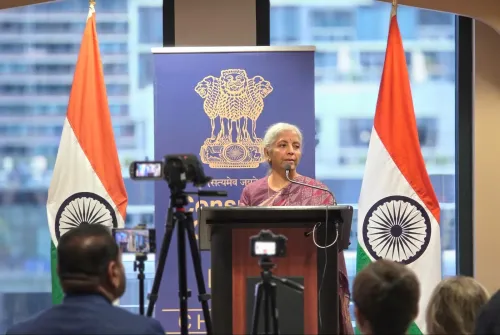
FM Nirmala Sitharaman addressed the Indian diaspora in Chicago on 30 August , calling for greater support for India's reform agenda.
The Viksit Bharat target year of 2047 is 'hardly 20 years from now,' she said, underlining the urgency of scale and speed.
India aims to bring borrowing down to 50% of GDP by 2030 ; the government says it has already met its 2025-26 fiscal deficit milestone.
A budget-backed insurance pool shielded Indian farmers and logistics from global shipping and commodity disruptions, according to Sitharaman.
India's improving credit ratings are attributed to 'proper management of the economy,' not cuts to social welfare, she said.
Finance Minister Nirmala Sitharaman on 30 August called on the Indian diaspora in Chicago to extend greater support — in talent, ideas, and capital — to India's reform agenda, stressing that the 2047 deadline for achieving Viksit Bharat (Developed India) is 'hardly 20 years from now' and demands urgent scale and speed.
The Case for Diaspora Support
Addressing a gathering at the Consulate General of India's office in Chicago, Sitharaman said India needs people with talent and global exposure to contribute ideas and resources. 'Above all, support in terms of capital, which is so required for a country to meet all its aspirations,' she told the audience. The appeal comes as the Centre accelerates structural reforms ahead of its centenary independence target.
Fiscal Discipline and Debt Targets
The Finance Minister outlined India's fiscal roadmap, stating that the government has set a target to bring borrowing down to 50% of GDP by 2030. 'There are advanced economies whose debt is well over 200% of their GDP even now. We have given ourselves a fiscal discipline path on the fiscal deficit as well. We have fulfilled the trajectory. The last mile that had to be reached by 2025-26, we have reached,' she noted. She attributed improving credit ratings not to cutting welfare spending but to 'proper management of the economy.'
Navigating Global Supply Shocks
Sitharaman pointed to India's handling of global commodity disruptions — including crude oil, LPG, and fertilisers — as evidence of economic resilience. She said a fertiliser shortage was averted because the government kept markets informed about procurement requirements in advance. On the shipping insurance crisis, she said a budget-backed pool of funds was created to cover additional risk premiums paid by shipping liners, ensuring that Indian farmers, households, and logistics networks were insulated from the fallout. 'Many countries have seen their calculations go haywire amid these uncertainties. Thankfully, despite our limitations, we have kept our citizens protected,' she said.
Modi's Fiscal Track Record Cited
The Finance Minister invoked Prime Minister Narendra Modi's record of fiscal prudence — first as Chief Minister of Gujarat and subsequently as Prime Minister — as a foundation for investor confidence. She emphasised that the improvement in India's sovereign credit profile has been earned through disciplined spending rather than by curtailing social welfare allocations. This framing is consistent with the government's broader effort to position India as a fiscally credible destination for long-term foreign capital.
What Comes Next
With the 2047 vision now a fixed policy anchor across ministries, the diaspora outreach signals an intensified effort to channel non-resident Indian expertise and investment into the domestic economy. The government's next fiscal consolidation milestone — the 50% debt-to-GDP target — will be closely watched by rating agencies and institutional investors as a credibility test for the reform trajectory.
Point of View
Long-term investment to sustain its reform momentum. The 50%-of-GDP debt target by 2030 is an ambitious fiscal anchor, but India's track record on self-imposed fiscal rules has been mixed; the credibility of this milestone will depend on whether the next two Union Budgets hold the line without squeezing capital expenditure. Notably, the claim that India's credit ratings are improving 'without cutting welfare' sidesteps a more complex picture: several states are under significant fiscal stress, and the Centre's off-balance-sheet liabilities remain a point of scrutiny for rating agencies. The diaspora outreach is smart politics, but the harder audience is Moody's and Fitch.
NationPress
14 Oct 2026
Frequently Asked Questions
What is Viksit Bharat and why is 2047 significant?
Viksit Bharat, meaning 'Developed India,' is the Indian government's vision to achieve developed-nation status by 2047, the centenary of independence. Finance Minister Sitharaman has described the deadline as 'hardly 20 years from now,' stressing that reforms must accelerate significantly to meet it.
What fiscal targets did FM Sitharaman announce in Chicago?
Sitharaman said India is targeting borrowing at 50% of GDP by 2030 and has already fulfilled its fiscal deficit reduction trajectory through 2025-26. She contrasted this with advanced economies where debt exceeds 200% of GDP.
How did India handle the global fertiliser and commodity supply crisis?
According to Sitharaman, India avoided a fertiliser shortage by keeping markets informed about procurement needs in advance. The government also created a budget-backed fund to cover additional shipping insurance premiums caused by elevated risk, protecting Indian farmers, households, and logistics networks.
Why is FM Sitharaman seeking support from the Indian diaspora?
Sitharaman said India needs talent, ideas, and capital from the diaspora to sustain the pace and scale of reforms required to achieve Viksit Bharat by 2047. The appeal was made during an event at the Consulate General of India in Chicago.
How does the government explain India's improving credit ratings?
Sitharaman attributed the improvement to disciplined economic management rather than cuts to social welfare spending. She cited Prime Minister Modi's fiscal record — first in Gujarat and then at the Centre — as the foundation for growing investor confidence.