Rajnath Singh hails India's 7.8% Q4 growth, cites 12-year reform arc
Synopsis
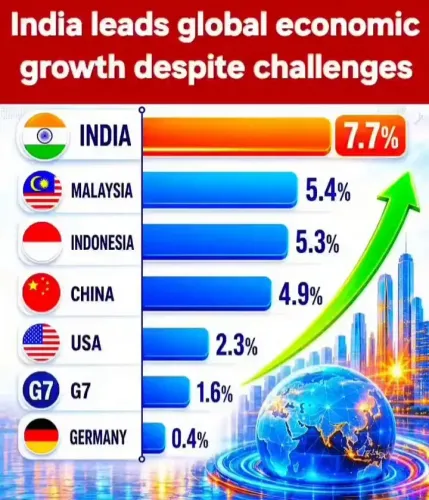
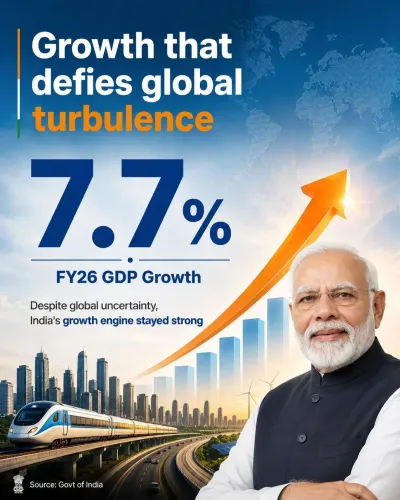
Union Defence Minister Rajnath Singh on June 6, 2026 highlighted India's 7.7% GDP growth in FY 2025–26 and a Q4 acceleration to 7.8%, attributing the performance to twelve years of Modi government reforms and the 'Reform, Perform, Transform' mantra driving the Viksit Bharat vision.
Key Takeaways
Union Defence Minister Rajnath Singh posted on June 6, 2026 citing India's GDP growth of 7.7% for FY 2025–26 .
Growth accelerated to 7.8% in the fourth quarter of FY 2025–26, according to the post.
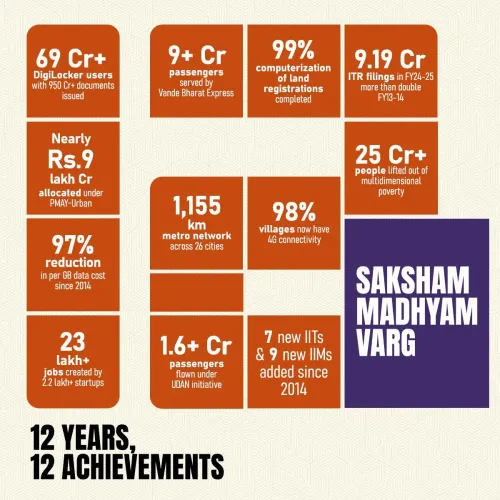
Singh attributed the performance to 12 years of reforms under Prime Minister Narendra Modi under the 'Reform, Perform, Transform' framework.
The post explicitly links economic growth to the Viksit Bharat goal of making India a developed nation by 2047 .
Policy milestones cited in the reform arc include Make in India (2014), GST (2017), and Atmanirbhar Bharat (2020).
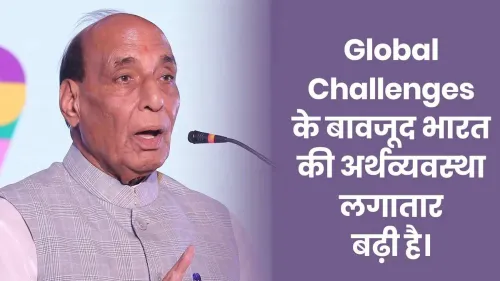
Singh framed the growth story as creating 'new opportunities' for 140 crore Indians amid global economic uncertainty.
Union Defence Minister Rajnath Singh on Saturday, June 6, 2026, credited twelve years of structural reform under Prime Minister Narendra Modi for India's position as the world's fastest-growing major economy, citing GDP growth of 7.7% for FY 2025–26 and an acceleration to 7.8% in the fourth quarter.
Context
Singh's post frames India's growth trajectory against a backdrop of global economic uncertainty, arguing that the country has demonstrated 'resilience and underlying strength' built over the last 12 years through what he described as the mantra of 'Reform, Perform, Transform.' He attributed the performance directly to Prime Minister Narendra Modi's leadership, citing a focus on innovation, infrastructure, and entrepreneurship.
The Defence Minister wrote that Modi's 'unwavering commitment to nation-building' and 'ability to steer the country through unprecedented global challenges' have transformed India into 'a confident, resilient, and globally respected economic power.' The post connects the growth figures to the broader vision of Viksit Bharat — the government's long-term goal of making India a developed nation by 2047.
Policy Backdrop
The 'Reform, Perform, Transform' framing invoked by Singh has been a recurring motif in the BJP government's economic communication since 2014. The period he references spans landmark structural interventions: the Make in India initiative launched in September 2014 to attract manufacturing investment, the nationwide rollout of the Goods and Services Tax (GST) in July 2017, and the Atmanirbhar Bharat self-reliance package announced in May 2020 in response to pandemic-era disruptions.
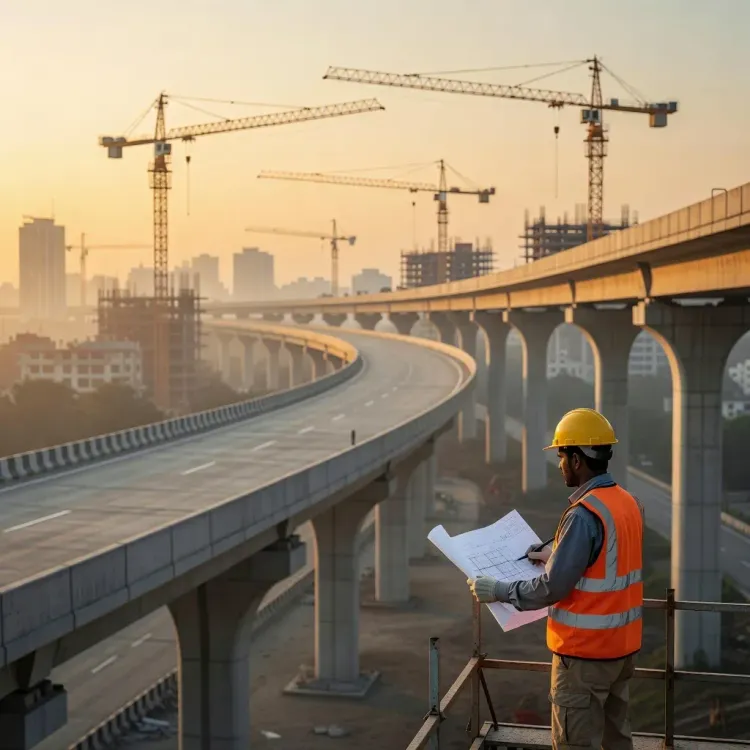
Successive Union Budgets under this administration have consistently prioritised capital expenditure on infrastructure alongside digital public infrastructure, a combination that economists have pointed to as underpinning India's above-peer growth rates. The emphasis on fiscal prudence alongside welfare delivery has been a consistent thread across policy statements from the government.
Stakeholders and Impact
The growth numbers, if sustained, carry direct implications for Indian entrepreneurs and small businesses, who stand to benefit from an expanding domestic market and improved credit conditions. Global investors have increasingly looked to India as an alternative destination amid supply-chain diversification away from single-country dependence, a trend the government has actively courted through production-linked incentive schemes and bilateral investment frameworks.
For 140 crore Indians — a figure Singh specifically cited — the political argument is that macroeconomic gains are translating into tangible opportunities. The government's communication strategy has consistently sought to link headline GDP numbers to aspirational outcomes for ordinary citizens, particularly in the context of the Viksit Bharat vision.
What's Next
Attention will now turn to the presentation of the Union Budget 2026–27 and any mid-term review of targets under the National Infrastructure Pipeline, both of which will be scrutinised as tests of whether the growth momentum cited by Singh can be institutionally sustained. How the government manages global headwinds — including commodity price volatility and shifting trade alignments — while maintaining the reform cadence will determine whether the Viksit Bharat trajectory holds through the next fiscal cycle.
Point of View
The message is designed to project continuity and institutional depth rather than a one-off statistical event. The specific Q4 acceleration figure serves as a rhetorical anchor, suggesting momentum rather than mere average performance. Positioning the data within the Viksit Bharat framework also keeps long-horizon aspirational politics active, which matters as the government looks to sustain public confidence ahead of the next Union Budget cycle.
NationPress
24 Sept 2026
Frequently Asked Questions
What is India's GDP growth rate for FY 2025-26?
According to Union Defence Minister Rajnath Singh's post on June 6, 2026, India's economy grew by 7.7% in FY 2025–26, with the fourth quarter recording an accelerated growth of 7.8%.
What is Viksit Bharat and how does it relate to India's economy?
Viksit Bharat is Prime Minister Narendra Modi's long-term vision to transform India into a fully developed nation by 2047. Rajnath Singh linked India's current GDP growth figures directly to this vision, arguing that the growth story is creating new opportunities for 140 crore Indians.
What does 'Reform, Perform, Transform' mean in Indian economic policy?
'Reform, Perform, Transform' is a governing mantra associated with the BJP-led central government since 2014, encapsulating its approach of structural economic reforms, performance-linked governance, and national transformation through initiatives such as Make in India, GST, and Atmanirbhar Bharat.
Why is Rajnath Singh commenting on the economy if he is the Defence Minister?
Senior cabinet ministers in India routinely communicate on broad national policy matters beyond their immediate portfolio. As a senior BJP leader and former Home Minister, Rajnath Singh frequently amplifies government messaging on economic and governance achievements.
Which economic reforms has the Modi government undertaken since 2014?
Key reforms include the Make in India initiative launched in September 2014, the nationwide GST rollout in July 2017, and the Atmanirbhar Bharat self-reliance package announced in May 2020, alongside sustained increases in capital expenditure on infrastructure and digital public infrastructure.