Rajnath Singh hails 12 years of Modi's India First foreign policy
Synopsis
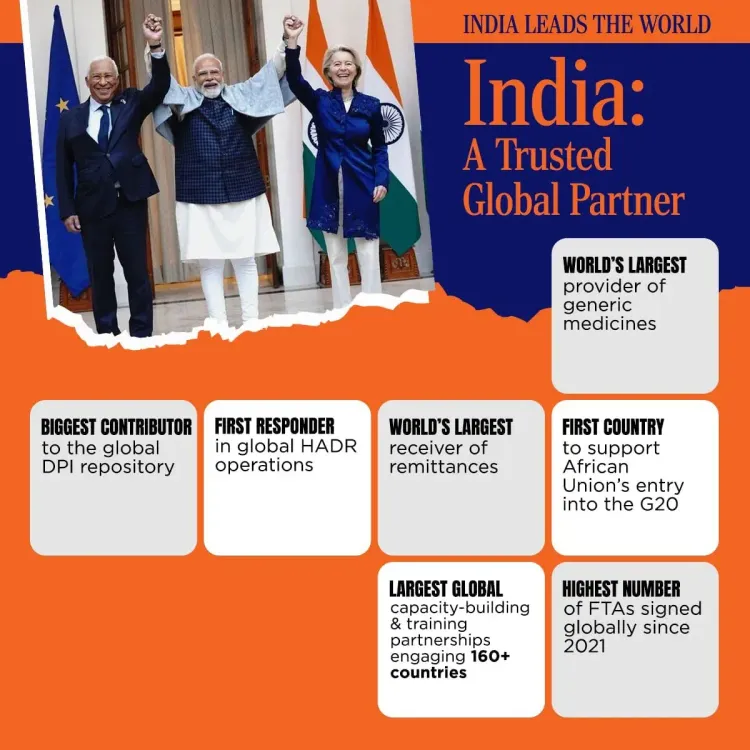
Defence Minister Rajnath Singh praised 12 years of PM Modi's India First foreign policy on June 19, 2026, highlighting India's rise as a credible global voice, its Global South advocacy, and the Viksit Bharat vision linking diplomacy to national development goals.
Key Takeaways
Rajnath Singh on June 19, 2026 marked 12 years of the Modi government's India First foreign policy .
India's diplomacy since 2014 has combined Neighbourhood First, Act East and minilateral groupings such as the Quad, I2U2 and BRICS .
India used its G20 presidency in 2023 to embed Global South priorities in the New Delhi Declaration .
The Viksit Bharat vision — targeting developed-country status by 2047 — is framed as inseparable from India's expanding global influence.
The civilisational concept of Vasudhaiva Kutumbakam has been institutionalised as a core plank of official Indian foreign-policy vocabulary.
Upcoming SCO and BRICS summits will test the durability of India's multi-alignment doctrine.
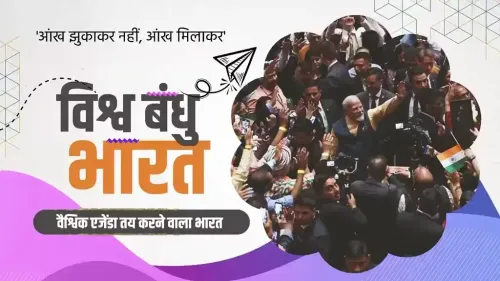
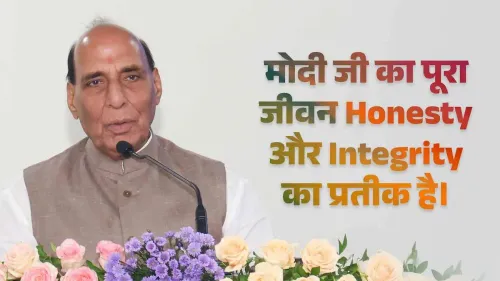
Union Defence Minister Rajnath Singh on Friday, June 19, 2026, praised the transformation of India's foreign policy over the past 12 years under Prime Minister Narendra Modi, saying the country has emerged as a 'confident, credible and responsible voice on the world stage' rooted in the civilisational ethos of Vasudhaiva Kutumbakam (the world is one family).
Context
Singh's post marks what the ruling Bharatiya Janata Party (BJP) is celebrating as #12YearsOfIndiaFirst — a reference to the Modi government's tenure since May 2014. The minister credited the Prime Minister's leadership with placing 'national interest at its core' while simultaneously expanding India's global footprint through neighbourhood ties, strategic partnerships and advocacy for the Global South.
Singh wrote that 'today, India engages with the world not merely from a position of aspiration but with growing capability, influence and respect' — a framing that positions the current diplomatic posture as qualitatively different from earlier decades of Indian foreign policy.
Policy Backdrop
The Modi government's Neighbourhood First policy, articulated at the outset of its first term in 2014, prioritised immediate neighbours and was followed by an upgrade of the Look East policy into the more activist Act East Policy, deepening ties with ASEAN and East Asia. These initiatives were complemented by India's participation in minilateral groupings such as the Quad, I2U2 and BRICS, which allowed New Delhi to pursue issue-based coalitions without formally abandoning its non-alignment heritage.
A landmark moment came when India hosted the G20 summit in 2023, using the presidency to insert Global South priorities into the New Delhi Declaration. The sustained use of Vasudhaiva Kutumbakam as official diplomatic vocabulary — prominently displayed at the G20 — reflects a decade-long effort to anchor foreign-policy messaging in India's civilisational identity.
Singh's statement also invokes the Viksit Bharat vision — the government's goal of achieving developed-country status by 2047 — linking internal modernisation targets directly to India's expanding global influence.
Stakeholders and Impact
Global South nations, which have increasingly looked to India as a bridge between the developed world and emerging economies, stand as the most prominent external stakeholders in this foreign-policy narrative. India's advocacy in multilateral forums has given smaller economies a platform they lacked in earlier G7-dominated structures.
Neighbouring states — from Sri Lanka and Bangladesh to Nepal and Bhutan — have been central to the Neighbourhood First framework, though the relationships have seen varying degrees of friction and cooperation over the period. Strategic partners across Washington, Tokyo, Abu Dhabi and Riyadh have deepened defence and economic ties with New Delhi over the same span.
What's Next
India's forthcoming engagements in the SCO and BRICS summits will be watched as tests of the diplomatic doctrine Singh has described. Any parliamentary debate on an updated foreign-policy framework ahead of the 2029 general election could crystallise these 12 years of practice into formal doctrine.
As the BJP marks this political milestone, the government's ability to sustain multi-alignment — balancing ties with the United States, Russia, China and the broader Global South simultaneously — will define whether 'India First' endures as a durable strategic posture or remains a campaign-era slogan.
Frequently Asked Questions
What is India's India First foreign policy under PM Modi?
'India First' is the guiding principle of Prime Minister Narendra Modi's foreign policy since 2014, prioritising national interest while pursuing multi-alignment — engaging major powers, championing the Global South and deepening neighbourhood ties simultaneously.
What did Rajnath Singh say about India's foreign policy in June 2026?
On June 19, 2026, Defence Minister Rajnath Singh stated that over 12 years of PM Modi's leadership, India has become a 'confident, credible and responsible voice on the world stage,' rooted in the ethos of Vasudhaiva Kutumbakam and moving toward the Viksit Bharat vision.
What is Vasudhaiva Kutumbakam and why does India use it in diplomacy?
Vasudhaiva Kutumbakam is a Sanskrit phrase meaning 'the world is one family.' The Modi government has used it as a central theme of Indian diplomacy, most prominently during India's G20 presidency in 2023, to frame India's global engagement in its civilisational tradition.
What is the Viksit Bharat vision mentioned in foreign policy?
Viksit Bharat is the Indian government's national vision to achieve developed-country status by 2047, the centenary of independence. It links domestic modernisation — in infrastructure, technology and economy — with India's growing international influence and diplomatic weight.
What is India's Neighbourhood First policy?
Neighbourhood First is a foreign-policy doctrine articulated by the Modi government in 2014 that gives priority to relations with India's immediate neighbours — including Sri Lanka, Bangladesh, Nepal, Bhutan, Maldives and Afghanistan — as the foundation of India's broader global engagement.