Nadda Hails 12 Years of Modi's Nation First Foreign Policy
Synopsis
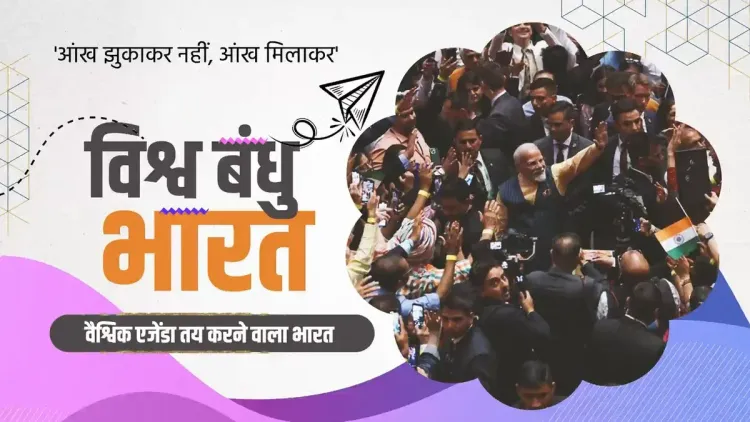
Union Health Minister J. P. Nadda marked twelve years of PM Modi's governance by crediting the 'Nation First' approach with making India's foreign policy stronger and more globally respected, anchoring the message in Vasudhaiva Kutumbakam and flagging Neighbourhood First, Act East, and Viksit Bharat as defining pillars.
Key Takeaways
Nadda , Union Health Minister and BJP national president, posted on June 19, 2026 , marking 12 years of PM Modi's 'Nation First' foreign policy.
The post invokes Vasudhaiva Kutumbakam — 'the world is one family' — as the civilisational foundation of India's diplomatic approach.
Neighbourhood First (launched 2014) and Act East Policy (unveiled at ASEAN-India Summit, Myanmar, November 2014) are cited as flagship frameworks deepening regional ties.
Vasudhaiva Kutumbakam served as the official theme of India's G20 presidency in 2023 , giving the principle multilateral institutional weight.
The message explicitly links foreign policy success to Viksit Bharat , the government's goal of a fully developed India by 2047 .
Upcoming BRICS and SCO summits and 2025-26 budget allocations for connectivity corridors will be the next tests of this diplomatic posture.
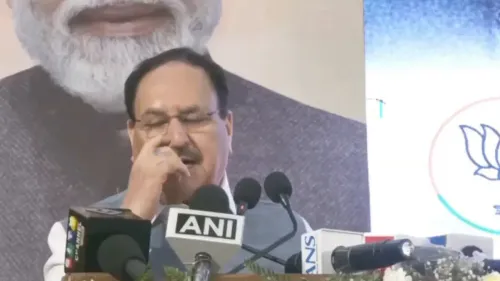
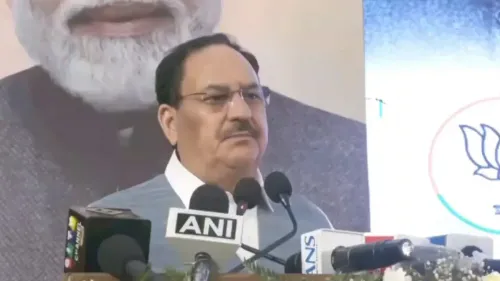
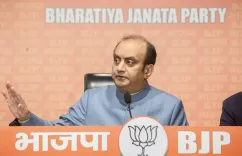
Union Health Minister and BJP national president J. P. Nadda on Friday, June 19, 2026, credited Prime Minister Narendra Modi's 'Nation First' approach with transforming India into a more confident and globally respected power over the past twelve years, invoking the principle of Vasudhaiva Kutumbakam — 'the world is one family' — as the civilisational foundation of that journey.
Context
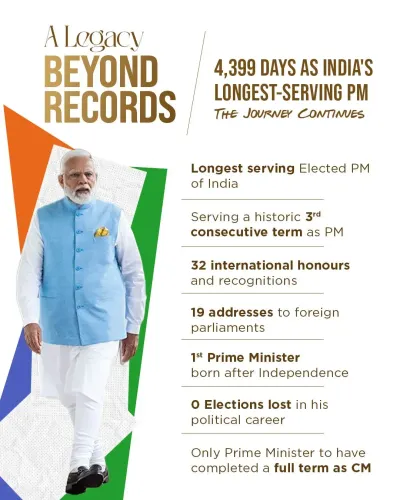
Nadda's post, tagged #12YearsOfIndiaFirst, marks roughly twelve years since Narendra Modi assumed office as Prime Minister in May 2014. The message frames India's foreign policy evolution not as a series of discrete events but as a coherent, values-driven arc, arguing that the country is 'not only advancing its national interests but also contributing to global solutions.'
The post singles out two flagship policy frameworks — Neighbourhood First and Act East — as evidence of deeper regional integration. It also ties foreign policy success to the long-term domestic goal of Viksit Bharat, the government's vision of a fully developed India by 2047.
Policy Backdrop
The Neighbourhood First approach was articulated from the very start of Modi's first term, with early bilateral visits and outreach through the SAARC framework signalling a recalibration toward immediate neighbours. The Act East Policy was formally unveiled at the ASEAN-India Summit in Myanmar in November 2014, upgrading the earlier 'Look East' posture into a more strategic and economically focused partnership with ASEAN and broader East Asian nations.
The phrase Vasudhaiva Kutumbakam gained additional institutional weight when it was adopted as the official theme of India's G20 presidency in 2023, lending a multilateral dimension to what had begun as a bilateral and regional outreach strategy. Together, these pillars form the scaffolding of what the ruling dispensation describes as 'multi-alignment' — maintaining strategic autonomy while deepening ties across geographies.
Stakeholders and Impact
The primary beneficiaries of Neighbourhood First include India's immediate neighbours — Bangladesh, Nepal, Sri Lanka, Bhutan, Maldives, and Myanmar — through connectivity projects, trade facilitation, and security cooperation. The Act East Policy has expanded commercial and strategic linkages with ASEAN member states and partners such as Japan, South Korea, and Australia.
Domestically, the government has consistently presented a muscular foreign policy as an enabler of the Viksit Bharat goal — arguing that stronger global standing attracts investment, technology, and supply-chain partnerships essential for India's economic transformation. Nadda's framing reinforces this link, positioning diplomatic gains as inseparable from development outcomes.
What's Next
Implementation milestones for Act East connectivity corridors and Neighbourhood First projects are expected to feature in the 2025-26 budget cycle, with funding allocations likely to be cited as proof of policy continuity. India's positioning ahead of forthcoming BRICS and SCO summits will serve as the next major test of the diplomatic weight Nadda describes.
As the ruling party marks the twelve-year milestone with coordinated messaging, the foreign policy narrative is set to remain central to the BJP's broader political communication — framing global standing as a direct dividend of stable, long-term governance under PM Modi.
Point of View
Arriving at the twelve-year mark of Modi's tenure to consolidate the narrative that foreign policy strength is a BJP-era achievement rather than an institutional continuity. By threading Vasudhaiva Kutumbakam — a principle that predates the current government by millennia — into a partisan anniversary message, the BJP frames civilisational heritage as a governing credential. The explicit link to Viksit Bharat is strategically significant: it positions diplomatic gains as a prerequisite for economic development, making any critique of foreign policy also a critique of the development vision. As a Health and Chemicals minister speaking on diplomacy, Nadda's intervention underscores how foreign policy has become a whole-of-party messaging asset rather than the preserve of the external affairs establishment.
NationPress
18 Sept 2026
Frequently Asked Questions
What is India's Neighbourhood First policy?
Neighbourhood First is an Indian foreign policy approach launched in 2014 under PM Modi that prioritises deeper ties with immediate neighbours — including Bangladesh, Nepal, Sri Lanka, Bhutan, Maldives, and Myanmar — through connectivity, trade, and security cooperation.
What is the Act East Policy of India?
The Act East Policy, formally unveiled at the ASEAN-India Summit in Myanmar in November 2014, upgraded India's earlier 'Look East' approach into a more strategic and economically focused partnership with ASEAN nations and broader East Asian partners such as Japan, South Korea, and Australia.
What does Vasudhaiva Kutumbakam mean and why is it significant?
Vasudhaiva Kutumbakam is a Sanskrit phrase meaning 'the world is one family.' It gained modern institutional significance when it was adopted as the official theme of India's G20 presidency in 2023, and is frequently invoked by the Modi government as the civilisational basis of India's foreign policy.
What is Viksit Bharat and how does it relate to foreign policy?
Viksit Bharat is the Indian government's long-term goal of becoming a fully developed economy by 2047. The government consistently links foreign policy achievements — such as stronger trade partnerships and strategic alliances — to the investment and technology flows needed to reach this domestic development target.
Why did J. P. Nadda post about foreign policy if he is the Health Minister?
As BJP national president in addition to his ministerial role, J. P. Nadda regularly posts on broad governance and political themes. His post on June 19, 2026, marked the hashtag #12YearsOfIndiaFirst, a coordinated party-wide anniversary messaging effort celebrating twelve years of PM Modi's governance.