Nadda marks 12 years of Modi govt with welfare milestones
Synopsis
Union Health Minister J. P. Nadda on June 9, 2026, marked 12 years of the Modi government by citing welfare milestones: over 25 crore lifted from poverty, 4 crore pucca homes, 60 crore Ayushman Bharat beneficiaries, 19,000-plus Jan Aushadhi Kendras, and 3 crore Lakhpati Didis, framing all gains as steps toward Viksit Bharat 2047.
Key Takeaways
Union Health Minister J.
Nadda marked 12 years of the Modi government on June 9, 2026 , with a detailed Hindi-language post on X under #12YearsOfSeva .
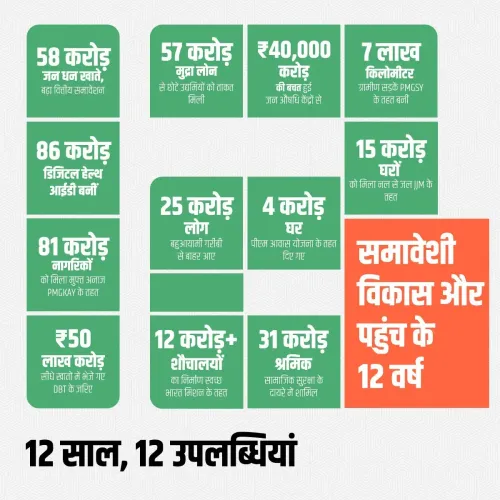
The government claims more than 25 crore people have been lifted out of poverty and over 4 crore families have received pucca (permanent) homes in this period.
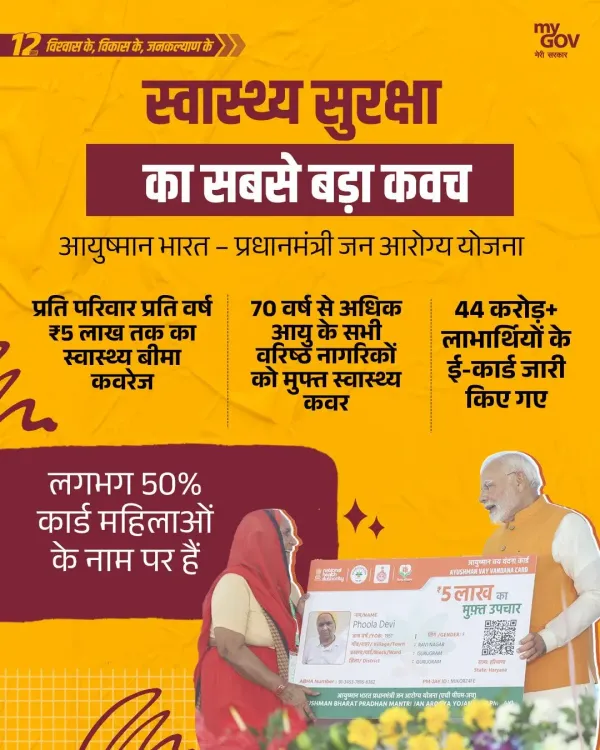
Ayushman Bharat is cited as having benefited over 60 crore people , with senior citizens above 70 years now eligible for free treatment up to Rs 5 lakh .
Over 19,000 Jan Aushadhi Kendras are claimed to be providing medicines at up to 90 per cent lower prices across India.
More than 3 crore Lakhpati Didis — women in self-help groups earning above Rs 1 lakh annually — are highlighted as a women's empowerment milestone.
All achievements are framed within the Viksit Bharat 2047 vision of making India a developed nation by its centenary of independence.
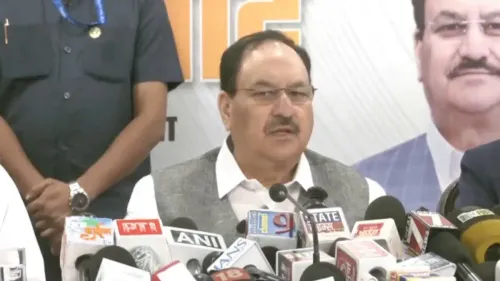
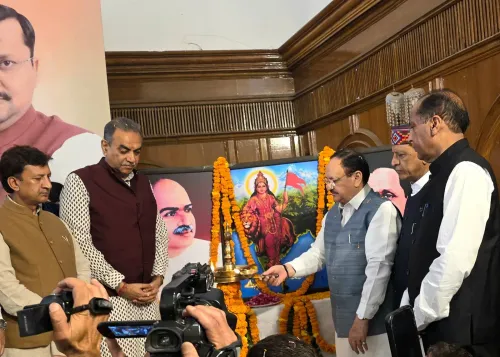
Union Health Minister and BJP national president J. P. Nadda on Tuesday, June 9, 2026, took to X to mark 12 years of the Narendra Modi-led government, highlighting welfare outcomes across housing, health, generic medicines, and women's empowerment under the hashtag #12YearsOfSeva.
Context
Nadda's post, written in Hindi, characterises the 2014–2026 period as a journey of 'vishwas, vikas aur jankalyan' (trust, development, and public welfare) under what he calls the 'far-sighted leadership' of Prime Minister Narendra Modi. The post comes as the BJP-led government completes a symbolic 12-year milestone in office, and serves as a consolidated account of flagship scheme outcomes across multiple ministries.
The minister claims that during this period, more than 25 crore people have been lifted out of poverty and over 4 crore families have received permanent (pucca) homes, ensuring, in his words, 'a roof over every household.'
Policy Backdrop
On the health front, Nadda highlights Ayushman Bharat, India's flagship national health protection mission, stating that more than 60 crore people have benefited from the scheme. He also notes that senior citizens above 70 years of age are now covered for free treatment up to Rs 5 lakh. Ayushman Bharat Pradhan Mantri Jan Arogya Yojana was launched in September 2018 to provide annual coverage of up to Rs 5 lakh for secondary and tertiary care to eligible families.
The post further references the Pradhan Mantri Bharatiya Janaushadhi Pariyojana, claiming that more than 19,000 Jan Aushadhi Kendras now offer medicines at up to 90 per cent lower prices across the country. The scheme, which operates dedicated outlets selling quality generic medicines, has been a key plank of the government's affordable-healthcare agenda.
On housing, the Pradhan Mantri Awas Yojana — approved in 2015 with implementation beginning in 2016-17 — forms the backbone of the 4 crore pucca homes figure cited by Nadda. The scheme targets both rural and urban poor households.
Stakeholders and Impact
Nadda singles out women's economic empowerment as a standout achievement, stating that more than 3 crore 'Lakhpati Didis' — women in self-help groups who now earn above Rs 1 lakh annually — have become symbols of women's empowerment. The Lakhpati Didi initiative is a component of the Deendayal Antyodaya Yojana – National Rural Livelihoods Mission, which was restructured in 2015 and subsequently scaled up.
The post frames progress across a broad spectrum: 'garib kalyan se lekar kisan samman tak, mahila sashaktikaran se lekar yuva udyamita tak, aadhunik avsanrachna se lekar digital kranti tak' — from welfare for the poor and farmer dignity, to women's empowerment, youth entrepreneurship, modern infrastructure, and the digital revolution. The primary beneficiaries cited span poor households, elderly citizens, rural women in self-help groups, and farmers.
What's Next
Nadda concludes by situating these achievements within the government's Viksit Bharat 2047 vision — the official target of achieving developed-nation status by the centenary of India's independence. He describes the Modi government's policies of 'seva aur sushasan' (service and good governance) as 'epoch-making' in the journey toward this goal, rooted in the Antyodaya principle of prioritising the most marginalised.
Attention will now turn to parliamentary and cabinet decisions on further expanding Ayushman Bharat age and income criteria, as well as the next NITI Aayog Multidimensional Poverty Index update, which is expected to provide independent tracking of poverty-reduction trends.
Point of View
Shareable document ahead of what is likely a sustained anniversary campaign. By anchoring health, housing, and women's empowerment under a single 'Antyodaya' frame, the party signals that its electoral identity remains rooted in scheme-delivery rather than ideological positioning alone. The invocation of 'Viksit Bharat 2047' as the destination ties near-term welfare gains to a long-horizon national aspiration, making it harder for critics to evaluate the government solely on present-day metrics. As the BJP's national president and Health Minister simultaneously, Nadda's authorship of the post underscores the party's intent to own the welfare narrative at both the political and administrative levels.
NationPress
23 Sept 2026
Frequently Asked Questions
What is the #12YearsOfSeva campaign about?
#12YearsOfSeva is a BJP-led social media campaign marking 12 years of the Narendra Modi government (2014–2026), highlighting welfare outcomes across housing, health, women's empowerment, and poverty reduction.
How many people have benefited from Ayushman Bharat according to the government?
Union Health Minister J. P. Nadda's post claims that more than 60 crore people have benefited from the Ayushman Bharat scheme, with senior citizens above 70 years now eligible for free treatment up to Rs 5 lakh.
What is the Lakhpati Didi scheme?
Lakhpati Didi is a component of the Deendayal Antyodaya Yojana – National Rural Livelihoods Mission that aims to help women in self-help groups achieve annual incomes above Rs 1 lakh. The government claims over 3 crore such women have reached this milestone.
How many Jan Aushadhi Kendras are there in India in 2026?
According to J. P. Nadda's post, there are more than 19,000 Jan Aushadhi Kendras across India, offering medicines at up to 90 per cent lower prices than branded alternatives.
What is Viksit Bharat 2047?
Viksit Bharat 2047 is the Indian government's official vision to achieve developed-nation status by 2047, the centenary of India's independence, through sustained economic reforms, infrastructure development, and welfare delivery.