12 years of Modi govt built Viksit Bharat foundation, says Nadda
Synopsis
BJP president and Union Minister J.P. Nadda used a Chandigarh party conference to frame 12 years of Modi rule as a civilisational shift — invoking 4,399 days in office, 430,000 km of rural roads, and 78% of India under NDA governance as proof that the Viksit Bharat vision is already underway. The address doubles as a political curtain-raiser ahead of upcoming state polls.
Key Takeaways
Nadda addressed a BJP intellectuals' conference in Chandigarh on 12 June under the campaign '12 Years of Trust, Development and Public Welfare' .
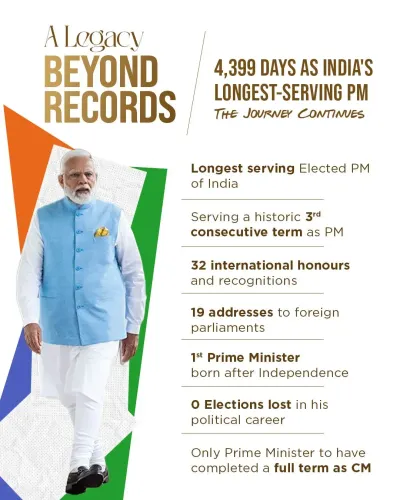
Prime Minister Narendra Modi has completed 4,399 days as head of government, Nadda said.
The BJP and NDA won 43 of 75 major elections since 2014; nearly 78% of India's population lives under NDA-governed states.
More than 4,30,000 km of rural roads built under PM Gram Sadak Yojana , including 14,400 km in Himachal Pradesh.
Railway electrification has risen by over 200% ; Himachal Pradesh achieved 100% electrification.
Nadda cited Article 370 abrogation , Ram Temple construction, Triple Talaq abolition, and CAA implementation as historic decisions fulfilled under Modi.
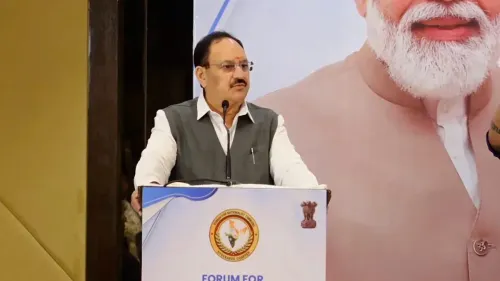
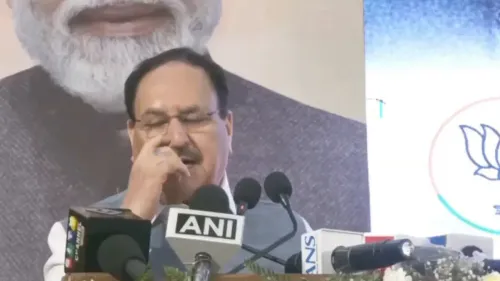
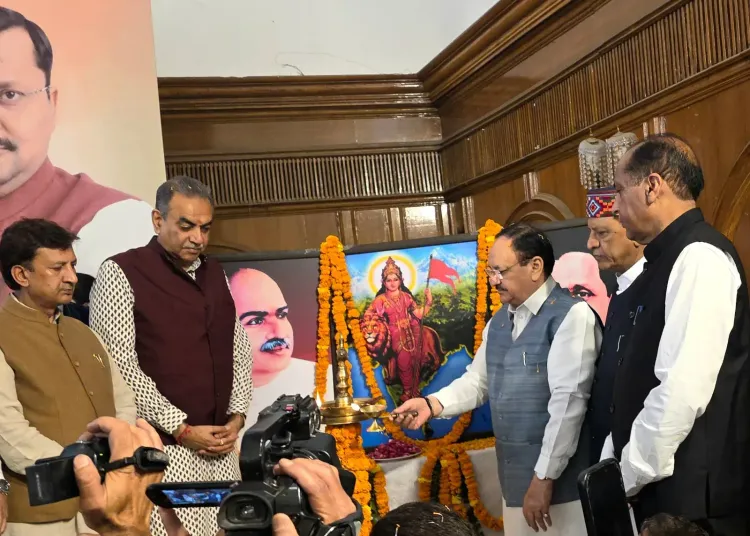
Union Health and Family Welfare Minister J.P. Nadda on Friday, 12 June declared that the 12-year tenure of the Narendra Modi-led Central government would be remembered as a golden chapter in India's history, asserting that the period has laid the structural foundation for a developed India. He was addressing an intellectuals' conference in Chandigarh under the Bharatiya Janata Party (BJP)'s campaign '12 Years of Trust, Development and Public Welfare'.
Key Claims on Governance and Milestones
Nadda said Prime Minister Modi has now completed 4,399 days as the nation's 'Pradhan Sevak' (chief servant), calling it a milestone that reflects the trust and aspirations of 1.4 billion Indians. He argued that before 2014, Indian politics was dominated by casteism, dynastic politics, appeasement, and corruption.
'Citizens had accepted that governments would change, but governance would remain the same,' Nadda said, adding that Modi changed this by making politics a medium of service, accountability, and good governance.
Historic Decisions Highlighted
The Union Minister cited several long-pending decisions fulfilled under the Modi government as evidence of transformational governance. These include the abrogation of Article 370 in Jammu and Kashmir, the construction of the Ram Temple in Ayodhya, the abolition of Triple Talaq, and the implementation of the Citizenship Amendment Act (CAA) — decisions he said previous governments had avoided for political reasons.
He also invoked Modi's vision of 'Amrit Kaal' and the resolve to build a 'Viksit Bharat' (developed India) by 2047, framing the past 12 years as groundwork for that goal.
Electoral Record and Political Reach
Nadda pointed to the BJP's electoral dominance as a barometer of public confidence. He said that in 75 major elections held since 2014, the BJP and the National Democratic Alliance (NDA) secured victory in 43. He added that nearly 78 per cent of India's population now lives in states governed by the BJP or NDA.
The Modi government has also secured a third consecutive Lok Sabha mandate, with the BJP emerging as the largest party in all three general elections since 2014, Nadda said.
Infrastructure and Rural Connectivity
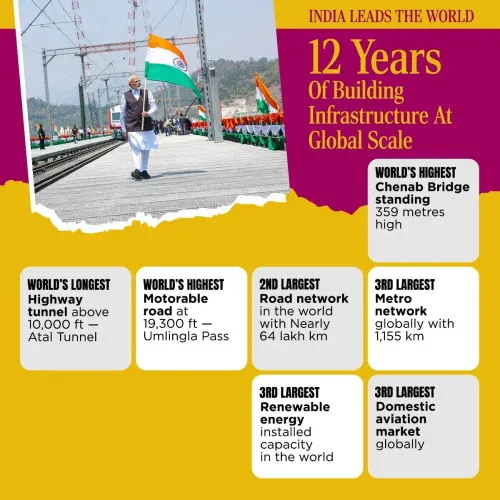
On infrastructure, Nadda said railway electrification has increased by more than 200 per cent nationally, with Himachal Pradesh achieving 100 per cent railway electrification. He cited the construction of national highways, tunnels, four-lane corridors, and modern transport networks as evidence of a transformed landscape.
Under the Pradhan Mantri Gram Sadak Yojana, more than 4,30,000 km of rural roads have been built across India, including over 14,400 km in Himachal Pradesh, he said, noting the scheme's role in integrating rural areas into the mainstream of development.
With the BJP's campaign marking 12 years in power, Nadda's address signals that the party intends to project this period as a governance benchmark ahead of upcoming state elections.
Point of View
From rural road kilometres to NDA-governed population share, are selective highlights rather than a balanced audit; opposition-governed states' contributions to national infrastructure go unacknowledged. The invocation of Article 370, Ayodhya, and CAA alongside development metrics signals that the party sees ideological fulfilment and governance delivery as a unified pitch. Whether that framing resonates beyond the BJP's base — particularly among younger, urban voters demanding jobs and price stability — is the question the campaign does not answer.
NationPress
22 Sept 2026
Frequently Asked Questions
What is the BJP's '12 Years of Trust, Development and Public Welfare' campaign?
It is a BJP outreach campaign marking 12 years of the Narendra Modi-led Central government, aimed at highlighting governance achievements across infrastructure, social welfare, and policy decisions since 2014. The campaign includes conferences with party intellectuals and public events across states.
What infrastructure achievements did J.P. Nadda highlight?
Nadda cited a more than 200% rise in railway electrification nationally, 100% electrification in Himachal Pradesh, and the construction of over 4,30,000 km of rural roads under the Pradhan Mantri Gram Sadak Yojana, including 14,400 km in Himachal Pradesh.
Which policy decisions did Nadda describe as historic?
He cited the abrogation of Article 370 in Jammu and Kashmir, the construction of the Ram Temple in Ayodhya, the abolition of Triple Talaq, and the implementation of the Citizenship Amendment Act (CAA) as long-pending decisions that previous governments had avoided.
What is the BJP's electoral record since 2014 according to Nadda?
According to Nadda, the BJP emerged as the largest party in all three Lok Sabha elections since 2014 and, along with NDA allies, won 43 of 75 major elections held in that period. He said nearly 78% of India's population now lives in BJP or NDA-governed states.
What is the Viksit Bharat vision and how does it relate to the Modi government's tenure?
Viksit Bharat, or 'developed India', is the Modi government's stated goal of achieving developed-nation status by 2047, coinciding with India's centenary of independence. Nadda argued that the past 12 years have established the structural and policy groundwork required to realise that vision.