Nadda hails Modi as India's longest-serving elected PM
Synopsis
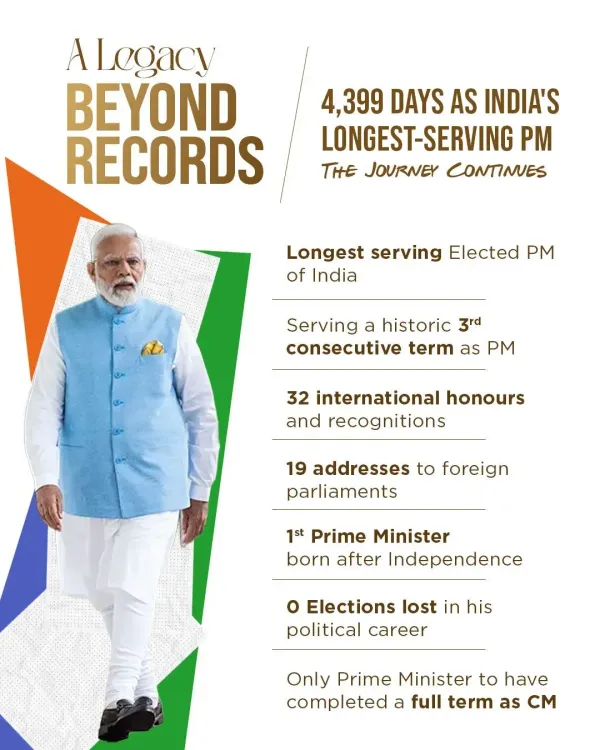
Union Health Minister and BJP president J. P. Nadda on 10 June 2026 marked PM Narendra Modi completing 4,399 days in office — making him India's longest-serving elected Prime Minister — and reaffirmed the collective resolve to build a Viksit Bharat by 2047.
Key Takeaways
Nadda on 10 June 2026 declared Narendra Modi India's longest-serving elected Prime Minister.
Modi has served 4,399 days across three consecutive terms beginning 26 May 2014 .
Nadda highlighted welfare outreach to 140 crore Indians, infrastructure growth, and India's global standing as defining features of the tenure.
Flagship schemes cited in context include PM Awas Yojana and Ayushman Bharat .
The post reaffirmed commitment to Viksit Bharat 2047 , the government's vision for a developed India by the centenary of independence.
As BJP national president, Nadda's tribute carries both governmental and party-political significance ahead of future electoral cycles.
Union Health Minister and BJP national president J. P. Nadda on Wednesday, 10 June 2026, paid tribute to Prime Minister Narendra Modi, marking the day as the milestone on which Modi became India's longest-serving elected Prime Minister — a distinction Nadda said reflects 'the trust of millions and the rise of a New India that is confident, aspirational and globally respected.'
Context
Nadda's post, shared on X, cited 4,399 days of continuous governance under Modi, who was first sworn in as Prime Minister on 26 May 2014 following the BJP-led NDA's decisive general election victory. The BJP-led coalition subsequently secured re-election in 2019 and again in 2024, giving Modi three consecutive terms in office.
The post carried the hashtags #LongestServingElectedPMModi and #ViksitBharat2047, framing the milestone not as a personal record but as a collective national achievement. 'This is more than a record,' Nadda wrote. 'It is a testament to a leadership journey dedicated to service, development and nation-building.'
Policy Backdrop
Nadda's tribute specifically highlighted welfare outreach — 'empowering the poor and farmers' and 'strengthening women, youth and the middle class' — alongside 'record infrastructure growth.' These references align with flagship programmes launched and scaled across Modi's three terms, including PM Awas Yojana for affordable housing and Ayushman Bharat, the government-backed health coverage scheme that Nadda himself oversees as Union Health Minister.
The post also pointed to 'India's growing stature on the world stage,' a recurring theme in BJP's political communication that encompasses India's G20 presidency in 2023, its expanding role in multilateral forums, and its positioning as a major global economy. Nadda described the 4,399 days as 'defined by development, determination and delivery.'
Stakeholders and Impact
The tribute directly names 140 crore Indians as stakeholders in this governance journey — a framing that encompasses farmers, women, youth and the middle class as primary beneficiaries of the Modi government's policy agenda. By invoking these constituencies, Nadda reinforced the BJP's long-standing electoral narrative that broad-based welfare delivery has been the foundation of the party's repeated mandates.
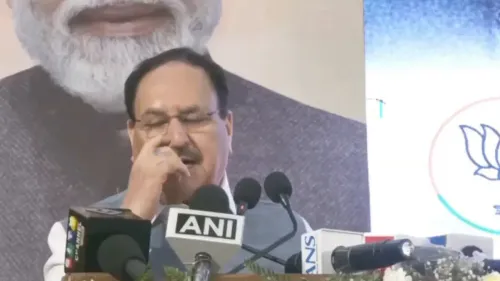
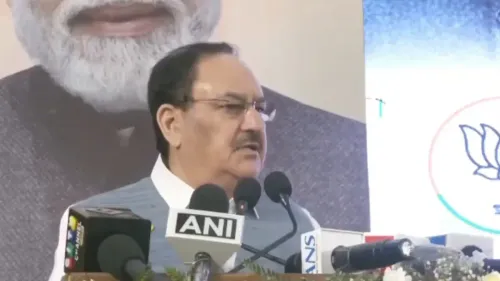
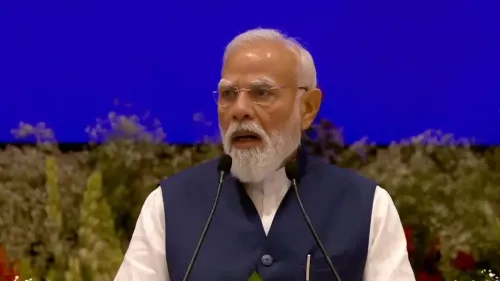
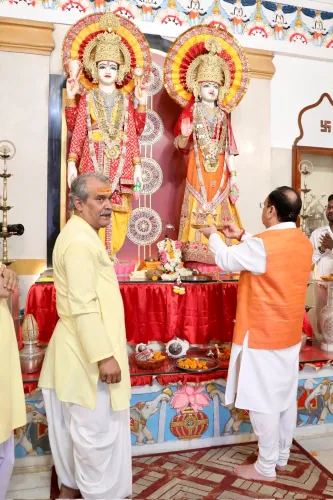
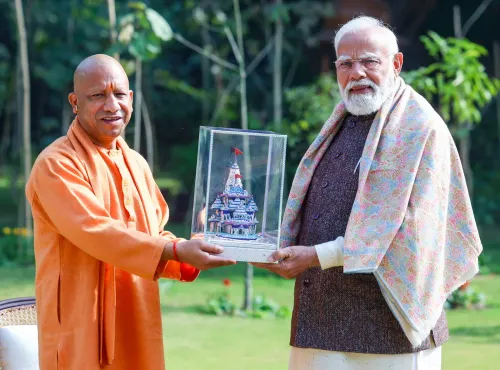
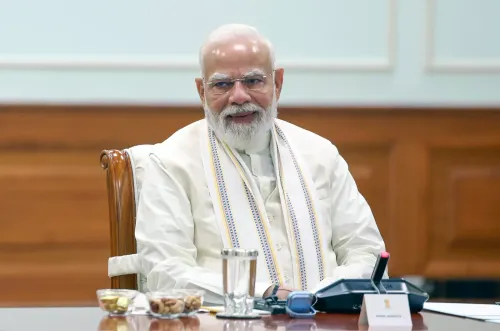
As BJP national president, Nadda's public acknowledgement of the milestone carries both a governmental and a party-political dimension, signalling internal cohesion and projecting a unified leadership image ahead of future electoral cycles. The post, accompanied by four images, was designed for wide social media circulation.
What's Next
Nadda closed his post with a forward-looking commitment: 'The journey continues with a collective resolve to build a #ViksitBharat@ 2047' — the government's official vision to transform India into a developed nation by the centenary of independence. Upcoming parliamentary sessions and Union Budget presentations are expected to outline updated targets under this framework, while international summits may further feature India's positioning as an emerging development model.
The milestone is likely to feature prominently in BJP's political messaging through the coming months, with the Viksit Bharat 2047 roadmap serving as the organisational thread connecting past governance achievements to long-term national ambitions.
Point of View
Delivery-oriented rule. By anchoring the message in citizen welfare — farmers, women, youth, the middle class — rather than party ideology, it broadens the appeal beyond the BJP's base. The invocation of Viksit Bharat 2047 is significant: it converts a backward-looking milestone into a forward-looking mandate, effectively arguing that the electoral trust of three terms is a down-payment on a 21-year national project. For Nadda, who holds both a senior cabinet role and the party presidency, the post also projects internal unity at a moment when demonstrating cohesive leadership is strategically valuable.
NationPress
25 Oct 2026
Frequently Asked Questions
When did Narendra Modi become India's longest-serving elected Prime Minister?
According to J. P. Nadda's post on 10 June 2026, that date marked the milestone of Modi completing 4,399 days as Prime Minister, making him India's longest-serving elected Prime Minister.
How many terms has Narendra Modi served as Prime Minister?
Narendra Modi has served three consecutive terms as Prime Minister, first elected in May 2014, re-elected in 2019, and again in 2024 at the head of the BJP-led NDA.
What is Viksit Bharat 2047?
Viksit Bharat 2047 is the Indian government's official vision to transform India into a fully developed nation by 2047, the centenary of independence. J. P. Nadda referenced it as the continuing goal of Modi's governance journey.
What did JP Nadda say about Modi's 4,399 days in office?
Nadda described the 4,399 days as 'defined by development, determination and delivery,' calling the milestone 'a testament to a leadership journey dedicated to service, development and nation-building.'
What schemes are associated with Modi's tenure highlighted by Nadda?
Nadda's tribute referenced empowerment of the poor, farmers, women, youth and the middle class alongside record infrastructure growth. Key schemes from Modi's tenure include PM Awas Yojana and Ayushman Bharat, the government-backed health coverage programme.