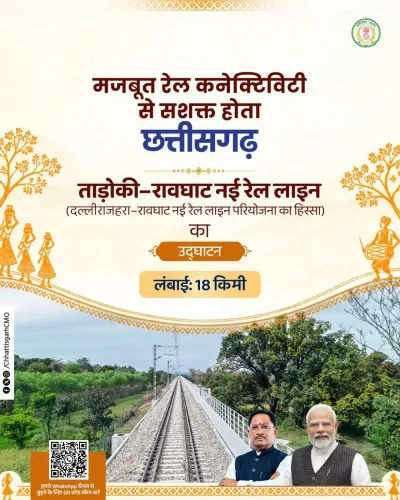
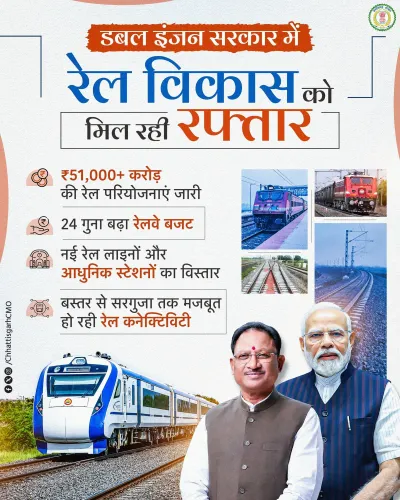
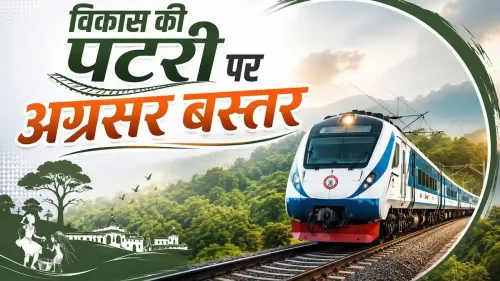
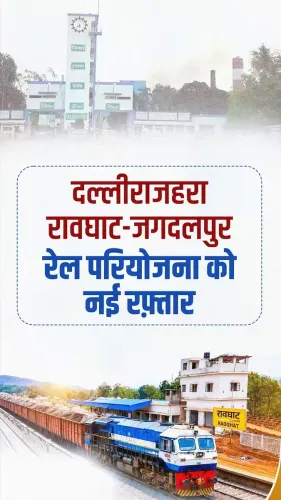
Chhattisgarh CMO Flags Rail Expansion Linking Bastar to Growth
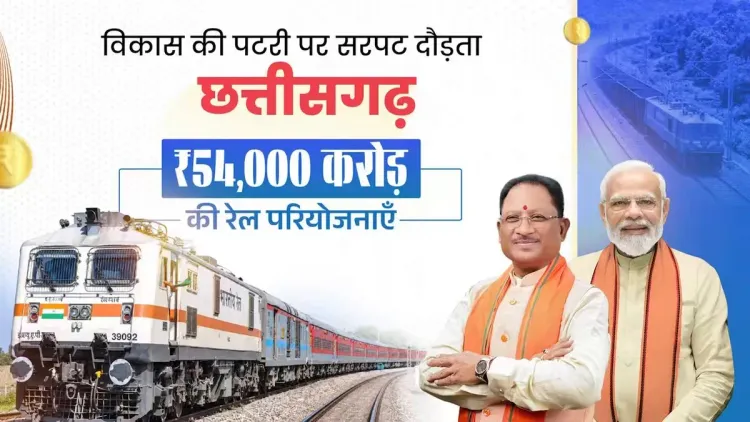
Synopsis
The Chief Minister's Office of Chhattisgarh has spotlighted the state's rail network expansion as a transformative step for remote Bastar, highlighting improved access to education, health, trade and jobs for tribal communities long isolated by poor connectivity.
Key Takeaways
The Chief Minister's Office of Chhattisgarh posted on 25 October 2026 highlighting rail network expansion in the state.
Bastar , a remote southern district with significant tribal populations, is identified as a key beneficiary of improved rail connectivity.
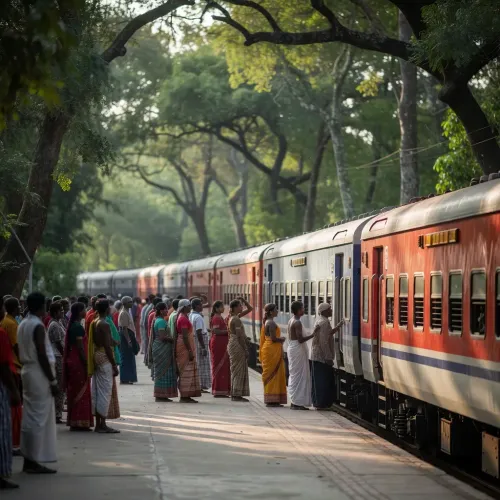
The post cites easier movement, time savings, and better access to education, health, trade and employment as expected outcomes.
The CMO tagged @RailMinIndia and used #ViksitChhattisgarh , signalling alignment with the national 'Viksit Bharat' development framework.
Indian Railways has pursued new line and track-doubling projects in Chhattisgarh's southern tribal districts across successive rail budgets since the 2010s.
For generations, Bastar — the vast, forest-dense district in southern Chhattisgarh — has sat at the edge of India's development map, its tribal communities separated from markets, hospitals, and schools by sheer distance. Now, the Chief Minister's Office of Chhattisgarh is signalling that the state's expanding rail network is beginning to close that gap, tagging the Ministry of Railways in a post on Sunday, 25 October 2026.
The CMO's post, written in Hindi, framed the rail expansion in direct, human terms: 'आवागमन सुगम होगा, समय की बचत होगी' — movement will become easier, time will be saved — and pointed to widening access to 'education, health, trade and employment opportunities' as the core payoff. The tagging of @RailMinIndia and hashtags #RailInfra4Chhattisgarh, #Bastar, and #ViksitChhattisgarh ('Developed Chhattisgarh') signal this is a coordinated state-centre narrative push, not a routine update.
Bastar's long wait for reliable rail links
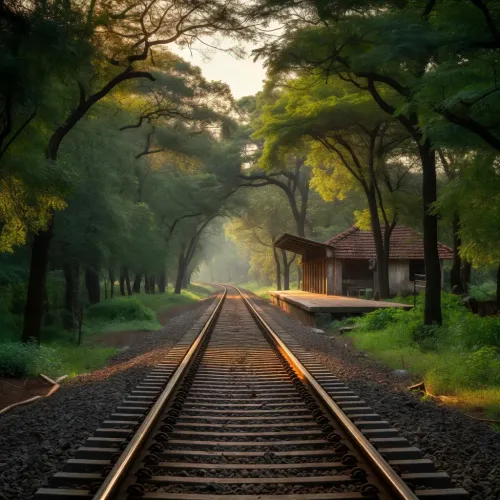
Bastar has historically been among India's most connectivity-starved regions. Dense forests, difficult terrain, and limited infrastructure investment through the late twentieth century left its predominantly tribal population reliant on poor roads and infrequent transport. The knock-on effects — limited access to secondary schools, district hospitals, and commodity markets — have kept the region's economic indicators well below the state average.
Indian Railways has pursued new line and track-doubling projects serving Chhattisgarh's southern tribal districts across successive national rail budgets since the 2010s. These projects are part of a broader central government priority to integrate remote central and eastern Indian regions into the national economy — reducing the kind of spatial inequality that has historically fuelled both poverty and unrest in such districts.
Why rail beats road in Bastar's terrain
For a region like Bastar, rail connectivity delivers what road expansion cannot fully replicate: predictable schedules, higher passenger volumes, and the ability to move goods — iron ore, forest produce, agricultural surplus — in bulk at lower cost. For a student travelling to a college in Jagdalpur or a patient reaching a specialised hospital, a reliable train service transforms travel from a day-long ordeal to a manageable journey. That is the 'time saved' the CMO's post is pointing to.
The state government's invocation of #ViksitChhattisgarh also anchors the rail push within the wider national 'Viksit Bharat' (Developed India) framework — making explicit that the state sees infrastructure connectivity not as a standalone project but as the foundation for human development outcomes across health, education, and livelihoods.
Specific project names, current commissioning timelines, and the precise route alignments involved have not been independently confirmed; the story to watch is how quickly announced rail links translate into operational services for the communities the post describes. When the first train moves through Bastar's forests on schedule, that abstract promise becomes a lived reality for thousands.
Point of View
Connectivity investments carry a dual subtext: economic integration and the stabilisation of a region that has long been associated with Left-wing extremism, making rail infrastructure as much a security-adjacent policy as a development one. The focus on human outcomes — health, education, jobs — rather than engineering metrics suggests the CMO is pitching the story to ordinary voters, not just planners. Whether operational milestones follow the messaging will determine how much political dividend the framing actually yields.
NationPress
25 Oct 2026
Frequently Asked Questions
Which areas of Chhattisgarh will benefit from the rail network expansion?
The Chhattisgarh CMO specifically highlighted Bastar , a remote southern district, as a key beneficiary of the expanding rail network, which aims to improve connectivity for tribal communities in the region.
What benefits does rail connectivity bring to Bastar's tribal communities?
Improved rail links are expected to make travel easier, save time, and widen access to education, health services, trade and employment opportunities for residents of Bastar and other remote districts.
What is the Viksit Chhattisgarh initiative mentioned in the CMO's post?
Viksit Chhattisgarh ('Developed Chhattisgarh') is a state development framework aligned with the national 'Viksit Bharat' vision, under which rail and other infrastructure investments are positioned as foundations for broader economic and human development.
Has Indian Railways been investing in Chhattisgarh's rail network?
Yes. Indian Railways has pursued new line and track-doubling projects serving Chhattisgarh's southern tribal districts across successive national rail budgets since the 2010s, as part of wider efforts to integrate remote central Indian regions.
Why is rail infrastructure particularly important for Bastar compared to road development?
Rail offers predictable schedules, higher passenger capacity, and the ability to move bulk goods like agricultural produce at lower cost — advantages that are especially significant in Bastar's difficult forested terrain where road travel can be slow and unreliable.