CM Sai Pushes Dallirajhara-Rawghat-Jagdalpur Rail Project
Synopsis
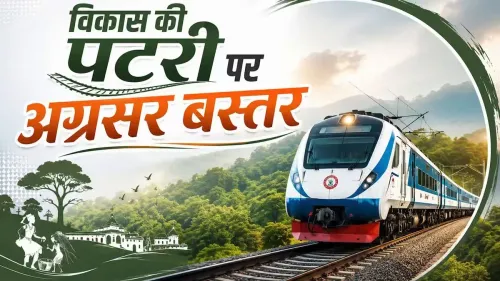
The Chhattisgarh CMO announced on 23 June 2026 that the long-pending Dallirajhara-Rawghat-Jagdalpur rail project has gained fresh momentum under CM Vishnu Deo Sai, promising to transform connectivity and development in the mineral-rich, tribal-dominated Bastar division.
Key Takeaways
The Chhattisgarh CMO announced renewed momentum for the Dallirajhara-Rawghat-Jagdalpur rail project on 23 June 2026 .
Chief Minister Vishnu Deo Sai has positioned the rail corridor as a flagship connectivity initiative for Bastar division .
The project has been in planning since the early 2000s and aims to link iron-ore-rich districts with Jagdalpur .
Beneficiaries include tribal communities , the mining sector , local businesses, and security infrastructure in Left Wing Extremism -affected districts.
The corridor is part of a broader central-India strategy also seen in Odisha and Jharkhand to integrate tribal belts via rail.
Key next steps involve land acquisition , Ministry of Railways funding releases, and phase-wise completion timelines.
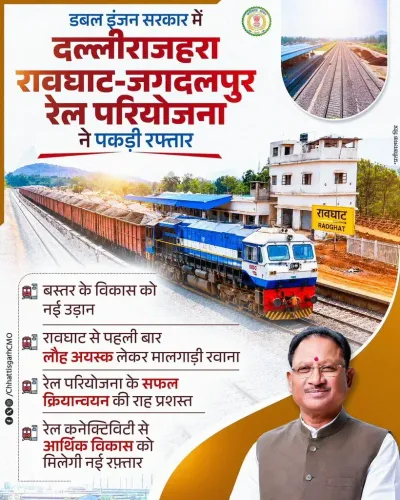
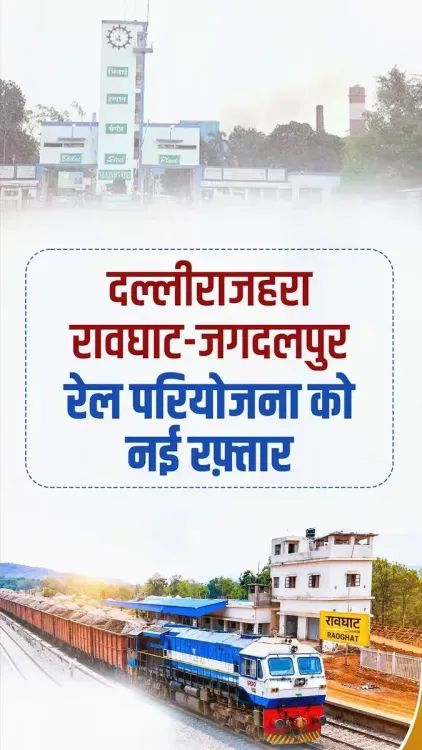
The Chief Minister's Office of Chhattisgarh announced on Tuesday, 23 June 2026 that the long-pending Dallirajhara-Rawghat-Jagdalpur rail project has received renewed momentum under the leadership of Chief Minister Vishnu Deo Sai, with the state government describing the development as a new chapter in connectivity for the mineral-rich but historically underserved Bastar region.
Context
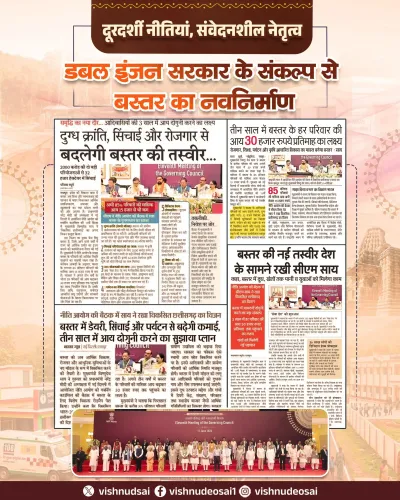
The CMO post, written in Hindi, declared: 'Bastar ke vikas ko milegi nayi udaan' ('Bastar's development will take a new flight'), adding that the double-engine government — a term used by the ruling BJP to describe aligned state and central administrations — is writing a new story of progress by connecting Bastar to a modern rail network. The announcement signals a fresh push on a corridor that has figured in railway planning documents for over two decades without reaching completion.
Policy Backdrop
The Dallirajhara-Rawghat-Jagdalpur rail corridor has featured in successive Railway Budgets and Chhattisgarh state plans since the early 2000s. The project is designed to link the iron-ore-rich districts of Dantewada and Bastar with Jagdalpur, the divisional headquarters, improving both freight movement for the mining sector and passenger connectivity for tribal communities. Indian Railways, the central body responsible for execution, has classified segments of this corridor as strategically important given their passage through Left Wing Extremism-affected districts.
The broader policy rationale mirrors similar rail initiatives in Odisha and Jharkhand, where new lines in the tribal belt are intended to serve a dual purpose: integrating resource-rich areas into the national economy and reducing the isolation that has historically fuelled insurgency. Chhattisgarh's government has framed infrastructure investment in Bastar as central to its development-led security approach since Chief Minister Sai took office in December 2023.
Stakeholders and Impact
The primary beneficiaries of an operational rail link would be the tribal communities of Bastar division, who currently depend on road transport across difficult terrain for access to markets, healthcare, and education. Local businesses and the mining sector — Bastar's iron ore reserves are among the largest in central India — stand to gain significantly from reduced freight costs and faster movement of ore to processing facilities.
Improved rail connectivity is also expected to ease the logistics burden on security forces operating in the region and open up possibilities for tourism linked to Jagdalpur's cultural and natural heritage sites. For tribal residents, a functioning rail corridor could mean access to employment opportunities and markets well beyond the division's boundaries.
What's Next
Key milestones to watch include progress on land acquisition along the corridor, disbursement of funds from the Ministry of Railways, and any formally announced phase-wise completion timelines. The state government's renewed emphasis on this project suggests it will feature prominently in upcoming infrastructure reviews and budget discussions between Raipur and New Delhi. If the current momentum translates into on-ground construction activity, the Dallirajhara-Rawghat-Jagdalpur line could redefine economic geography across one of India's most resource-rich yet connectivity-starved regions.
Point of View
And any visible progress here carries outsized symbolic weight ahead of future electoral cycles. The timing also fits a pattern of the Chhattisgarh government amplifying infrastructure milestones in tribal districts to counter opposition narratives about governance gaps. Whether this announcement reflects a genuine acceleration in construction or a repackaging of existing approvals will become clear once ground-level progress reports emerge.
NationPress
22 Sept 2026
Frequently Asked Questions
What is the Dallirajhara-Rawghat-Jagdalpur rail project?
The Dallirajhara-Rawghat-Jagdalpur rail project is a long-pending railway corridor in Chhattisgarh designed to connect iron-ore-rich districts of Dantewada and Bastar with Jagdalpur, improving both freight movement for the mining sector and passenger connectivity for tribal communities.
Why is the Bastar rail project important?
Bastar is a mineral-rich but historically underconnected and insurgency-affected region. A functional rail link would reduce isolation for tribal communities, lower freight costs for the mining sector, and support security operations in Left Wing Extremism-affected districts.
Who is leading the Bastar rail project in Chhattisgarh?
Chief Minister Vishnu Deo Sai, who took office in December 2023, has positioned the Dallirajhara-Rawghat-Jagdalpur rail corridor as a flagship infrastructure initiative for Bastar under his administration.
How long has the Dallirajhara-Jagdalpur rail project been pending?
The Dallirajhara-Rawghat-Jagdalpur corridor has featured in Railway Budgets and state plans since the early 2000s, making it a project that has been pending for over two decades without full completion.
What does 'double engine government' mean in the context of Chhattisgarh?
'Double engine government' is a phrase used by the BJP to describe a situation where the same party governs both the state and the central government, implying better coordination on projects like the Bastar rail corridor that require both state and Railway Ministry support.