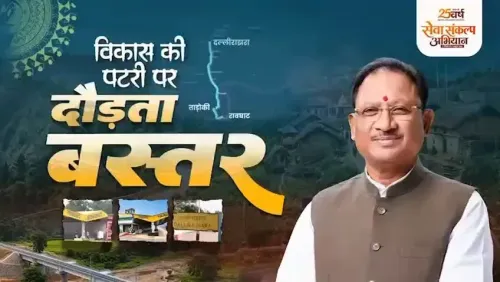
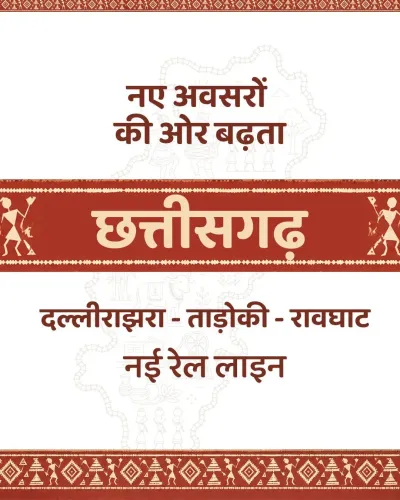
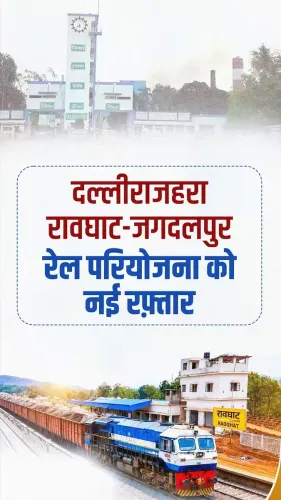
Chhattisgarh CM Sai inaugurates Rawghat rail line, first since Independence

Synopsis
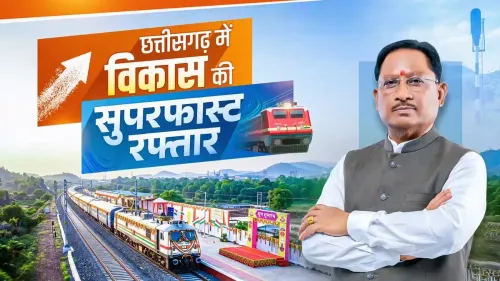
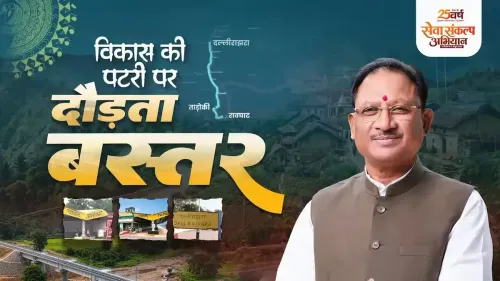
For the first time since Independence, rail reaches Rawghat in Chhattisgarh's Bastar division. CM Vishnu Deo Sai inaugurated the Tadoki–Rawghat and Abhanpur–Kurud lines, launched Rawghat–Raipur and Raipur–Kurud passenger services, and laid the foundation of a Raipur electric engine depot on 20 October 2026.
Key Takeaways
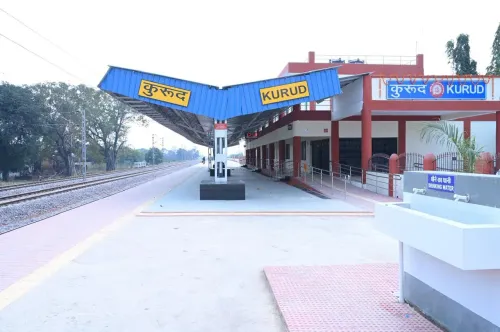
The Tadoki–Rawghat and Abhanpur–Kurud rail lines were inaugurated on 20 October 2026 .
Rawghat receives its first-ever rail connection since India's Independence — a historic milestone for the mineral-rich Bastar division.
Passenger services on the Rawghat–Raipur and Raipur–Kurud corridors were formally launched.
Foundation stone for a modern electric rail engine maintenance facility was laid in Raipur .
The projects are expected to unlock trade, freight, and employment opportunities tied to Rawghat's iron-ore reserves.
The expansion continues a national pattern of extending rail into tribal and mining belts of central India alongside Odisha and Jharkhand .
For the first time since Independence, a railway line will reach Rawghat — the remote, mineral-rich corner of Chhattisgarh's Bastar division that successive governments promised to connect but never did. On Tuesday, 20 October 2026, the Chief Minister's Office of Chhattisgarh announced a cluster of landmark railway events under the leadership of Chief Minister Vishnu Deo Sai and the guidance of Prime Minister Narendra Modi.
What was inaugurated — and why Rawghat matters
The announcements covered three distinct milestones in a single stroke. The Tadoki–Rawghat and Abhanpur–Kurud rail lines were formally inaugurated. Passenger rail services on the Rawghat–Raipur and Raipur–Kurud corridors were flagged off. And in Raipur, the foundation stone was laid for a modern electric rail engine maintenance facility — the kind of depot that anchors long-term rail operations rather than just opening a line and hoping for the best.
Rawghat is not simply a dot on the map. Nestled in the Bastar division, it sits atop one of India's significant iron-ore deposits. Decades of Naxal activity, difficult terrain, and persistent funding gaps kept it off the rail grid long after the rest of the country moved on. The CMO's post captured the historic weight plainly: 'Azaadi ke baad pehli baar Rawghat tak pahunchegi rail' — 'For the first time after Independence, rail will reach Rawghat.'
The Bastar corridor's long road to the tracks
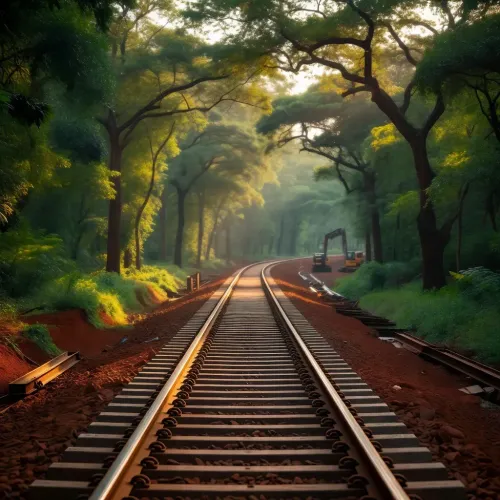
Rail projects in Chhattisgarh's tribal and mining belts were first sanctioned in the early 2000s, part of a broader push to integrate central India's mineral corridor with the national network. Progress was repeatedly slowed — by security concerns in Naxal-affected districts, by the engineering demands of forested terrain, and by the sheer cost of laying track through sparsely populated zones where no immediate freight revenue was guaranteed.
Indian Railways, the central government operator, and successive state administrations kept the Rawghat corridor alive on paper even as timelines slipped. The current Bharatiya Janata Party government in Chhattisgarh, with Vishnu Deo Sai as Chief Minister since December 2023, has framed rail expansion as both an economic lifeline and a governance signal for a region long associated with insurgency.
Freight, trade, and jobs riding the new tracks
The CMO's statement tied the inaugurations directly to a development trinity: 'vikas, vyapar aur rozgaar' — development, trade, and employment. That framing is deliberate. Rawghat's iron-ore reserves have remained commercially underutilised largely because moving bulk ore without a rail link is prohibitively expensive. A functional line changes the calculus for mining companies and downstream industries almost immediately.
Beyond freight, the new Rawghat–Raipur passenger service closes a connectivity gap for tens of thousands of Bastar residents who previously faced long road journeys to reach the state capital. The Raipur–Kurud service similarly shortens commutes for a cluster of towns south of the capital. The electric maintenance depot in Raipur, meanwhile, signals that the state is preparing for a higher density of electric traction — consistent with Indian Railways' national electrification drive.
A pattern taking shape across the mineral belt
Chhattisgarh's rail expansion fits a discernible national template. Neighbouring states — Odisha and Jharkhand — have seen similar pushes to thread railway lines through mineral-rich, historically underserved districts. The political logic is as clear as the economic one: visible infrastructure in regions marked by poverty and conflict is both a development tool and an election narrative.
Whether the Rawghat corridor fulfils its freight potential will depend on the pace of mining clearances and the reliability of the new passenger services. But the tracks reaching Rawghat for the first time in India's post-Independence history is, by any measure, a line in the ground worth marking.
Point of View
Delivering a project that eluded predecessors for decades reinforces its 'Sushasan' (good governance) brand ahead of future electoral cycles. More broadly, the Rawghat corridor exemplifies the Centre's dual-use logic for tribal-belt rail: freight revenue from minerals and a visible governance dividend in Naxal-affected districts. The acid test will be whether mining clearances and passenger ridership follow the ribbon-cutting at the pace the inauguration's ambition demands.
NationPress
20 Oct 2026
Frequently Asked Questions
Why is the Rawghat rail line historically significant?
The Tadoki–Rawghat line is the first railway connection to reach Rawghat since India's Independence in 1947, ending decades of rail isolation for the mineral-rich Bastar division of Chhattisgarh.
Which rail lines were inaugurated in Chhattisgarh on 20 October 2026?
The Tadoki–Rawghat and Abhanpur–Kurud rail lines were inaugurated, and passenger services on the Rawghat–Raipur and Raipur–Kurud corridors were launched on 20 October 2026.
What is the new facility being built in Raipur?
A modern electric rail engine maintenance facility — a depot critical for supporting electric traction operations — had its foundation stone laid in Raipur on 20 October 2026.
How will the Rawghat rail line benefit the local economy?
The line is expected to enable commercial movement of Rawghat's iron-ore reserves, reduce freight costs, create employment, and cut travel times for Bastar residents commuting to Raipur.
Who inaugurated the Rawghat rail line?
The inaugurations took place under Chief Minister Vishnu Deo Sai's leadership and Prime Minister Narendra Modi's guidance, as announced by the Chief Minister's Office of Chhattisgarh.