Nadda highlights 12 years of infrastructure gains under Modi
Synopsis
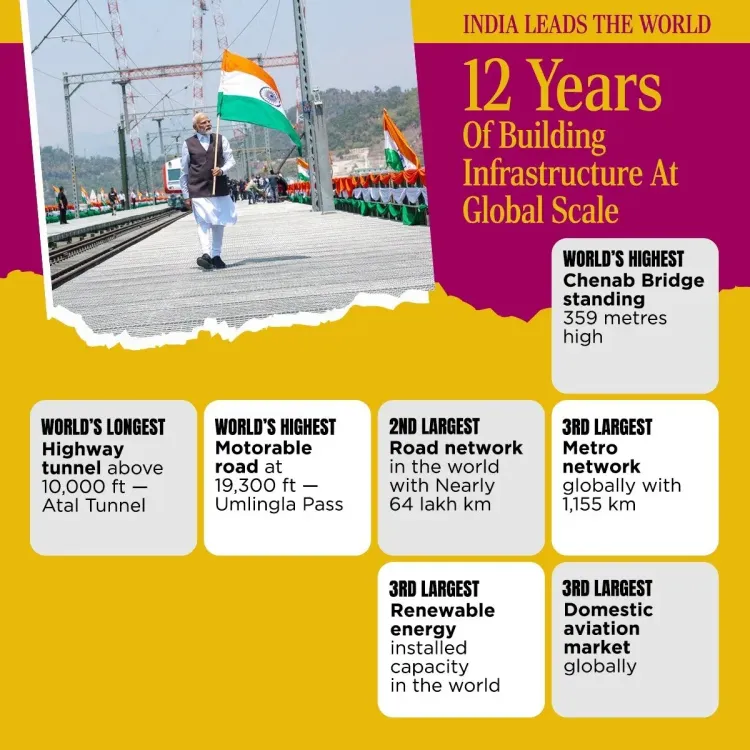
BJP national president and Union Health Minister J. P. Nadda has outlined 12 years of infrastructure progress under PM Modi, citing highway expansion, railway electrification, airport growth, Jal Jeevan Mission coverage, and digital connectivity milestones under the #12YearsOfNayaBharatNirman campaign.
Key Takeaways
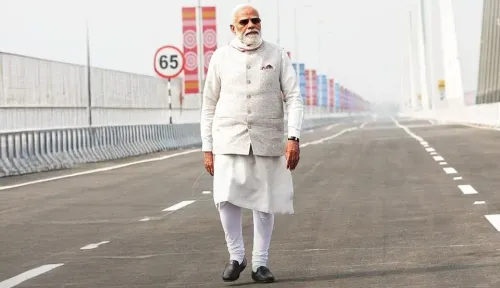
The national highway network has grown from 91,287 km to over 1,46,572 km since 2014, with construction pace at 29.1 km per day .
FASTag has cut toll payment time from 12 minutes to 40 seconds .
Railway electrification stands at over 99% , with 1,338 stations under redevelopment via the Amrit Bharat Station Scheme .
Operational airports have increased from 74 in 2014 to 164 , partly driven by the UDAN scheme.
The Jal Jeevan Mission has provided tap water to over 15.8 crore rural households.
India now has over 102.8 crore internet connections and more than 530 GW of installed power capacity.
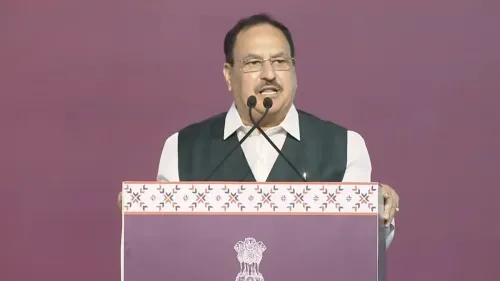
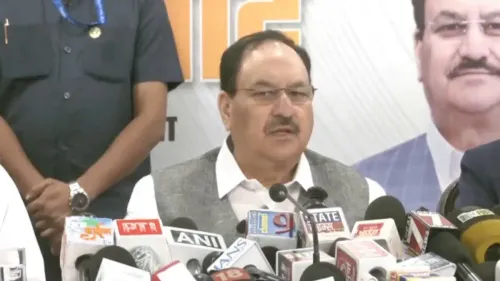
Union Health Minister J. P. Nadda on Tuesday, June 16, 2026, posted a detailed account on X of what the Narendra Modi government describes as a historic transformation of India's infrastructure over the past 12 years, citing figures across roads, railways, airports, digital connectivity, power, and water supply.
Context
Nadda's post, tagged #12YearsOfNayaBharatNirman ('12 years of building a new India'), is part of a coordinated BJP communication drive marking a dozen years since the party came to power in May 2014. The minister, who also holds the portfolio of Chemicals and Fertilizers and serves as BJP national president, framed the data as evidence of 'a historic transformation in the infrastructure sector.'
The post lists specific metrics: the national highway network expanding from 91,287 km to over 1,46,572 km, road construction reaching 29.1 km per day, and toll payment time under FASTag dropping from 12 minutes to just 40 seconds.
Policy Backdrop
The figures cited by Nadda span several flagship programmes. Bharatmala Pariyojana, approved in 2015, accelerated national highway construction to improve freight corridors and inter-city connectivity. The FASTag electronic toll collection system was rolled out nationally to cut congestion and enable cashless payments at highway plazas.
In the railways, Nadda noted that over 99% electrification has been achieved, indigenously designed Vande Bharat Express trains have been introduced since 2019, and 1,338 stations are being redeveloped under the Amrit Bharat Station Scheme, formally launched in 2023. The UDAN regional connectivity scheme, introduced in 2017, is credited with helping grow the number of operational airports from 74 in 2014 to 164 today.
On basic services, the Jal Jeevan Mission — announced in the 2019-20 Union Budget to deliver tap water to all rural households — has, according to the post, reached over 15.8 crore rural households. Digital and energy growth is cited through 102.8 crore internet connections and over 530 GW of installed power capacity.
Stakeholders and Impact
The beneficiaries of these programmes span a broad cross-section: rural households gaining first-time access to piped water, highway users experiencing faster toll clearance, rail passengers on new semi-high-speed services, and air travellers in smaller cities connected through regional airports. Reduced logistics costs from faster roads and digital payments are also cited by the government as an economic multiplier.
The infrastructure push is presented by the BJP as foundational to the Atmanirbhar Bharat ('self-reliant India') vision, with Nadda writing that these achievements 'reflect the transformation of India's modern, robust, and inclusive infrastructure ecosystem' and are 'propelling the nation towards new heights.'
What's Next
Attention will now turn to remaining coverage gaps under the Jal Jeevan Mission, which had set a target of universal rural tap water access, and to new phases of station redevelopment and highway corridor announcements expected in forthcoming Union Budgets. The pace of airport operationalisation under UDAN and further expansion of the Vande Bharat network are also being closely watched as indicators of whether the momentum outlined in Nadda's post is sustained into the next phase of governance.
Point of View
Deploying a cascade of sector-specific metrics to build a cumulative narrative of transformation ahead of what is likely sustained electoral messaging. By spanning roads, rail, air, water, digital, and power in a single post, the BJP is signalling breadth rather than depth — a strategy designed to make the record feel comprehensive to diverse voter blocs. The use of the hashtag #12YearsOfNayaBharatNirman suggests a coordinated multi-day campaign, not a standalone statement. The real test of these numbers will come from independent audits of last-mile delivery, particularly on Jal Jeevan Mission coverage and airport operationalisation in underserved regions.
NationPress
15 Sept 2026
Frequently Asked Questions
How much has India's national highway network expanded since 2014?
According to the government, the national highway network has expanded from 91,287 km to over 1,46,572 km since 2014, with construction pace reaching 29.1 km per day .
What is the Jal Jeevan Mission and how many households has it covered?
The Jal Jeevan Mission is a central government scheme launched in 2019 to provide functional tap water connections to rural households; the government states it has reached over 15.8 crore rural households.
How many airports does India have in 2026 compared to 2014?
The number of operational airports has grown from 74 in 2014 to 164 , with the UDAN regional connectivity scheme playing a key role in developing previously underserved locations.
What is the Amrit Bharat Station Scheme?
The Amrit Bharat Station Scheme is a railway initiative formally launched in 2023 to redevelop over 1,000 stations with modern passenger amenities and multimodal integration; 1,338 stations are currently being redeveloped under it.
How has FASTag changed toll collection in India?
FASTag , India's national electronic toll collection programme, has reduced average toll payment time from 12 minutes to just 40 seconds by enabling cashless, barrier-free highway payments.