Nadda Marks 12 Years of Modi Govt Welfare Schemes
Synopsis
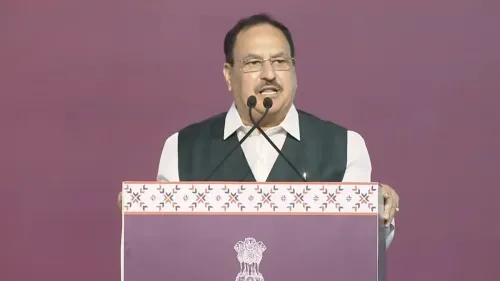
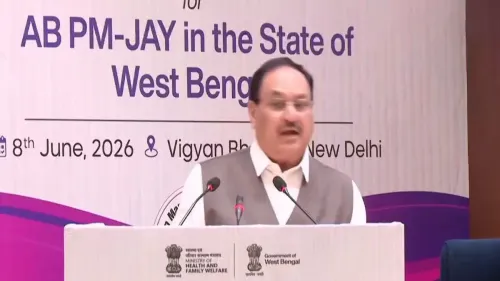
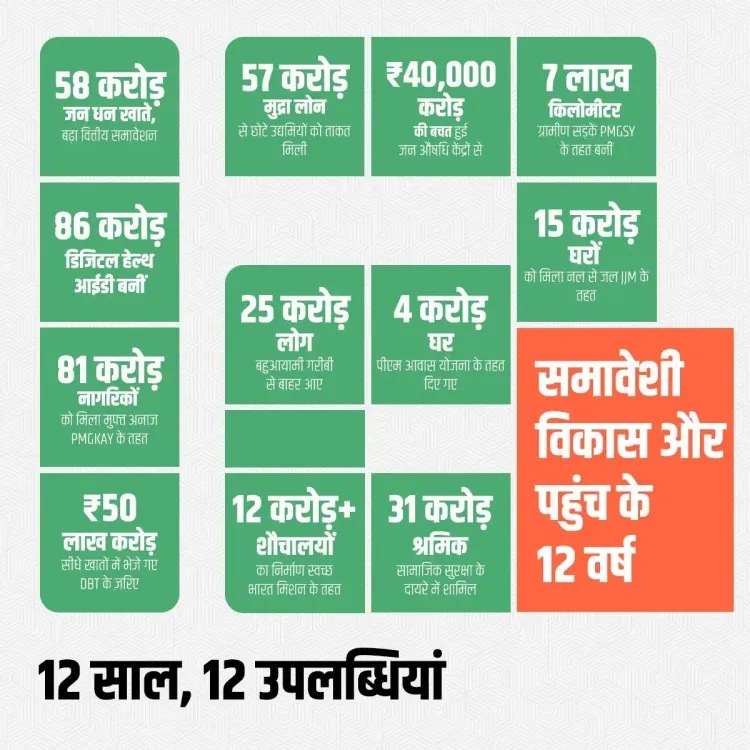
Union Health Minister J. P. Nadda on 8 June 2026 marked 12 years of the Modi government, crediting flagship schemes including Ayushman Bharat, PM-KISAN, Ujjwala Yojana and Swachh Bharat Mission with transforming the lives of crores of Indians under the philosophy of 'Antyodaya se Rashtroudaya'.
Key Takeaways
Union Health Minister J.
Nadda posted on 8 June 2026 marking 12 years of the Modi government under the hashtag #12YearsOfGaribKalyan .
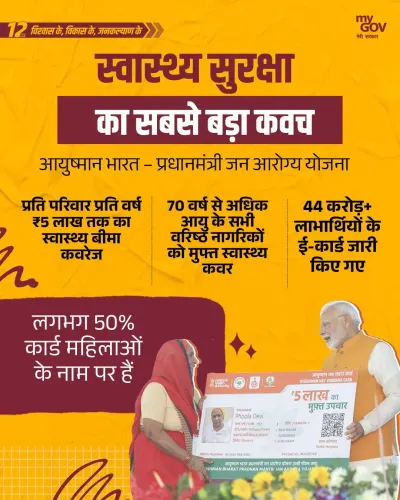
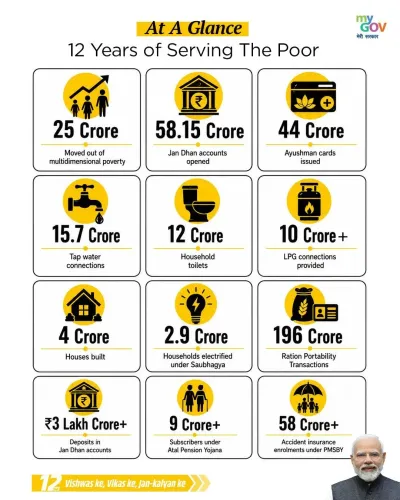
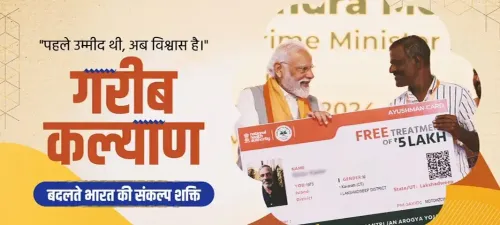
More than a dozen schemes were cited, including Ayushman Bharat (up to Rs 5 lakh annual health cover), Pradhan Mantri Awas Yojana , PM-KISAN , Ujjwala Yojana , and PM SVANidhi .
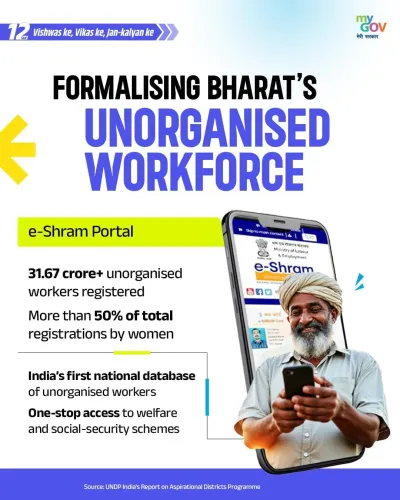
Nadda highlighted expanded banking access, strengthened rights for persons with disabilities , and a reduction in rural poverty as key outcomes.
The overarching philosophy cited is Antyodaya se Rashtroudaya — upliftment of the last person driving national progress.
The post frames the 12-year period as a milestone toward building a Viksit evam Aatmanirbhar Bharat (Developed and Self-Reliant India) by 2047 .
Independent, survey-backed data on the claimed welfare outcomes was not cited in the post.
Union Health Minister J. P. Nadda on Monday, 8 June 2026, took to X to mark 12 years of the Narendra Modi government, crediting a suite of flagship welfare programmes with transforming the lives of crores of Indians under the guiding philosophy of 'Antyodaya se Rashtroudaya' — 'from upliftment of the last person to the rise of the nation'.
Context
Nadda's post, tagged #12YearsOfGaribKalyan, listed more than a dozen central schemes — including Ayushman Bharat, Direct Benefit Transfer (DBT), Pradhan Mantri Awas Yojana, PM-KISAN, Ujjwala Yojana, Suraksha Bima Yojana, MUDRA Yojana, PM SVANidhi, Swachh Bharat Mission, and free ration distribution — as milestones of what he called an era of 'good governance rooted in Antyodaya'. He described the period as a 'milestone in building a developed and self-reliant India (Viksit evam Aatmanirbhar Bharat).'
The post also highlighted expanded banking access for every household, strengthened rights for persons with disabilities (Divyang bhai-behno ke adhikaron mein vistar), and a 'notable reduction in poverty in rural areas' as outcomes of the government's sustained efforts — though independent survey-backed figures for these claims were not cited in the post.
Policy Backdrop
Ayushman Bharat, launched in September 2018, provides up to Rs 5 lakh annual health cover per family and is billed as the world's largest publicly funded health assurance scheme. Pradhan Mantri Awas Yojana, rolled out in 2015, targets construction of pucca homes for the rural and urban poor, while Ujjwala Yojana, begun in 2016, extended subsidised LPG connections to women from below-poverty-line households.
The Swachh Bharat Mission, launched on 2 October 2014, set out to eliminate open defecation nationwide. PM SVANidhi, introduced in June 2020, offered working capital loans to street vendors — a targeted intervention during the post-pandemic economic recovery. Underpinning all these schemes is an expanded Direct Benefit Transfer architecture, which routes subsidies and cash transfers directly to beneficiaries' bank accounts via Aadhaar linkage to reduce leakages.
Stakeholders and Impact
The primary beneficiaries across these programmes span below-poverty-line households, rural poor, women, landholding farmers, street vendors, and persons with disabilities. Nadda framed the collective impact as crores of families being brought into the mainstream — provided security, dignity, sanitation, and a better quality of life.
As BJP national president and a senior Union Cabinet minister, Nadda's post carries dual significance: it is simultaneously a policy communication and a political messaging exercise ahead of continued electoral cycles. The #12YearsOfGaribKalyan hashtag signals a coordinated party-wide campaign marking the anniversary of the Modi government's first term.
What's Next
Analysts and civil society groups will watch for fresh data from official assessments on scheme outcomes — including household surveys and audit reports — to substantiate the broad gains cited by the minister. Any new budgetary allocations or scheme extensions announced in the forthcoming Union Budget will be the next concrete policy marker. India's stated goal of becoming a Viksit Bharat (Developed India) by 2047 provides the long-term frame within which these welfare programmes are increasingly being positioned.
Point of View
A concept rooted in Deendayal Upadhyaya's political philosophy, is deliberate: it ties the BJP's ideological heritage to measurable delivery outcomes. The dual role Nadda plays — as BJP national president and a senior Cabinet minister — means such communications carry both administrative credibility and partisan intent simultaneously. The post's broad welfare claims, absent fresh survey data, will likely draw scrutiny from opposition parties and independent researchers looking for verifiable outcome metrics.
NationPress
20 Sept 2026
Frequently Asked Questions
What is #12YearsOfGaribKalyan?
#12YearsOfGaribKalyan is a hashtag used by BJP leaders, including Union Health Minister J. P. Nadda, to mark 12 years of the Narendra Modi government and highlight welfare schemes launched since 2014.
What schemes did JP Nadda mention in his post?
Nadda mentioned Ayushman Bharat, Direct Benefit Transfer, Pradhan Mantri Awas Yojana, PM-KISAN, Ujjwala Yojana, Suraksha Bima Yojana, MUDRA Yojana, PM SVANidhi, Swachh Bharat Mission, and free ration distribution.
What does 'Antyodaya se Rashtroudaya' mean?
'Antyodaya se Rashtroudaya' is a Hindi phrase meaning 'from the upliftment of the last person to the rise of the nation,' reflecting the BJP government's stated philosophy of inclusive development rooted in the Antyodaya concept.
What is Ayushman Bharat and who does it benefit?
Ayushman Bharat, launched in September 2018, is India's flagship health assurance scheme providing up to Rs 5 lakh annual coverage per family to poor and vulnerable households; it is considered the world's largest publicly funded health assurance programme.
What is Viksit Bharat and how does it relate to these schemes?
Viksit Bharat, or 'Developed India', is the Modi government's goal of making India a fully developed nation by 2047; welfare schemes like those cited by Nadda are positioned as foundational steps toward achieving that long-term target.